
Description
IoT in Canada’s Defense Strategy
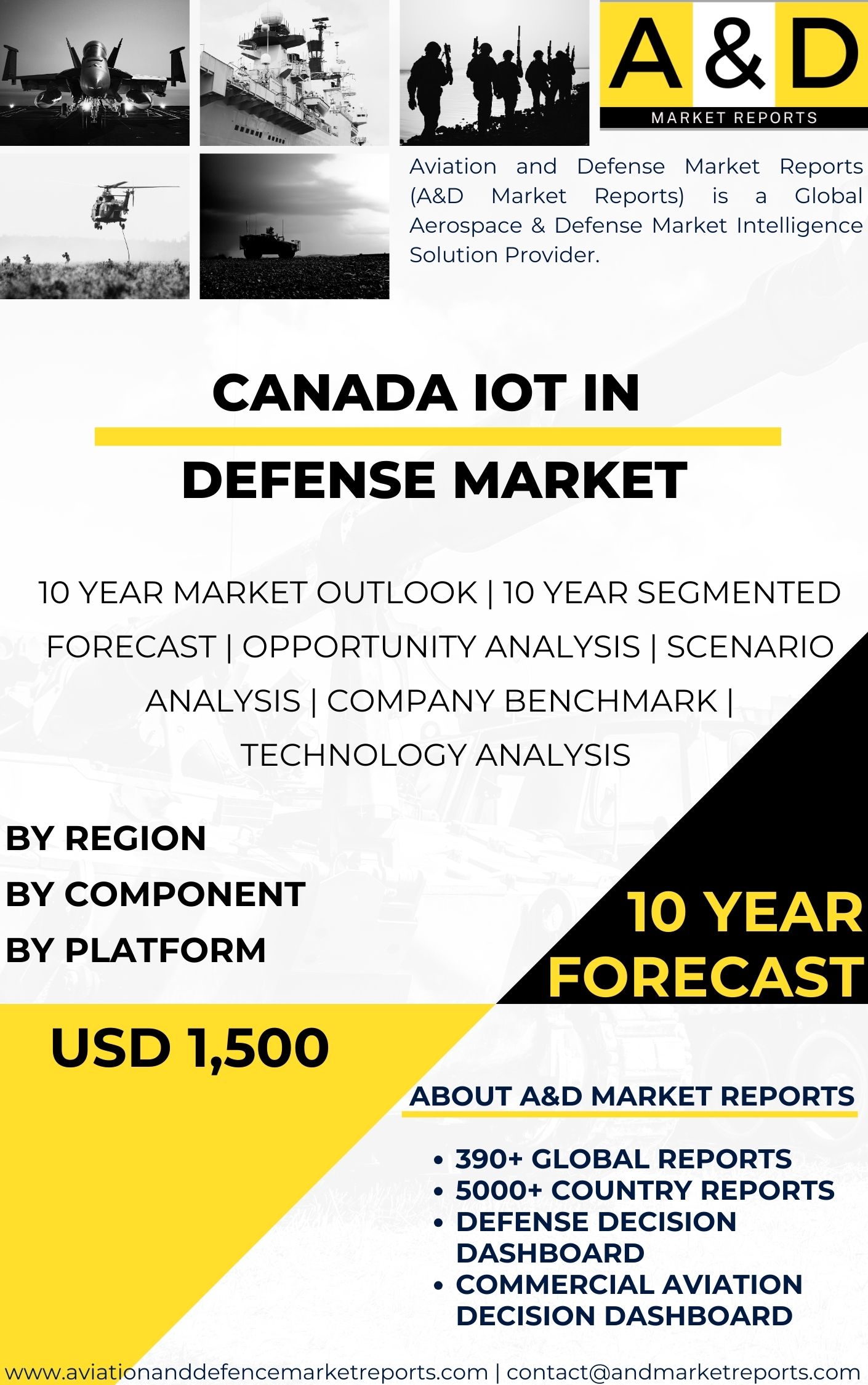
The Canada IoT in Defense Market is a powerful technology that is transforming the defense sector of Canada. IoT connects devices, sensors, and systems to collect and share real-time data across different platforms. This continuous data flow improves awareness, coordination, and response speed during military operations. In defense, IoT supports monitoring, communication, and automation across various systems. The Canadian Armed Forces uses IoT to strengthen operational efficiency and improve mission readiness. As security challenges become more complex, IoT helps defense forces adapt quickly. It also enhances decision-making by providing accurate and timely information in critical situations.
IoT in Military Equipment and Platforms
IoT is widely used in military equipment and platforms to improve performance and reliability. Sensors are embedded in aircraft, armored vehicles, and naval systems to monitor their condition. These sensors collect data on engine performance, system health, and operational status in real time. This enables predictive maintenance, where issues are identified before they become serious problems. As a result, downtime is reduced and equipment remains operational for longer periods. This ensures that military assets are always ready for deployment. IoT helps improve efficiency, reduce maintenance costs, and increase the lifespan of critical defense equipment.
IoT in Military Logistics and Supply Chain
IoT plays a major role in improving logistics and supply chain management in defense operations. Connected devices and RFID systems track the movement of equipment, supplies, and vehicles. This provides real-time visibility of inventory and transportation. It helps prevent delays, losses, and mismanagement of resources. Efficient logistics ensure that troops receive the necessary support on time. IoT also helps optimize storage and distribution processes. This leads to better resource utilization and reduced operational costs. Strong supply chain management improves overall mission effectiveness.
IoT for Situational Awareness in Defense
IoT significantly enhances situational awareness in military environments. Sensors, surveillance cameras, and drones continuously collect data from the battlefield. This information is transmitted to command centers in real time. It helps monitor enemy movements, detect threats, and assess risks. Improved visibility allows commanders to make faster and more accurate decisions. IoT reduces uncertainty and improves coordination between units. This leads to better planning and execution of missions. Enhanced situational awareness ensures safer and more effective military operations.
IoT with Artificial Intelligence in Defense
IoT becomes even more powerful when combined with artificial intelligence technologies. AI systems analyze large volumes of data collected from IoT devices. They identify patterns, detect anomalies, and predict potential threats. This allows defense forces to take proactive actions instead of reacting late. AI improves decision-making by providing insights and recommendations. It also helps optimize resource allocation and mission planning. The integration of IoT and AI increases operational efficiency and accuracy. This combination plays a key role in modern defense strategies.
Cybersecurity in IoT Defense Systems
Cybersecurity is a critical aspect of IoT in defense systems. Connected devices can be vulnerable to cyber threats if not properly secured. Strong encryption and authentication methods are used to protect data and communication networks. The defense industry in Canada focuses on building secure IoT systems. Continuous monitoring helps detect and prevent cyber-attacks. Secure systems ensure the confidentiality and integrity of military information. This is essential for maintaining trust and operational security. Robust cybersecurity measures protect both infrastructure and personnel.
IoT in Military Training and Simulation
IoT improves military training programs. For instance, wearable devices track soldier performance. At the same time, simulation systems create real-life scenarios. As a result, training becomes more practical and effective. In addition, soldiers receive instant feedback. This helps them improve quickly. Because risks are lower, training is safer. Furthermore, advanced tools prepare troops for real missions. Therefore, IoT enhances skill development.
IoT in Border Security and Surveillance
IoT strengthens border security systems. Sensors and cameras monitor border areas continuously. As a result, unusual activities are detected quickly. In addition, alerts are sent in real time. This allows faster response from security forces. Because of this, illegal crossings can be prevented. Furthermore, remote areas can be monitored easily. Overall, IoT improves national border protection.
IoT in Cyber Defense Operations
IoT supports cyber defense by monitoring networks. Connected systems track data and detect unusual behavior. As a result, threats are identified early. Then, quick action can be taken to stop attacks. In addition, this reduces damage to systems. Because networks stay secure, operations continue smoothly. Furthermore, communication remains stable during missions. Therefore, IoT strengthens cyber defense capabilities.
IoT in Disaster Response and Humanitarian Missions
IoT is also useful in disaster response. Sensors collect data from affected areas in real time. As a result, teams can assess damage quickly. In addition, rescue operations become more organized. Connected systems help locate people in danger. Because of this, response time improves. Furthermore, resources are used more efficiently. Overall, IoT supports better emergency management.
IoT and Defense Partnerships
IoT helps build strong defense partnerships. Shared systems allow better communication between nations. As a result, joint operations become more effective. In addition, data can be exchanged easily. This improves coordination during missions. Because systems are compatible, teamwork becomes smoother. Furthermore, training exercises are more efficient. Therefore, IoT supports stronger alliances for Canada.
Conclusion: Importance of IoT in Defense
IoT has become a key technology in the defense sector of Canada. It improves efficiency, security, and decision-making across military operations. The Canadian Armed Forces benefits from its wide range of applications. Continuous innovation ensures that IoT systems remain advanced and reliable. Strong cybersecurity measures protect sensitive information and infrastructure. IoT supports both military and humanitarian missions effectively. As technology continues to evolve, IoT will remain essential in strengthening national defense and ensuring long-term security.