
Description
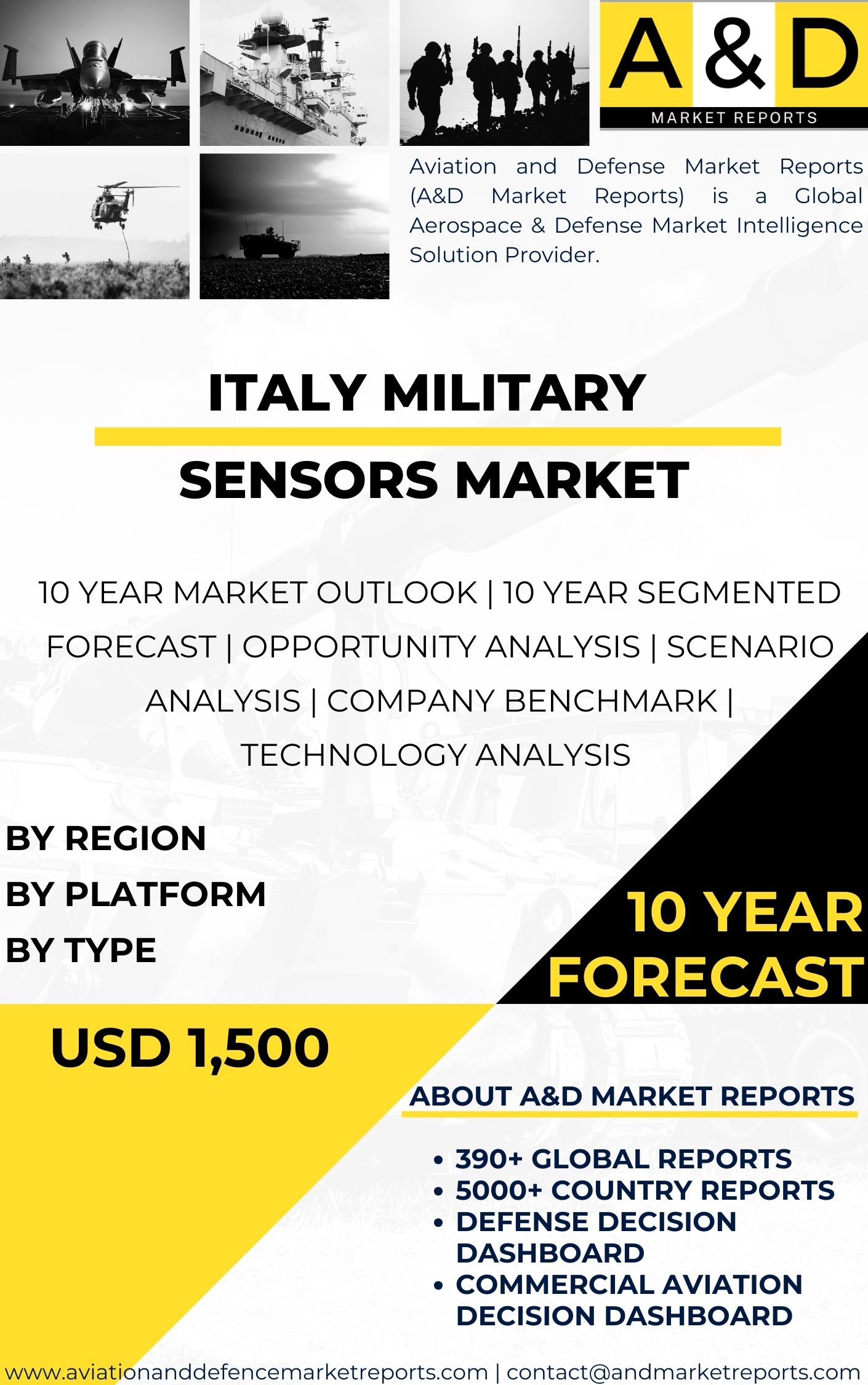
Overview of the Italy Military Sensors Market
The Italy Military Sensors market is a critical and dynamic segment within the country’s defense industry, focused on delivering advanced sensor technologies that enhance situational awareness, intelligence gathering, and overall operational effectiveness of the Italian Armed Forces, while military sensors play a pivotal role in modern warfare by providing real-time data and actionable insights to commanders, enabling faster and more informed decision-making, and the market reflects Italy’s strong commitment to technological innovation, modernization, and strengthening national security capabilities.
Strategic Importance and Market Drivers
Italy’s strategic location in Europe and its membership in NATO and other international security alliances highlight the importance of maintaining a technologically advanced defense force, as the market is driven by the need to equip armed forces with high-performance sensors capable of delivering accurate, real-time information across land, air, sea, and space domains, while increasing geopolitical tensions, evolving threats, and the growing complexity of modern warfare continue to accelerate demand for advanced sensor systems.
Range of Sensor Technologies and Applications
The Italy Military Sensors market encompasses a wide range of technologies including radar systems, electro-optical and infrared (EO/IR) sensors, acoustic sensors, chemical and biological sensors, and electronic warfare sensors, all of which are integrated into various military platforms such as aircraft, naval vessels, ground vehicles, and unmanned systems, enabling comprehensive data collection, improved surveillance, enhanced targeting capabilities, and more effective execution of military operations across diverse environments.
Key Industry Player – Leonardo S.p.A.
A major player in this market is Leonardo S.p.A., a leading Italian aerospace and defense company that develops and manufactures a broad range of advanced sensor systems including radar and EO/IR technologies, while leveraging its expertise in innovation, system integration, and research to deliver high-performance solutions for both domestic and international markets, thereby strengthening Italy’s position in the global defense technology landscape.
Role of International Collaboration
The Italy Military Sensors market benefits from strong collaboration with international defense companies and research institutions, where joint development programs, partnerships, and technology transfer initiatives foster innovation, enhance system capabilities, reduce development risks, and improve interoperability with allied forces, while also strengthening Italy’s competitiveness in the global military sensors market.
Technological Innovation Challenges
One of the primary challenges in the market is the need for continuous innovation and technological upgrades to meet evolving defense requirements, as modern military operations demand sensors with greater range, higher accuracy, improved reliability, and enhanced performance, while rapid advancements in sensor technology require sustained investment in research and development to maintain effectiveness and competitiveness.
Cybersecurity and Electronic Warfare Challenges
Ensuring the resilience and security of military sensors against cyber threats and electronic warfare is another significant challenge, as adversaries increasingly deploy sophisticated techniques to disrupt or manipulate sensor data, making it essential to develop robust cybersecurity measures, secure communication protocols, and resilient systems that can withstand interference and maintain operational integrity.
Interoperability and Integration Challenges
Interoperability remains a key consideration in the Italy Military Sensors market, as sensors must seamlessly integrate with existing and future defense systems to enable efficient information sharing and coordination across multiple platforms and allied forces, requiring standardized architectures, advanced integration capabilities, and continuous system upgrades to support joint and multinational operations.
Opportunities in Network-Centric Warfare and Data Fusion
The increasing adoption of network-centric warfare and data fusion technologies presents significant opportunities for the market, as integrating data from multiple sensors and platforms enhances situational awareness, improves decision-making, and enables more coordinated and effective military operations, while supporting the development of highly connected and intelligent defense systems.
Growth in Unmanned and Autonomous Systems
The growing demand for unmanned and autonomous platforms offers new opportunities for integrating advanced sensor technologies, as sensors play a critical role in enabling navigation, surveillance, and autonomous decision-making in systems such as unmanned aerial vehicles, ground vehicles, and naval platforms, enhancing operational efficiency and reducing risks to personnel.
Expansion in ISR Capabilities
The increasing importance of intelligence, surveillance, and reconnaissance (ISR) operations provides further opportunities for the deployment of advanced sensor technologies, as sensors integrated into aircraft, drones, and satellites enable continuous monitoring, data collection, and analysis of strategic regions, supporting national security objectives and enhancing defense preparedness.
Export Potential and Global Expansion
Italy’s military sensors market holds strong export potential as global demand for advanced surveillance and sensing technologies continues to rise, providing opportunities for Italian companies to expand into international markets, establish strategic partnerships, and strengthen their global presence, while contributing to economic growth and technological advancement.
Conclusion and Future Outlook
In conclusion, the Italy Military Sensors market remains a vital and evolving segment of the country’s defense industry, driven by the need for advanced, reliable, and integrated sensor technologies, with continued investment in innovation, collaboration, and modernization expected to shape future growth, while addressing challenges and leveraging emerging opportunities will enable Italy to maintain a strong and competitive position in the global defense landscape and enhance its overall military capabilities.