
Description
Overview of France’s Defense Aircraft LRU Market
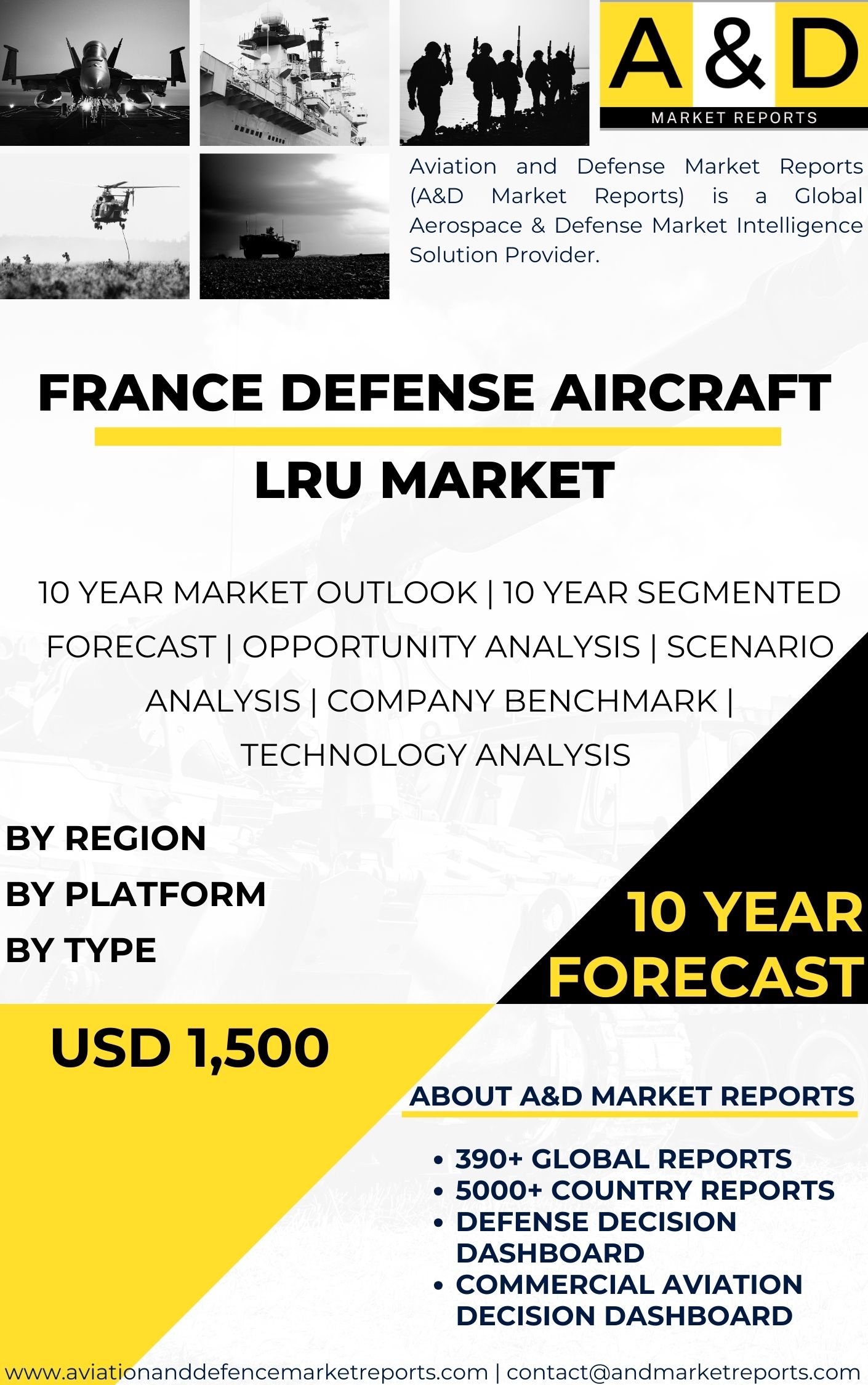
The France Defense aircraft LRU is a critical and dynamic segment of the country’s defense industry. LRUs are essential components that can be quickly replaced in the field, minimizing aircraft downtime. Consequently, they support rapid maintenance and repair operations. France invests heavily in developing, producing, and modernizing LRUs to enhance fleet performance and availability. In addition, LRUs ensure that military aircraft remain mission-ready, reflecting their strategic importance in national defense.
Significance of Defense Aircraft LRUs
The market’s significance lies in enabling continuous military aviation operations. LRUs can be replaced easily during maintenance or malfunctions, ensuring aircraft remain operational. Furthermore, rapid LRU replacement reduces turnaround times and improves operational efficiency. Consequently, the French Air Force and Navy maintain higher combat readiness. In addition, LRUs contribute to mission reliability and aircraft longevity, making them a cornerstone of defense aviation logistics.
Key Players and Industry Stakeholders
Key participants include government research institutions, defense companies, and private manufacturers. The French Ministry of Armed Forces, through the Direction Générale de l’Armement (DGA), oversees acquisition and development. Companies such as Dassault Aviation, Thales, and Safran lead research, development, and production of advanced LRUs. Moreover, these players collaborate with academic and technical institutions to accelerate innovation. Therefore, France has a robust ecosystem that supports high-performance LRU technologies.
Technological Advancements in LRUs
Technological progress drives market growth. Innovations in materials, miniaturization, and manufacturing processes have produced compact and lightweight LRUs. Additionally, advanced LRUs feature state-of-the-art electronics, sensors, and communication interfaces. These improvements enable real-time data monitoring and diagnostics. Furthermore, enhanced durability and reliability allow LRUs to operate effectively under demanding conditions. Consequently, aircraft maintain performance and readiness with minimal maintenance delays.
Applications in Avionics
Avionics is a primary application for LRUs. They control navigation, communication, and sensor systems. For instance, flight control computers, navigation units, and communication transceivers rely on LRUs. Moreover, avionics LRUs ensure stable operation and data accuracy. Therefore, aircraft can execute missions efficiently, even in complex environments.
Applications in Propulsion Systems
LRUs are also critical in propulsion systems. They monitor engine parameters and optimize performance. Additionally, propulsion LRUs improve fuel efficiency and reduce maintenance costs. Consequently, aircraft engines operate reliably and consistently. These systems are vital for ensuring that fleets remain fully operational during extended missions.
Applications in Electronic Warfare
Electronic warfare (EW) systems depend on LRUs. Radar warning receivers, electronic countermeasures, and jamming devices protect aircraft from enemy threats. Furthermore, EW LRUs can disrupt adversaries’ electronic systems. Therefore, aircraft survivability and mission success are enhanced significantly. In addition, LRUs allow rapid replacement and upgrade of EW capabilities to counter evolving threats.
Applications in Mission Systems
Mission systems also rely on LRUs. They include sensors, targeting devices, and weapons control units. Moreover, LRUs ensure that aircraft can perform air superiority, reconnaissance, or ground-attack missions efficiently. Consequently, mission adaptability and system reliability improve. In addition, quick replacement of mission LRUs reduces downtime and maintains operational readiness.
International Collaborations
France’s defense aircraft LRU market benefits from strategic collaborations. Partnerships with allied nations and defense industries enable technology sharing and joint R&D. Furthermore, these collaborations expand market reach and strengthen defense relationships. Consequently, France gains access to cutting-edge technologies and accelerates innovation in LRUs. In addition, international projects help standardize LRUs for interoperability across allied platforms.
Policy and Regulatory Considerations
Policy frameworks guide the LRU market. France follows international regulations and export controls for defense technologies. Additionally, national policies focus on developing advanced LRUs to maintain a technological edge. Ethical and safety considerations ensure that LRUs meet stringent performance and reliability standards. Therefore, regulatory compliance supports both domestic defense needs and international export opportunities.
Future Growth and Market Prospects
The future of France’s LRU market is promising. As aircraft become more advanced, demand for high-performance LRUs will increase. Furthermore, modernization programs and technological upgrades drive market expansion. Advanced electronics, lightweight materials, and real-time diagnostics will be in high demand. Consequently, LRUs will continue to enhance aircraft availability, efficiency, and operational readiness.
Challenges and Development Requirements
Challenges remain despite growth prospects. Continuous R&D is necessary to match evolving aircraft technologies. Additionally, LRUs must be compatible with multiple aircraft platforms. Streamlined development and optimized system architectures are essential. Furthermore, ensuring reliability under extreme conditions remains critical. Therefore, ongoing innovation and investment are required to maintain France’s global leadership in LRU technology.
Strategic Focus on Innovation and Collaboration
To seize opportunities, the market must focus on research, innovation, and partnerships. Emphasizing advanced electronics, materials, and miniaturization will improve efficiency. Moreover, collaboration between government, industry, and academia accelerates development. Consequently, France can produce LRUs that meet modern defense needs. In addition, integrating new technologies ensures long-term competitiveness and operational superiority.
Conclusion: Strengthening Aircraft Capabilities
France’s defense aircraft LRU market is essential for maintaining operational readiness and mission effectiveness. Key players, technological advancements, applications, international collaborations, and supportive policies all contribute to its significance. Furthermore, ongoing innovation and modernization ensure that aircraft fleets remain efficient and reliable. By focusing on quality, technology, and collaboration, France can maintain global leadership in defense LRUs and strengthen its military capabilities.