
Description
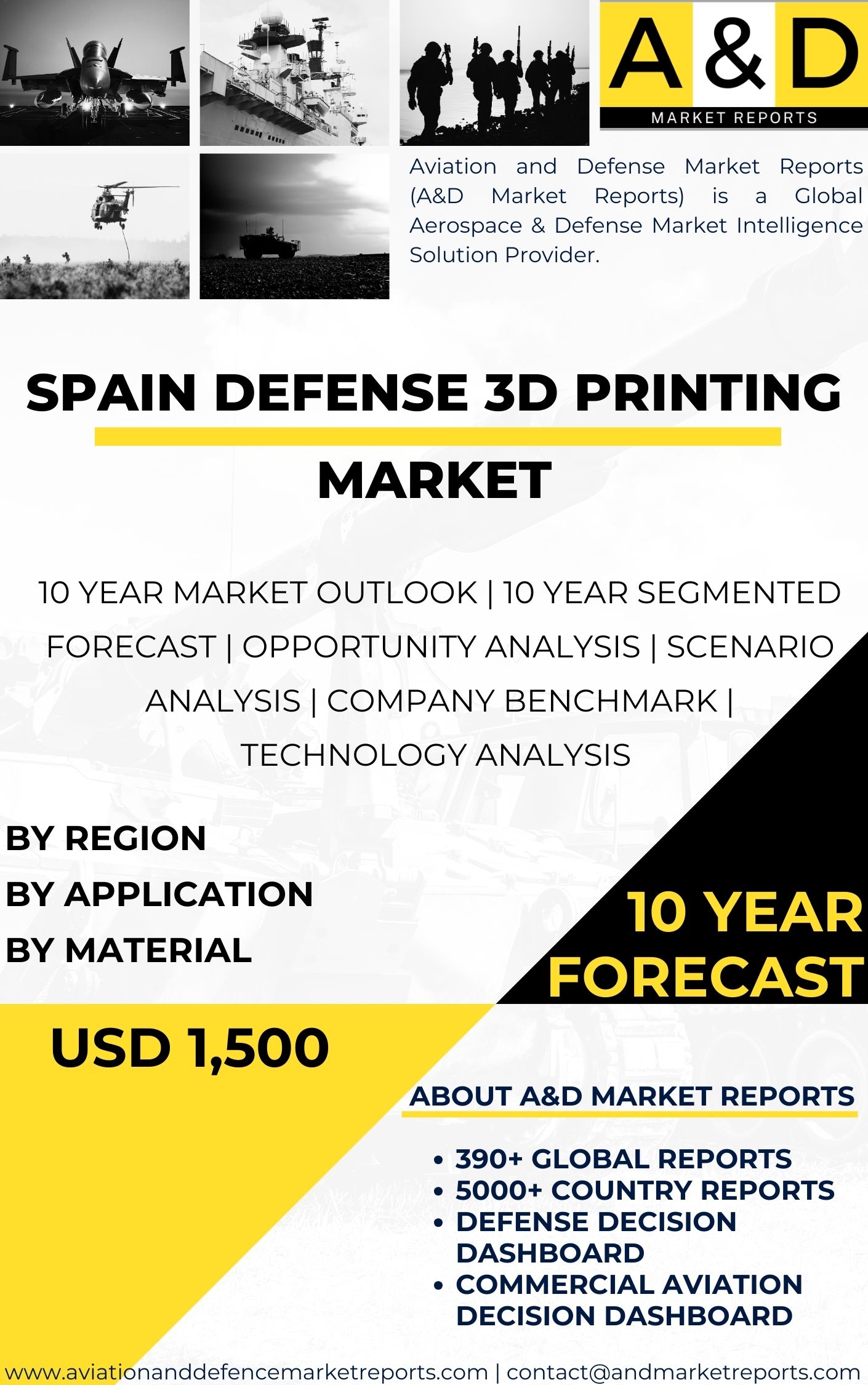
Overview of Spain 3D Printing Defense Market
The Spain Defense 3D printing defense industry is a rapidly expanding and highly innovative sector focused on additive manufacturing technologies for military applications. This technology builds components layer by layer using digital design files, enabling the creation of complex, lightweight, and highly customized parts that traditional manufacturing methods cannot easily produce. Spain is increasingly adopting 3D printing to strengthen its defense industrial base, reduce dependency on external supply chains, and improve mission readiness. It also supports faster development cycles, decentralized production capabilities, and improved sustainability across defense manufacturing operations.
Key Drivers of Market Growth
The main driver of 3D printing adoption in Spain’s defense sector is the growing need for faster, more flexible, and cost-efficient manufacturing solutions. Traditional production systems often involve long lead times, high tooling costs, and limited flexibility, especially for low-volume or specialized military components. 3D printing eliminates many of these limitations by allowing direct production from digital models without complex tooling. Furthermore, it enhances Spain’s ability to respond quickly to urgent operational requirements, ensuring improved readiness and reduced logistical dependency in critical defense scenarios.
Spare Parts Production and Operational Efficiency
3D printing plays a crucial role in on-demand spare parts production for military platforms such as aircraft, naval vessels, armored vehicles, and communication systems. Instead of relying on slow global supply chains, Spain can manufacture required parts locally and immediately when needed. This significantly reduces maintenance downtime and improves the operational availability of defense systems. Additionally, it helps extend the lifecycle of legacy platforms by enabling the reproduction of obsolete or discontinued components with high precision and reliability.
Rapid Prototyping and Defense Innovation
One of the most important advantages of 3D printing is its ability to accelerate rapid prototyping in defense research and development. Engineers can quickly design, test, and modify components without the need for expensive molds or long production cycles. This significantly reduces development time for new weapons systems, drones, aerospace parts, and naval equipment. It also encourages innovation by allowing multiple design iterations in a short time, resulting in improved performance, efficiency, and adaptability of defense technologies.
Customization and Design Flexibility
3D printing provides exceptional customization capabilities, which are highly valuable in defense applications where mission requirements often vary. Military systems frequently require specially designed components optimized for specific environments, platforms, or tactical roles. Additive manufacturing allows engineers to produce these tailored components with high precision without redesigning entire production lines. This flexibility improves system efficiency, reduces weight in aerospace applications, and enhances the adaptability of military equipment in diverse operational conditions.
Role of Major Defense and Aerospace Companies
Spain’s defense and aerospace sector is actively integrating 3D printing technologies into production and development processes. Companies such as Indra Sistemas and Navantia are using additive manufacturing for prototyping, tooling, and producing specialized components for military platforms. In the aerospace sector, major global players operating in Spain also use 3D printing for lightweight aircraft structures and high-performance parts. These developments strengthen Spain’s defense industrial ecosystem and enhance technological competitiveness.
Research, Development, and Industry Expansion
Research and development activities are essential for advancing 3D printing capabilities in Spain’s defense sector. Continuous innovation in materials such as metal alloys, ceramics, and advanced polymers is expanding the range of military applications. Universities, research institutions, and private companies are collaborating to improve printing speed, mechanical strength, and production accuracy. These combined efforts ensure that Spain remains competitive in next-generation defense manufacturing technologies and strengthens its innovation ecosystem.
Budget, Regulation, and Quality Challenges
Despite its advantages, 3D printing also presents several challenges in the defense sector. The initial investment required for advanced printing equipment, specialized materials, and skilled workforce development can be high. In addition, strict quality assurance and certification processes are necessary to ensure that printed components meet military-grade safety and performance standards. Spain must also comply with international defense export regulations, which adds another layer of complexity when using additive manufacturing for sensitive or controlled military technologies.
Future Outlook of Spain 3D Printing Defense Market
The future of 3D printing in Spain’s defense industry is highly promising due to increasing demand for efficient, decentralized, and innovative manufacturing systems. The technology is expected to evolve toward mobile and field-deployable production units capable of manufacturing spare parts near operational zones. Integration with artificial intelligence, digital twin technology, and automated design systems will further enhance precision and reduce production time. Overall, 3D printing is set to become a core pillar of Spain’s defense manufacturing strategy, enabling faster innovation, lower costs, and greater operational independence.