
Description
Spain Defense Gyroscope Market Overview
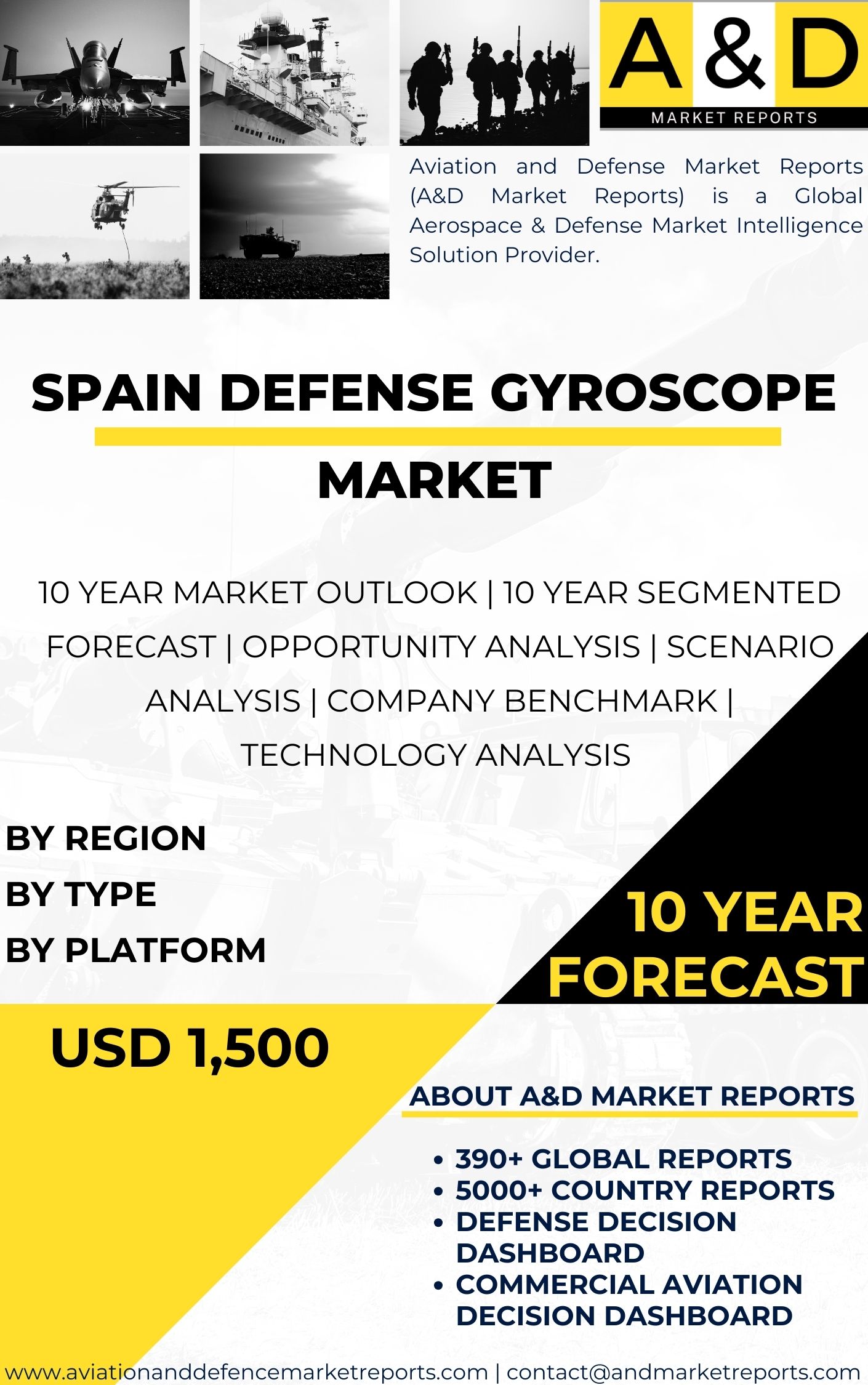
The Spain Defense Gyroscope Market is a vital segment of the country’s defense electronics industry. Gyroscopes provide precise orientation, stabilization, and navigation support for military platforms such as aircraft, naval vessels, missiles, submarines, and ground vehicles. These systems ensure accurate movement control, targeting precision, and stable guidance even in complex and high-speed operations. They are also a core part of inertial navigation systems (INS), allowing defense platforms to operate effectively even when GPS signals are weak, jammed, or completely unavailable. In modern warfare, gyroscopes play an essential role in improving mission accuracy, operational safety, and real-time decision-making across multiple defense domains including air, land, sea, and space-based systems.
Historical Development
The development of gyroscope technology in Spain began in the early aviation era when mechanical gyroscopes were first introduced to improve aircraft stability and navigation accuracy. During the Spanish Civil War, early gyroscopic instruments became important for enhancing pilot control and flight reliability under combat conditions. After World War II, Spain began modernizing its defense and aerospace sector, gradually integrating gyroscopes into military aircraft, ships, and navigation systems. Over time, Spanish engineers and defense companies advanced from mechanical gyroscopes to more sophisticated technologies such as fiber-optic gyroscopes and ring laser gyroscopes, which significantly improved precision, durability, and performance in modern military platforms.
Market Growth Drivers
The Spain Defense Gyroscope Market is expanding due to several strong drivers including ongoing modernization of Spain’s armed forces, increasing demand for high-precision navigation and stabilization systems, and the rapid growth of unmanned systems such as UAVs, missiles, and autonomous ground and naval vehicles. In addition, the integration of gyroscopes with advanced inertial navigation systems improves mission reliability and battlefield awareness. Rising investments in aerospace electronics and defense R&D are also strengthening the market. Furthermore, Spain’s participation in European and NATO defense programs encourages the adoption of advanced gyroscope technologies, while increasing focus on digital warfare and autonomous operations further accelerates market growth.
Key Players
Several major companies contribute significantly to the Spain Defense Gyroscope Market by developing advanced navigation and stabilization technologies for military applications. Indra Sistemas plays a leading role in designing and integrating defense electronics, avionics systems, and inertial navigation solutions that use gyroscopic technologies for precision guidance and control. SENER is another key engineering company specializing in aerospace systems, stabilization technologies, and high-precision navigation components used in defense platforms. Airbus Defence and Space supports the integration of gyroscopes into advanced military aircraft programs such as Eurofighter Typhoon and A400M, contributing to Spain’s overall aerospace and defense capabilities through multinational collaboration and innovation.
Technological Trends
Modern gyroscope technologies in Spain are evolving rapidly from traditional mechanical systems to advanced solid-state and digital solutions. Fiber-optic gyroscopes (FOG) and ring laser gyroscopes (RLG) are widely used due to their high accuracy, reliability, and resistance to harsh environmental conditions. In addition, micro-electromechanical systems (MEMS) gyroscopes are increasingly used in drones, compact defense systems, and portable military equipment due to their small size and low power consumption. The integration of artificial intelligence and sensor fusion technologies is further improving real-time navigation, allowing gyroscopes to work seamlessly with GPS, radar, and avionics systems to enhance situational awareness, targeting accuracy, and autonomous decision-making in defense operations.
Applications in Defense
Gyroscopes are widely used across multiple defense platforms in Spain and are essential for ensuring stability, navigation accuracy, and mission success in complex environments. In aircraft, they support autopilot systems, flight stabilization, and precise navigation during combat and transport missions. In naval vessels, gyroscopes improve heading control, weapon stabilization, and targeting accuracy in rough sea conditions. In missiles, they provide stable flight paths and high-precision guidance to ensure accurate target engagement. In UAVs and autonomous vehicles, gyroscopes enable stable flight control, maneuverability, and reliable operation in GPS-denied or contested environments, making them critical components of modern multi-domain military operations.
Challenges
The Spain Defense Gyroscope Market faces several important challenges that impact its growth and development. High research, development, and manufacturing costs limit large-scale deployment of advanced gyroscopic systems. Rapid technological advancements require continuous upgrades, which increase financial and operational pressure on defense programs. The market also faces strong competition from international defense manufacturers with advanced technologies and established global supply chains. In addition, increasing cybersecurity risks arise as gyroscope systems become more digital, interconnected, and dependent on software-based navigation systems. Ensuring long-term reliability, durability, and accuracy of gyroscopes under extreme temperature, vibration, and combat conditions also remains a significant technical challenge for manufacturers and defense agencies.
Opportunities
Despite challenges, the market offers strong growth opportunities driven by increasing demand for UAVs, autonomous systems, and smart defense technologies that rely heavily on gyroscopic navigation. Ongoing defense modernization programs in Spain are creating continuous demand for advanced inertial navigation and stabilization systems. There is also significant export potential for Spanish defense electronics companies in global markets, especially within Europe and allied nations. The integration of artificial intelligence, machine learning, and sensor fusion technologies is opening new innovation pathways for smarter and more adaptive gyroscope systems. Additionally, upgrading and retrofitting older military platforms with modern gyroscopic technologies provides a cost-effective way to enhance performance and extend system lifecycles.
Conclusion
The Spain Defense Gyroscope Market is a key enabler of modern military navigation, stability, and precision across air, land, sea, and autonomous systems. It supports critical defense operations by ensuring accurate movement control, reliable guidance, and enhanced situational awareness in complex environments. While challenges such as high costs, technological change, and cybersecurity risks exist, continued investment, innovation, and international collaboration are driving steady market growth. As Spain continues to modernize its armed forces and adopt advanced defense technologies, gyroscopes will remain a fundamental component of its future military capabilities and operational effectiveness.