
Description
South Korea Hypersonics Missiles Market Overview
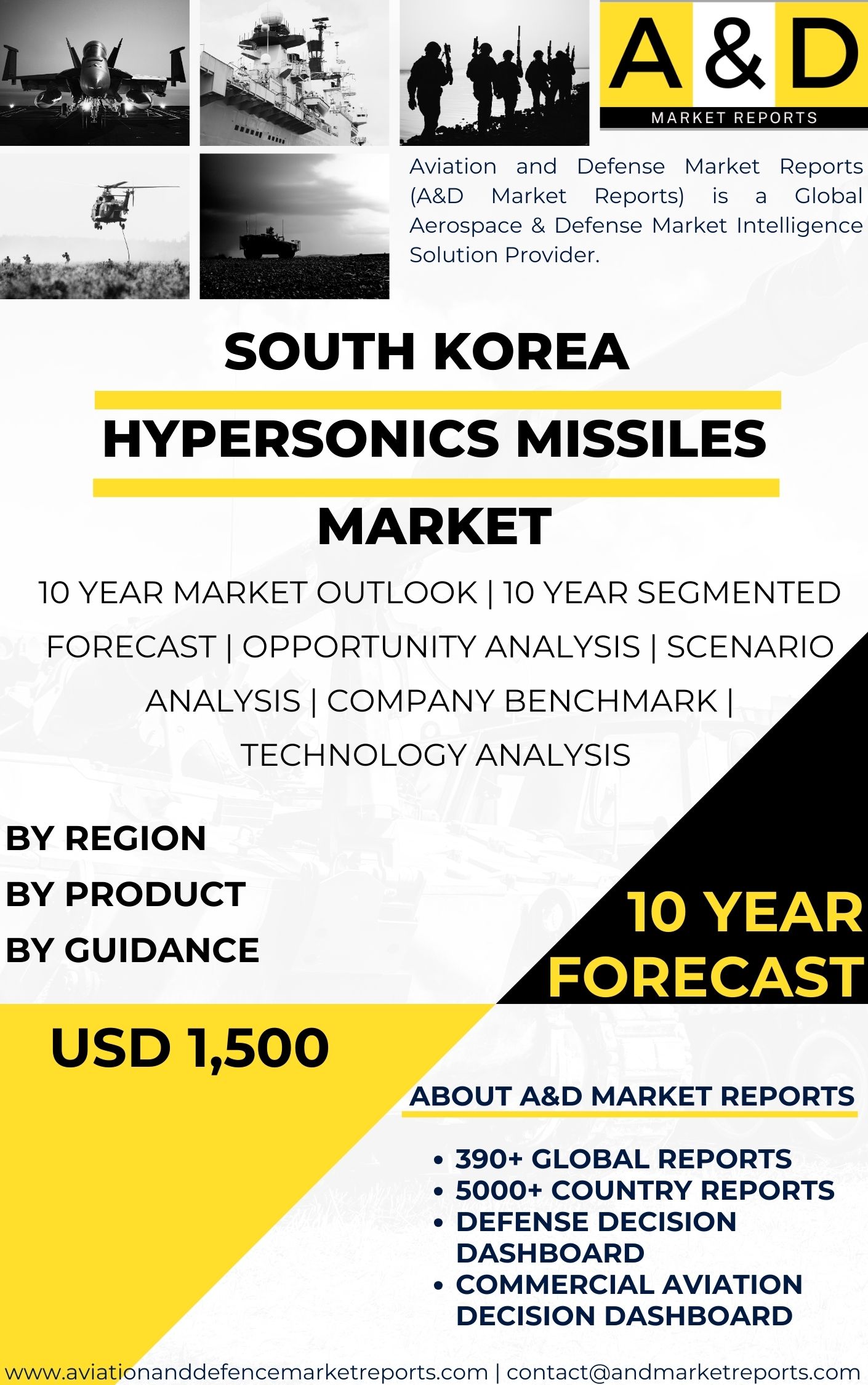
The South Korea hypersonics missiles market is a growing part of the country’s defense sector. Hypersonic missiles offer very high speed and strong strike ability. These weapons help improve deterrence and response capability. South Korea invests in local development and partnerships to strengthen national security.
Understanding Hypersonic Missile Technology
Hypersonic missiles travel faster than Mach 5. This speed makes them hard to detect and intercept. They can maneuver during flight, unlike traditional missiles. These features reduce enemy reaction time and increase strike success.
Regional Security Drivers for the South Korea Hypersonics Missiles Market
Security threats in the region drive market growth. Missile development by nearby adversaries increases defense needs. Hypersonic weapons help South Korea maintain military balance. They also support rapid response options.
Indigenous Development in the South Korea Hypersonics Missiles Market
Local development is a key priority in the South Korea hypersonics missiles market. The government supports research and testing programs. These efforts improve self-reliance and reduce dependence on external suppliers. Local control also protects sensitive defense technologies.
Role of ADD and Defense Companies
The Agency for Defense Development leads research work. Companies such as Hanwha Defense and LIG Nex1 support system design and testing. Their work focuses on propulsion, guidance, and materials.
Key Hypersonic Missile Programs
Hyunmoo-4 Hypersonic Missile
The Hyunmoo-4 is a major project. It is designed for air-launched missions. The missile supports precision strikes at long range. It strengthens the air force’s combat capability.
Ground-Launched Hypersonic Systems
South Korea is also exploring land-based hypersonic missiles. These systems support land deterrence strategies. They improve readiness during high-threat situations.
Strategic Partnerships and Technology Support
South Korea works with trusted defense partners. These partnerships support knowledge sharing and risk reduction. They also help speed up system development and testing.
Hypersonic Missile Defense Efforts
The South Korea hypersonics missiles market includes defensive research. Hypersonic threats are hard to counter. South Korea invests in detection and tracking systems. These efforts aim to improve early warning and response.
Advanced Materials and Propulsion Research
Hypersonic flight creates extreme heat and stress. Engineers focus on heat-resistant materials and strong engines. These technologies also benefit other defense systems.
Technical and Development Challenges
Hypersonic systems face engineering limits. High temperature and pressure complicate design. Continuous testing and advanced facilities are required. Long-term investment supports steady progress.
Strategic Importance of the South Korea Hypersonics Missiles Market
Hypersonic missiles support long-term defense goals. They strengthen deterrence and strike capability. South Korea aims to remain technologically advanced. Hypersonics play a major role in this strategy.
Conclusion
The South Korea hypersonics missiles market is vital to national defense growth. Local development, partnerships, and research drive progress. These systems improve speed, precision, and deterrence. Continued investment will support future readiness and security.