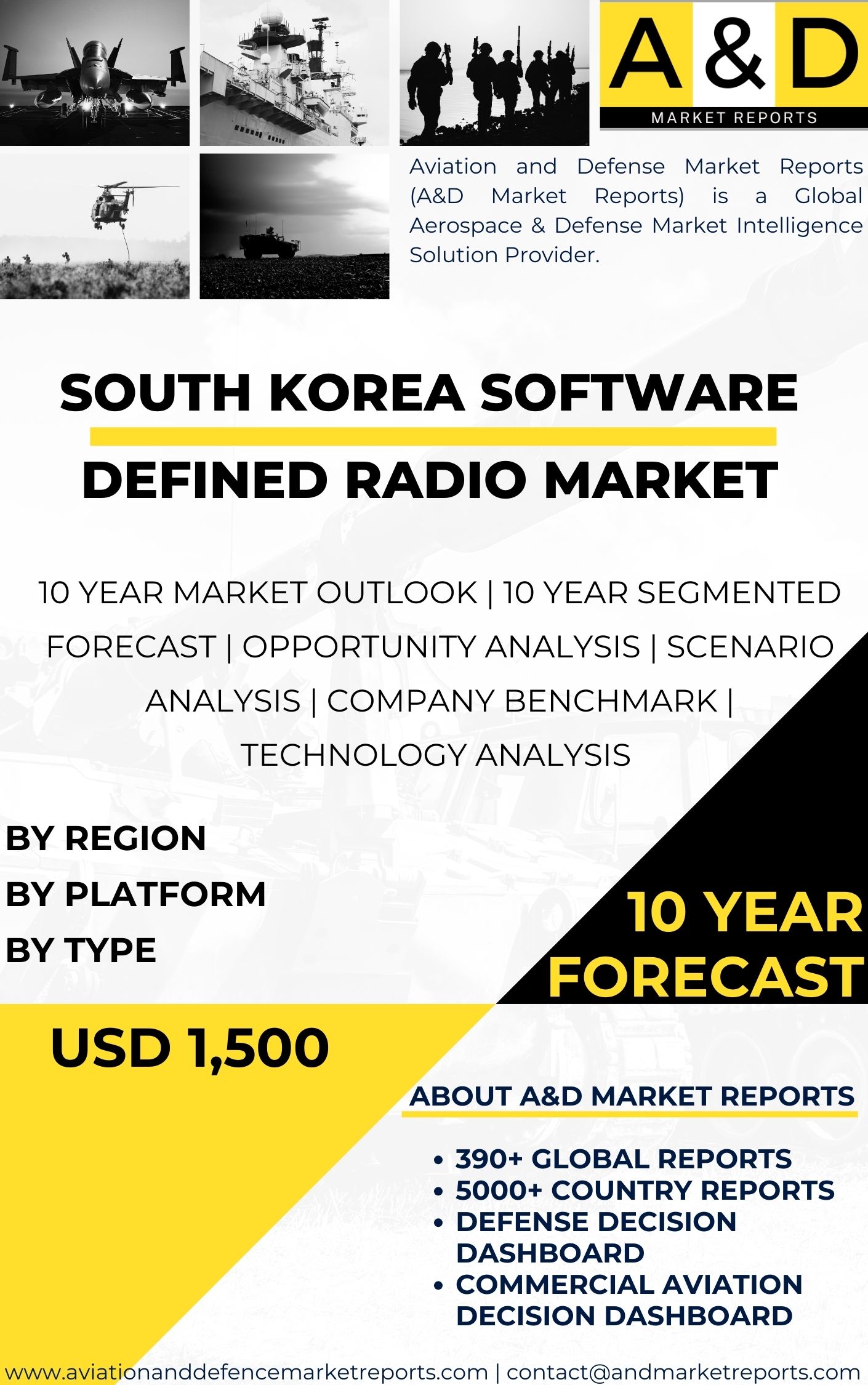
South Korea Software Defined Radio Market

$1,500.00

Enquire Now

The South Korea software-defined radio (SDR) market is a critical segment of the country’s defense and telecommunications industries, providing advanced communication systems that offer flexibility, interoperability, and enhanced security. SDR technology allows radio systems to be reconfigured and adapted through software updates, eliminating the need for hardware modifications and enabling seamless communication across different radio frequencies and networks. South Korea’s focus on indigenous development, strategic partnerships, and technological innovation has positioned it as a notable player in the global SDR market.

Go To Global Report Page Track this market real time on DDD

Description

South Korea Software-Defined Radio Market Overview

The Software Defined Radio Market  is an important part of the defense and telecommunications sectors. Software-defined radios use software instead of fixed hardware.

This approach allows fast updates, better flexibility, and secure communication. These systems support both military and civilian needs.

Understanding Software-Defined Radio Technology

Key Features of SDR Systems

Software-defined radios can change frequency bands through software. They also support multiple waveforms and encryption methods.

This flexibility reduces the need for hardware replacement.

Benefits of SDR Technology

SDR systems improve interoperability. They also support secure and reliable communication in complex environments.

Indigenous Development in the South Korea Software-Defined Radio Market

Role of Domestic Defense Companies

Indigenous development is a major strength of the South Korea software-defined radio market. Local companies design systems to meet national requirements.

LIG Nex1 and Hanwha Systems lead SDR development efforts.

Advantages of Local SDR Production

Domestic production improves supply security. It also allows faster system upgrades and easier integration.

Military Applications of Software-Defined Radio in South Korea

Secure Military Communication

The South Korean military uses SDR systems across land, sea, and air platforms. These radios support secure voice and data exchange.

They also improve situational awareness.

Command and Control Support

SDR systems help commanders maintain control in dynamic conditions. They ensure continuous communication during operations.

Civilian and Telecommunications Use of SDR Technology

Public Safety and Emergency Response

Public safety agencies use SDR systems during emergencies. These radios enable communication across different networks.

This improves coordination during disasters.

Commercial Telecommunications Benefits

Telecom operators benefit from SDR flexibility. The technology supports efficient use of radio spectrum.

Research and Innovation in the South Korea Software-Defined Radio Market

Focus on R&D Programs

South Korea invests heavily in SDR research. Efforts focus on waveform design and signal processing.

Engineers also work to improve data speed and reduce delay.

Performance Improvements

New SDR systems offer better range and efficiency. They also handle crowded radio environments more effectively.

Strategic Partnerships and Collaboration

South Korea partners with foreign technology firms. These partnerships support joint research and system enhancement.

They also help integrate advanced features into local SDR platforms.

Training and Workforce Development

Operator Skill Development

Training is essential for SDR system use. Personnel learn configuration and waveform selection.

Well-trained operators improve system performance.

Security and Encryption Standards

Security remains a top priority in the South Korea software-defined radio market. Authorities enforce strict encryption rules.

These measures protect sensitive data from cyber threats.

Future Outlook of the South Korea Software-Defined Radio Market

The South Korea software-defined radio market will continue to grow. Defense modernization and telecom upgrades will drive demand.

SDR technology will remain vital for secure communication, interoperability, and national security.
Table of content

Table Of Contents

1 Market Introduction

1.1 Market Introduction
1.2 Market Definition
1.3 Market Segmentation
1.4 10 Year Market Outlook

2 Market Technologies

3 Global Market Forecast

3.1 Global Market Forecast
3.2 By Platform
3.3 By Type

4 APAC Market Trends & Forecast

4.1 Drivers, Restraints And Challenges
4.2 PEST
4.3 Market ForecastScenario Analysis
4.3.1 Market Forecast By Platform
4.3.2 Market Forecast By Type
4.4 Scenario Analysis
4.5 Key Companies& Profiling

5 South Korea Analysis

5.1 Current Levels Of Technology Maturation In This Market
5.2 Market ForecastScenario Analysis
5.2.1 Market Forecast By Platform
5.2.2 Market Forecast By Type
5.3 Scenario Analysis
5.4 Country Defense Budget (Historical and 10- year forecast)
5.5 Defense Budget Category Spending- 10- year forecast
5.6 Procurement Analysis
5.7 EXIM Data
5.8 Patents

6 Opportunity Matrix

6.1 By Platform
6.2 By Type

7 Scenario Analysis

7.1 Scenario 1

7.1.1 By Platform (Scenario-1)
7.1.2 By Type (Scenario-1)

7.2 Scenario 2

7.2.1 By Platform (Scenario-2)
7.2.2 By Type (Scenario-2)

8 Company Benchmark

9 Strategic Conclusions

10 About Aviation And Defense Market Reports

Segments

By Platform
By Type

List of Tables

Table1: Global Market Forecast, South Korea Software Defined Radio Market
Table2: APAC Market Forecast, South Korea Software Defined Radio Market
Table3: APAC Market Forecast, By Platform
Table4: APAC Market Forecast, By Type
Table5: APAC, Scenario Analysis
Table6: South Korea Market Forecast, South Korea Software Defined Radio Market
Table7: South Korea Market Forecast, By Platform
Table8: South Korea Market Forecast, By Type
Table9: South Korea, Scenario Analysis
Table 10: South Korea Defense Budget 10 Year Forecast
Table 11: South Korea, Defense Budget Category Spending- 10- year forecast
Table 12: South Korea, Procurement Analysis
Table 13: South Korea, EXIM Data Analysis
Table 14: South Korea, Opportunity Analysis, By Platform
Table 15: South Korea, Opportunity Analysis, By Type
Table 16: South Korea, Scenario Analysis, By Platform
Table 17: South Korea, Scenario Analysis, By Type

List of Figures

Figure 1: Market Segmentation, South Korea Software Defined Radio Market
Figure 2: Key Technology Analysis, South Korea Software Defined Radio Market
Figure 3: Global Market Forecast, South Korea Software Defined Radio Market
Figure 4: APAC, Market Forecast, South Korea Software Defined Radio Market
Figure 5: APAC, Market Forecast, By Platform
Figure 6: APAC, Market Forecast, By Type
Figure 7: APAC, Scenario Analysis
Figure 8: South Korea, Market Forecast, South Korea Software Defined Radio Market
Figure 9: South Korea, Market Forecast, By Platform
Figure 10: South Korea, Market Forecast, By Type
Figure 11: South Korea, Scenario Analysis
Figure 12: South Korea, Defense Budget 10 Year Forecast
Figure 13: South Korea, Defense Budget Category Spending- 10- year forecast
Figure 14: South Korea, Procurement Analysis
Figure 15: South Korea, EXIM Data Analysis
Figure 16: South Korea, Opportunity Analysis, By Platform
Figure 17: South Korea, Opportunity Analysis, By Type
Figure 18: South Korea, Scenario Analysis, By Platform
Figure 19: South Korea, Scenario Analysis, By Type
Figure 20: Company Benchmark

Aviation and Defense Market Reports


TPA | TIA | Consulting | Market Reports | Defense Decision Dashboard


Our Defense Report - Our Team Has Worked on More Than 250+ Individual Products / Markets