
Description
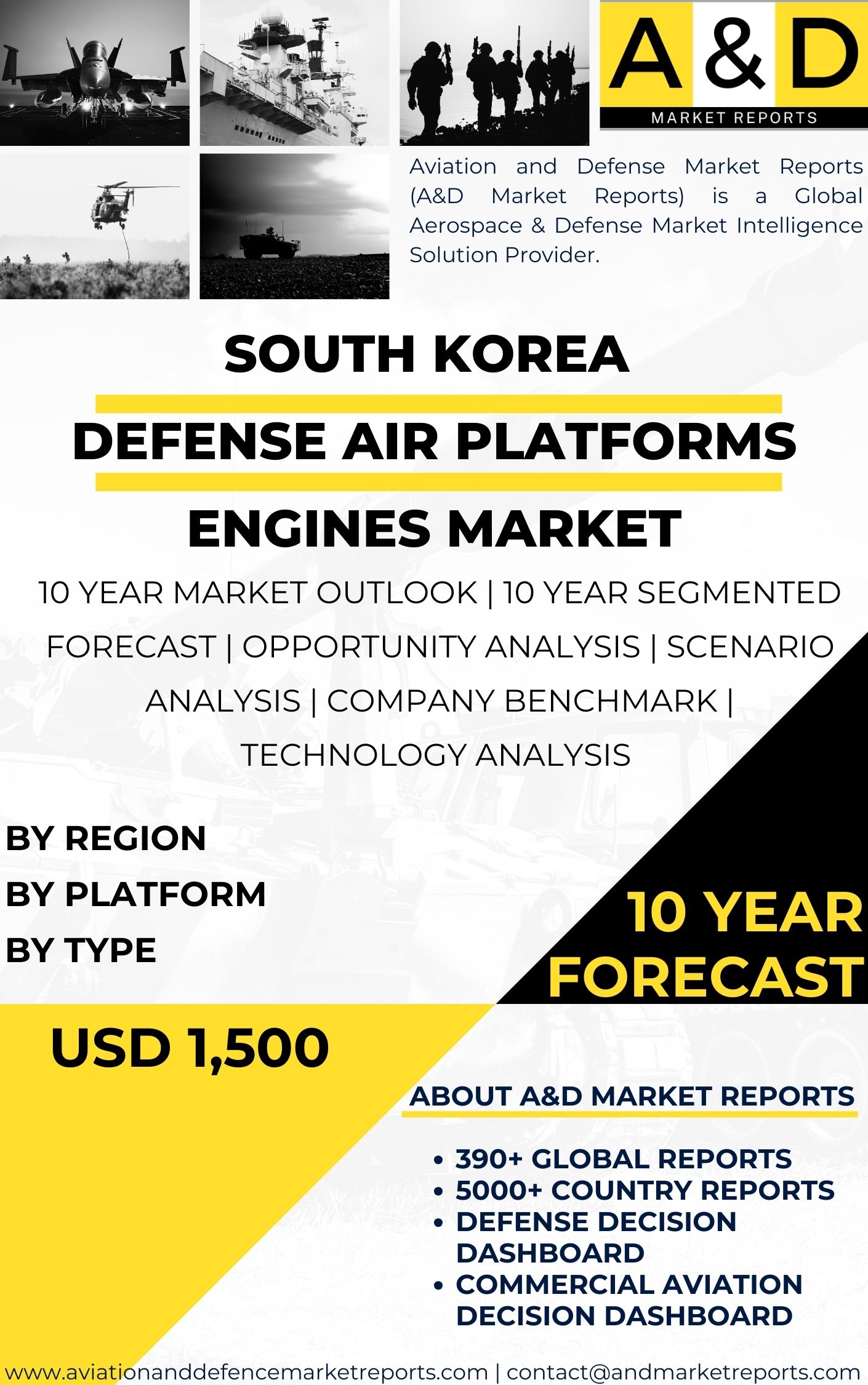
South Korea Defense Air Platforms Engines Market Overview
The South Korea defense air platforms engines market is a critical segment of the national defense industry, providing advanced propulsion systems that power a wide range of military aircraft including fighter jets, transport aircraft, helicopters, and unmanned aerial vehicles. Engine performance directly influences speed, range, payload capacity, and overall mission effectiveness, making it one of the most important components of air power capability. South Korea continues to invest heavily in indigenous development, technological innovation, and strategic partnerships to strengthen this market and enhance long-term defense self-reliance.
Importance of Engines in Defense Air Platforms
Engines are the fundamental power source of all defense air platforms, delivering the thrust and energy required for flight, maneuverability, and sustained operations. In military applications, engines must perform reliably under extreme environmental and combat conditions, including high altitude, temperature variations, and rapid mission cycles. Their efficiency and durability directly affect aircraft performance, operational readiness, and mission success rates. As a result, engine technology remains a core focus area in air defense modernization programs.
Performance and Operational Demands
Defense air platform engines are required to deliver extremely high thrust while maintaining stability, fuel efficiency, and long operational life. These engines must also support advanced capabilities such as stealth operation, reduced thermal signatures, and improved fuel economy to enhance survivability in modern combat environments. High reliability is essential to ensure uninterrupted mission performance during long-range and high-intensity operations. These demanding requirements continue to drive innovation in engine design and materials engineering.
Indigenous Development in the South Korea Defense Air Platforms Engines Market
Indigenous development is a major growth driver in the South Korea defense air platforms engines market, with key players such as Korea Aerospace Industries (KAI) and Hanwha Aerospace leading national engine development programs. These companies focus on designing and producing engines tailored to meet the specific operational requirements of South Korea’s armed forces. Local development enhances technological independence, improves supply chain security, and builds long-term engineering expertise within the country. This strategy is essential for reducing reliance on foreign engine suppliers.
Role in South Korean Military Operations
Military operations in South Korea heavily depend on reliable and high-performance engines to maintain air superiority and operational readiness across all air platforms. Fighter jets require powerful engines for speed and agility, while transport aircraft and helicopters rely on stable and efficient engines for long-duration missions and logistics support. These engines ensure rapid deployment, effective combat response, and continuous air support during both peacetime and conflict scenarios. The market plays a central role in sustaining overall air force capability.
Research and Development Advancements
South Korea invests significantly in research and development to improve engine efficiency, durability, and performance across defense air platforms. Engineers are focusing on advanced materials, improved combustion systems, and enhanced aerodynamics to extend engine lifespan and reduce maintenance requirements. Additional efforts are being made to lower noise levels and thermal emissions, which are critical for stealth and operational safety. Continuous R&D ensures that South Korea remains competitive in advanced aerospace propulsion technologies.
Strategic Partnerships and Collaboration
Strategic partnerships between domestic companies, research institutions, and international defense organizations play an important role in accelerating engine technology development. These collaborations facilitate knowledge transfer, joint research programs, and system integration across multiple platforms. They also help improve manufacturing efficiency and support the development of next-generation propulsion systems. Such partnerships strengthen South Korea’s aerospace ecosystem and enhance global competitiveness.
Maintenance and Workforce Training
Proper maintenance and skilled workforce training are essential for ensuring the long-term reliability and performance of defense air platform engines. Regular inspection schedules, diagnostics, and preventive maintenance practices are followed to minimize operational risks and extend engine life. Specialized training programs equip technicians with the skills needed to manage complex propulsion systems effectively. This focus on maintenance and training ensures high levels of operational readiness and safety.
Safety and Environmental Considerations
Safety is a top priority in the operation of defense air platform engines, with strict aviation standards governing performance, maintenance, and operational procedures. In addition to safety, environmental considerations such as emissions reduction and noise control are becoming increasingly important in engine development. South Korea is actively working to align with global sustainability standards while maintaining high defense capability. These measures ensure safer, cleaner, and more efficient air operations.
Conclusion
The South Korea defense air platforms engines market is essential for maintaining strong and reliable air power capabilities across all military aviation platforms. Indigenous development, continuous innovation, and strategic partnerships are driving steady market growth and technological advancement. From fighter jets to transport aircraft and helicopters, advanced engine systems remain central to mission success. Ongoing investment in engine technology will continue to strengthen South Korea’s defense readiness and aerospace leadership in the years ahead.