
Description
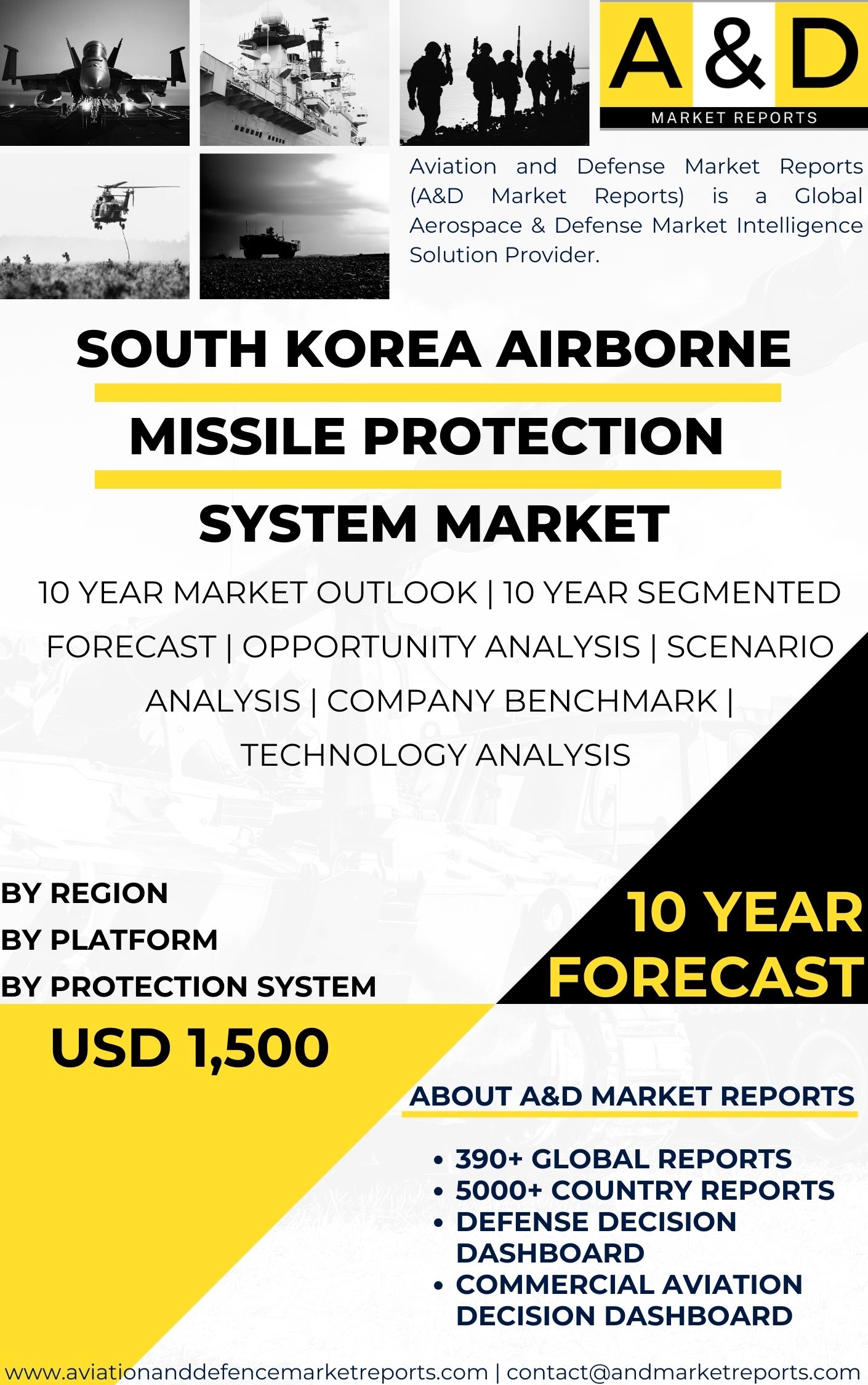
South Korea Airborne Missile Protection System Market Overview
The South Korea airborne missile protection system market is a critical segment of the country’s aerospace and defense industry, focused on enhancing the survivability and operational effectiveness of military aircraft in hostile environments. These systems are designed to detect, track, and counter incoming missile threats during combat missions, ensuring higher mission success rates and improved pilot safety. With increasing airspace threats and modern warfare complexities, South Korea is investing in advanced indigenous technologies to strengthen this market and improve self-reliance in airborne defense systems.
Role of Airborne Missile Protection Systems
Airborne missile protection systems play a vital role in modern aerial warfare by identifying and neutralizing incoming missile threats before they can strike an aircraft. These systems provide early warning and automated countermeasure responses, giving pilots crucial time to react and execute evasive maneuvers. In the South Korea airborne missile protection system market, emphasis is placed on speed, accuracy, and reliability to ensure effective defense against both surface-to-air and air-to-air missile threats.
Core Technologies Used
These protection systems are built using a combination of advanced sensors, electronic warfare jammers, and decoy mechanisms to protect aircraft from missile attacks. Sensors detect and classify incoming threats at long ranges, while jammers disrupt missile guidance systems to reduce targeting accuracy. Decoys are deployed to mislead missiles away from the aircraft, creating a layered defense system where each technology works together to maximize survivability.
Indigenous Development in the South Korea Airborne Missile Protection System Market
Indigenous development is a key focus area in the South Korea airborne missile protection system market, with leading defense companies such as LIG Nex1 and Hanwha Defense playing a major role in system design and production. This domestic approach strengthens national control over critical defense technologies while reducing dependence on foreign suppliers. It also enables customization of systems to meet specific operational requirements of the South Korean Air Force.
Military Use and Operational Importance
The South Korean military relies heavily on airborne missile protection systems to safeguard fighter jets, transport aircraft, and special mission platforms during operations. These systems are essential for ensuring aircraft survivability in contested airspace where missile threats are highly advanced and unpredictable. The South Korea airborne missile protection system market therefore plays a central role in enhancing mission readiness and strengthening overall air defense capabilities.
Research and Development Activities
South Korea continues to invest significantly in research and development to enhance detection range, response speed, and system accuracy in airborne protection technologies. Engineers are working to improve integration between sensors, countermeasure systems, and onboard avionics to create more coordinated defense responses. Reducing false alarms and improving real-time threat assessment are also key priorities in ongoing development efforts.
Strategic Partnerships and Collaboration
Strategic partnerships between defense manufacturers, government agencies, and research institutions are essential for advancing airborne missile protection technologies in South Korea. These collaborations enable knowledge sharing, joint testing programs, and faster innovation cycles. They also contribute to improved system reliability and ensure compatibility with next-generation aircraft platforms.
Testing, Quality Control, and Safety Standards
Strict testing and quality assurance processes are applied to ensure the effectiveness and reliability of airborne missile protection systems under real combat conditions. Each system undergoes extensive validation, including simulation-based testing and live scenario evaluations, to confirm performance standards. These safety measures help reduce operational risks and ensure consistent system behavior during critical missions.
Civilian Technology Adaptation
While primarily designed for military applications, certain technologies developed for airborne protection systems are also adapted for civilian aviation uses. Specialized aircraft such as firefighting planes and emergency response aircraft benefit from enhanced situational awareness and safety systems. This cross-sector application supports broader innovation and expands the technological impact of defense research.
Conclusion
The South Korea airborne missile protection system market is a vital component of national air defense strategy, ensuring aircraft survivability in increasingly complex threat environments. Through strong indigenous development, advanced research initiatives, and strategic collaboration, South Korea continues to enhance the effectiveness of its airborne defense technologies. As aerial threats evolve, continuous innovation in protection systems will remain essential for maintaining mission success and national security.