
Description
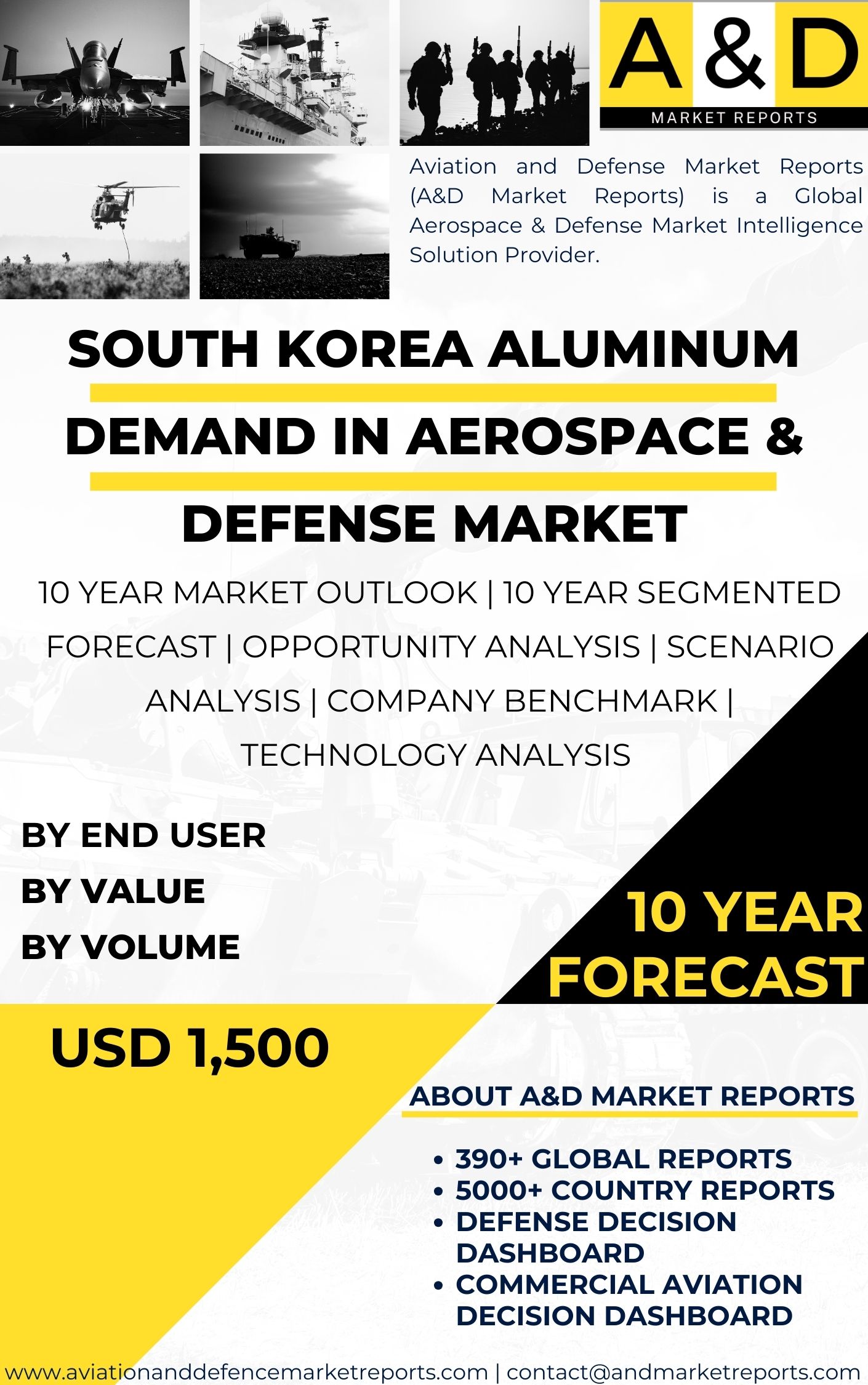
South Korea Aluminum Demand in Aerospace and Defense Industry Overview
The South Korea Aluminum demand aerospace and defense industry is increasing steadily as the country continues to strengthen its military capabilities and expand its aerospace manufacturing sector. Aluminum remains one of the most widely used materials in defense and aviation applications because of its excellent combination of lightweight properties, structural strength, durability, and corrosion resistance. As South Korea invests in advanced military platforms, indigenous aircraft programs, and next-generation defense technologies, the need for high-quality aluminum products continues to rise. The material plays a crucial role in improving performance, reducing overall system weight, and supporting long operational lifecycles across a wide range of defense applications.
Role of Aluminum in Aerospace and Defense Applications
Aluminum serves as a foundational material in aerospace and defense manufacturing due to its ability to deliver high strength while maintaining low weight. In aircraft structures, aluminum is extensively used in fuselages, wings, internal frameworks, and structural components where weight reduction directly contributes to improved fuel efficiency, speed, maneuverability, and payload capacity. In military applications, aluminum is utilized in armored vehicles, missile systems, naval platforms, and support equipment. Its natural resistance to corrosion helps protect critical systems operating in challenging environments, including coastal regions, humid climates, and harsh operational conditions. These characteristics make aluminum indispensable for modern military and aerospace platforms.
Technological Self-Reliance Driving Aluminum Demand
The aluminum demand in South Korea’s aerospace and defense industry is closely linked to the nation’s commitment to technological self-reliance and indigenous defense production. Major programs such as advanced fighter aircraft development, unmanned aerial vehicle production, and next-generation defense systems require significant quantities of aerospace-grade aluminum. Domestic manufacturing capabilities enable South Korea to reduce dependence on imported materials while ensuring secure supply chains for strategic defense projects. Continued investment in local aerospace production facilities and advanced material processing technologies is further increasing demand for specialized aluminum products and alloys across the defense sector.
Defense Modernization and Material Requirements
South Korea’s ongoing military modernization programs are creating strong demand for lightweight yet durable materials such as aluminum. The country continues to upgrade its air force, naval fleet, armored vehicle inventory, and missile systems to address evolving security requirements. Modern defense platforms require materials that provide structural integrity without compromising mobility, fuel efficiency, or operational performance. Aluminum offers an ideal balance between strength and weight, making it particularly suitable for advanced military systems. As modernization efforts accelerate, aluminum consumption is expected to increase across multiple defense segments, supporting enhanced protection, maneuverability, and mission effectiveness.
International Collaboration and Manufacturing Activity
South Korea’s participation in international defense cooperation programs and aerospace partnerships also contributes to growing aluminum demand. Joint development projects, technology-sharing agreements, and multinational production initiatives often involve the manufacturing of components, structures, and assemblies that rely heavily on aluminum materials. The metal’s versatility, machinability, and compatibility with modern production methods make it a preferred choice for both domestic and export-oriented aerospace manufacturing. Increased participation in global supply chains and defense exports is further strengthening demand for high-performance aluminum products throughout the country’s aerospace and defense ecosystem.
Advancements in Aluminum Research and Development
Research and development activities are continuously improving the performance characteristics of aluminum materials used in aerospace and defense applications. South Korean manufacturers and research institutions are developing advanced aluminum alloys that offer higher strength, improved fatigue resistance, and better performance under extreme operating conditions. Innovations in manufacturing techniques, including precision forming, additive manufacturing, and advanced heat treatment processes, are enhancing product quality and consistency. These advancements help meet stringent aerospace and military standards while supporting the production of increasingly sophisticated defense platforms and aviation systems.
Future Outlook for Aluminum Demand in South Korea Aerospace and Defense Industry
The aluminum demand in South Korea’s aerospace and defense industry is expected to maintain strong growth over the coming years. Continued investments in military modernization, indigenous aircraft programs, unmanned systems, and advanced defense technologies will sustain long-term material requirements. Growing emphasis on lightweight structures, fuel efficiency, and operational performance will further increase the importance of aluminum across air, land, and naval applications. Supported by ongoing innovation, domestic manufacturing expansion, and international collaboration, aluminum will remain a critical material for strengthening South Korea’s aerospace capabilities, defense readiness, and industrial competitiveness in the global market.