
Description
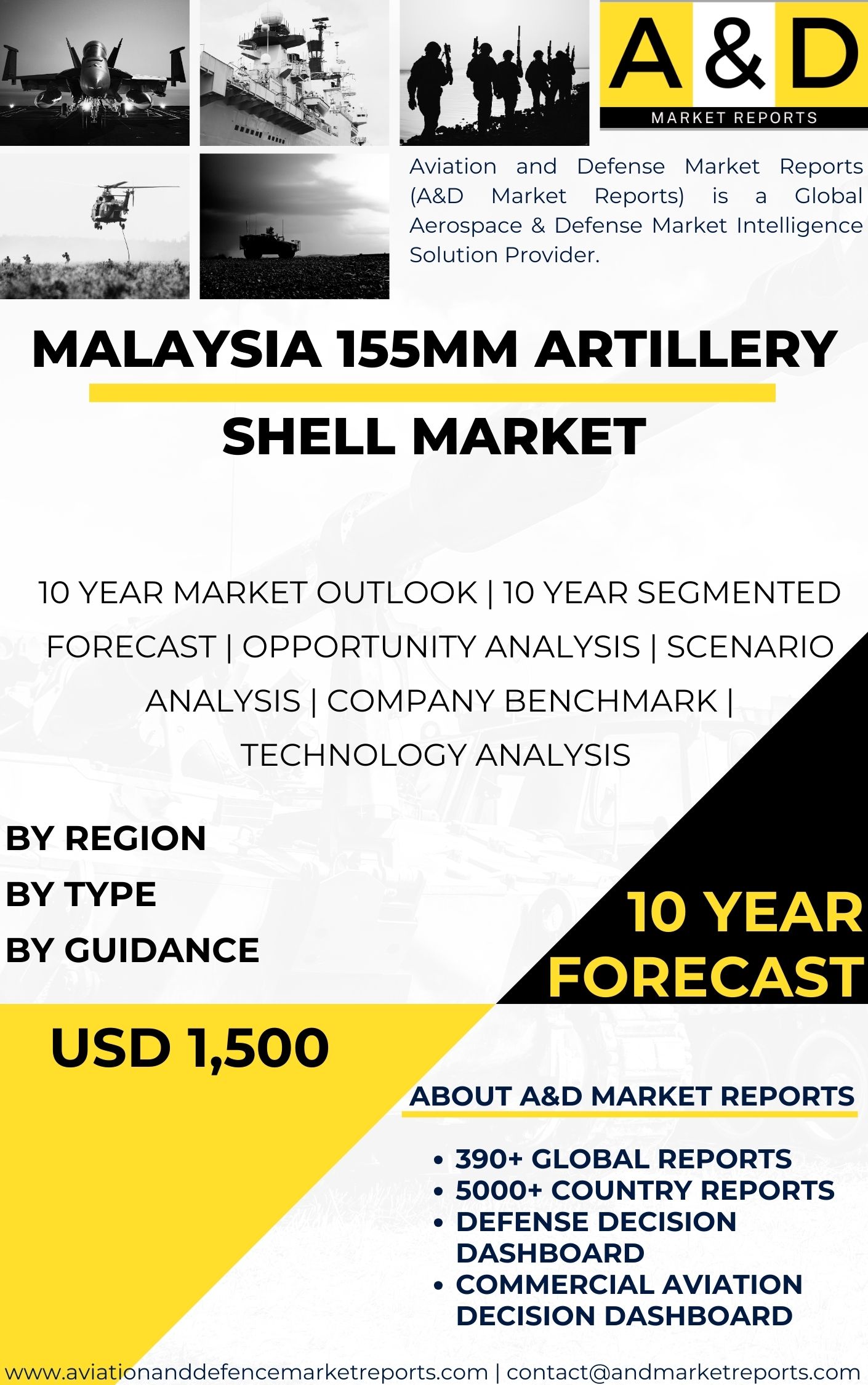
The 155mm artillery shell market in Malaysia reflects a dynamic and evolving segment of the country’s defense industry, driven primarily by ongoing modernization efforts within the Malaysian Armed Forces. The demand for these munitions aligns with Malaysia?s strategic goal to improve its artillery capabilities through the acquisition of sophisticated systems that boost firepower, mobility, and precision. Malaysian defense entities have shown increasing interest in partnerships with established international manufacturers to enhance indigenous artillery production and technological innovation. For instance, local defense firms such as Advanced Defense Systems actively collaborate with foreign manufacturers to introduce cutting-edge artillery solutions into the Malaysian market, aiming to combine local manufacturing expertise with advanced technology.
In recent developments, the Malaysian military has shown preference for self-propelled howitzers equipped with 155mm caliber guns, exemplified by the adoption of Slovak-made EVA M2 howitzers. These artillery systems, notable for their mobility and compatibility with Malaysia?s operational requirements, signal the direction of the artillery munitions market towards integrating highly mobile and technologically advanced platforms. The EVA M2 howitzer’s appeal lies not only in its firepower but also in its lighter weight and maneuverability, making it suitable for the geographic and strategic needs of Malaysian forces. This demonstrates the interplay between artillery shell demand and the type of artillery platforms being deployed, as shells must be compatible with the systems in service.
Technological trends influencing the 155mm artillery shell market in Malaysia include the increasing emphasis on precision and extended range capabilities. Globally, the 155mm caliber is favored because of its versatility, allowing a broad array of shell types such as high-explosive, smoke, illumination, and increasingly, precision-guided munitions. Malaysia?s artillery ammunition procurement similarly follows this global pattern, with a focus on enhancing accuracy and lethality while minimizing collateral damage. This growing demand for smart and guided munitions aligns with broader defense modernization goals to field artillery systems capable of digital fire control and network interoperability.
The market environment is also shaped by geopolitical considerations and the strategic landscape in Southeast Asia. The region?s complex security dynamics, including maritime territorial disputes and the need for credible deterrence forces on land, have prompted Malaysia to prioritize a robust artillery capability as part of its comprehensive defense posture. This context elevates the importance of reliable and effective 155mm artillery shells, which form the backbone of indirect fire support in ground operations. The Malaysian government?s commitment to upgrading its artillery arsenal is reflected in substantial investment discussions and procurement initiatives aimed at both acquiring new shells and developing local production capacity.
Local industrial capability expansion is another vital market facet, with efforts underway to establish production lines capable of meeting the country?s ammunition needs. Advanced manufacturing technologies, including forging presses designed for artillery shell production, have been introduced or planned in Malaysia to reduce reliance on imports and increase self-sufficiency in defense material. This approach allows Malaysia not only to secure the supply chain for critical munitions but also to foster technology transfer and skill development within its defense industrial base.
The competitive landscape includes several international suppliers actively promoting their 155mm artillery shells and related systems to Malaysian defense buyers. French and European companies, among others, are leveraging partnerships with Malaysian firms to present integrated solutions that combine hardware and ammunition tailored to local operational demands. These collaborations often culminate in agreements and memorandums of understanding meant to solidify long-term cooperation and technology sharing, reflecting a market trend toward joint ventures and localized defense ecosystems.
In essence, the 155mm artillery shell market in Malaysia represents a blend of increasing demand driven by strategic imperatives, technological advancement trends, and a push toward indigenization of production capabilities. The combination of imported artillery systems with compatible munitions, alongside efforts to build local manufacturing capacities, signals a comprehensive approach toward enhancing national artillery resources. Malaysia?s focus on flexible, mobile, and precise artillery systems underscores the critical role that these shells play in ensuring effective land defense and force projection.
Future prospects for the market include continued expansion as the Malaysian Armed Forces pursue upgrades and replacement of aging artillery stocks with modern calibers of 155mm shells tailored to new weapon systems. The emphasis on precision-guided and smart artillery ammunition, coupled with digital fire control integration, positions this market to evolve technologically and strategically. Moreover, the regional security environment in Southeast Asia will likely sustain demand, reinforcing Malaysia’s commitment to maintaining a capable and modern artillery component within its defense framework. This evolving landscape presents opportunities for both domestic industry growth and international collaboration, securing the 155mm artillery shell market as a significant and strategic segment of Malaysia?s military modernization ambitions.