
Description
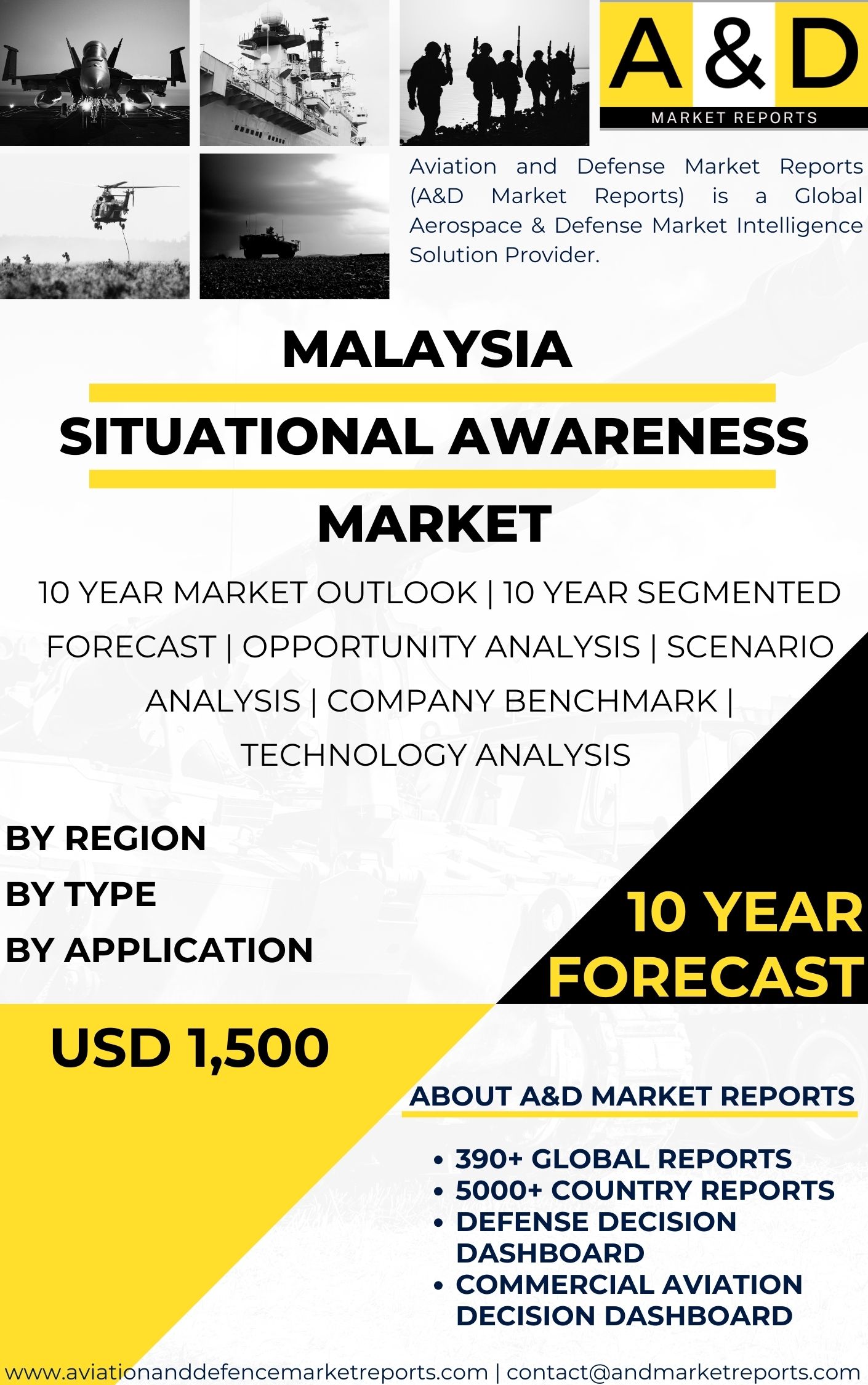
Malaysia Situational Awareness Market is developing within a dynamic environment shaped by technological advancements and rising demand across defense, security, transportation, and critical infrastructure. This market centers on collecting, processing, and interpreting data from diverse sources to support accurate decision-making and improve operational outcomes. Government agencies and private organizations rely on situational awareness systems to detect emerging threats, anticipate changes, and respond quickly to evolving conditions. Growth is heavily supported by increased investment in homeland security, border management, cyber defense, and disaster response initiatives.
Technology Integration in the Malaysia Situational Awareness Market
Technological convergence plays a pivotal role in the Malaysia Situational Awareness Market. The integration of artificial intelligence, machine learning, big data analytics, IoT platforms, and sensor networks provides comprehensive and real-time operational visibility. Malaysia’s accelerating digital transformation, alongside growing infrastructure development, has expanded the adoption of these technologies in smart city programs, transport networks, and industrial facilities. These solutions support predictive analytics, allowing organizations to take proactive measures to mitigate threats and operational risks.
Defense and Maritime Applications in the Malaysia Situational Awareness Market
Security priorities and regional geopolitical realities elevate the importance of the Malaysia Situational Awareness Market for defense and maritime domains. Advanced radar systems, satellite imaging, and unmanned aerial vehicles enhance monitoring of borders, territorial waters, and maritime routes. Multi-domain situational awareness integrates land, air, sea, and cyber data streams into a single operational view. Malaysia’s ongoing defense modernization efforts reinforce demand for integrated platforms capable of delivering actionable intelligence with minimal delay.
Public Safety and Emergency Response in the Malaysia Situational Awareness Market
The Malaysia Situational Awareness Market is increasingly vital for public safety, emergency services, and urban management. Data collected from CCTV networks, IoT sensors, drones, and social media monitoring tools assists authorities in managing large-scale events, ensuring crowd safety, and coordinating responses during emergencies or natural disasters. With rapid urbanization and larger population centers, situational awareness tools support efficient traffic control, incident detection, and real-time communication among response teams.
Commercial and Cybersecurity Demand in the Malaysia Situational Awareness Market
Commercial industries significantly drive the Malaysia Situational Awareness Market. Manufacturing, logistics, energy, telecommunications, and banking industries deploy situational awareness tools to safeguard physical assets and strengthen cyber defenses. Growing cyber threats have made cyber situational awareness a critical priority, enabling early detection of attacks, network monitoring, and regulatory compliance. For Malaysia’s financial and digital sectors, these capabilities are essential for protecting sensitive data and maintaining operational resilience.
Key Growth Drivers
Multiple factors accelerate the expansion of the Malaysia Situational Awareness Market. Advancements such as edge computing and 5G enhance the speed, precision, and reliability of data analysis and communication. Collaboration among Malaysian technology firms, global solution providers, and academic institutions fuels innovation and capability development. Government policies promoting digital transformation, defense modernization, smart infrastructure, and public safety improvement further strengthen the market’s growth trajectory.
Challenges Affecting the Malaysia Situational Awareness Market
Despite strong momentum, the Malaysia Situational Awareness Market faces challenges, including the technical complexity of integrating diverse data systems and the high investment costs associated with advanced platforms. Skilled personnel are required to manage, operate, and maintain these systems. Data privacy, civil liberties, and cybersecurity concerns must also be balanced with the need for enhanced surveillance and operational oversight. Continued investment in workforce training, regulatory development, and secure technology deployment remains essential.
Competitive Landscape
The Malaysia Situational Awareness Market features a competitive environment composed of local companies and leading multinational firms. These include hardware manufacturers, software developers, and system integrators delivering customizable, scalable solutions tailored to sector-specific needs. Flexibility, interoperability, and the ability to expand with evolving threats are increasingly important differentiators for providers in the Malaysian market.
Strategic Importance and Future Outlook
Overall, the Malaysia Situational Awareness Market highlights the national recognition of the need for integrated systems that unify physical, digital, and operational insights. Growing complexity in security environments and rapid technological advancement continue to drive innovation and adoption across sectors. As Malaysia deepens its digital transformation and strengthens national resilience, situational awareness technologies will remain essential for protecting assets, supporting public safety, and enabling informed strategic decision-making. This progression positions Malaysia to leverage situational awareness as a cornerstone in its broader security framework and digital economy ambitions.