
Description
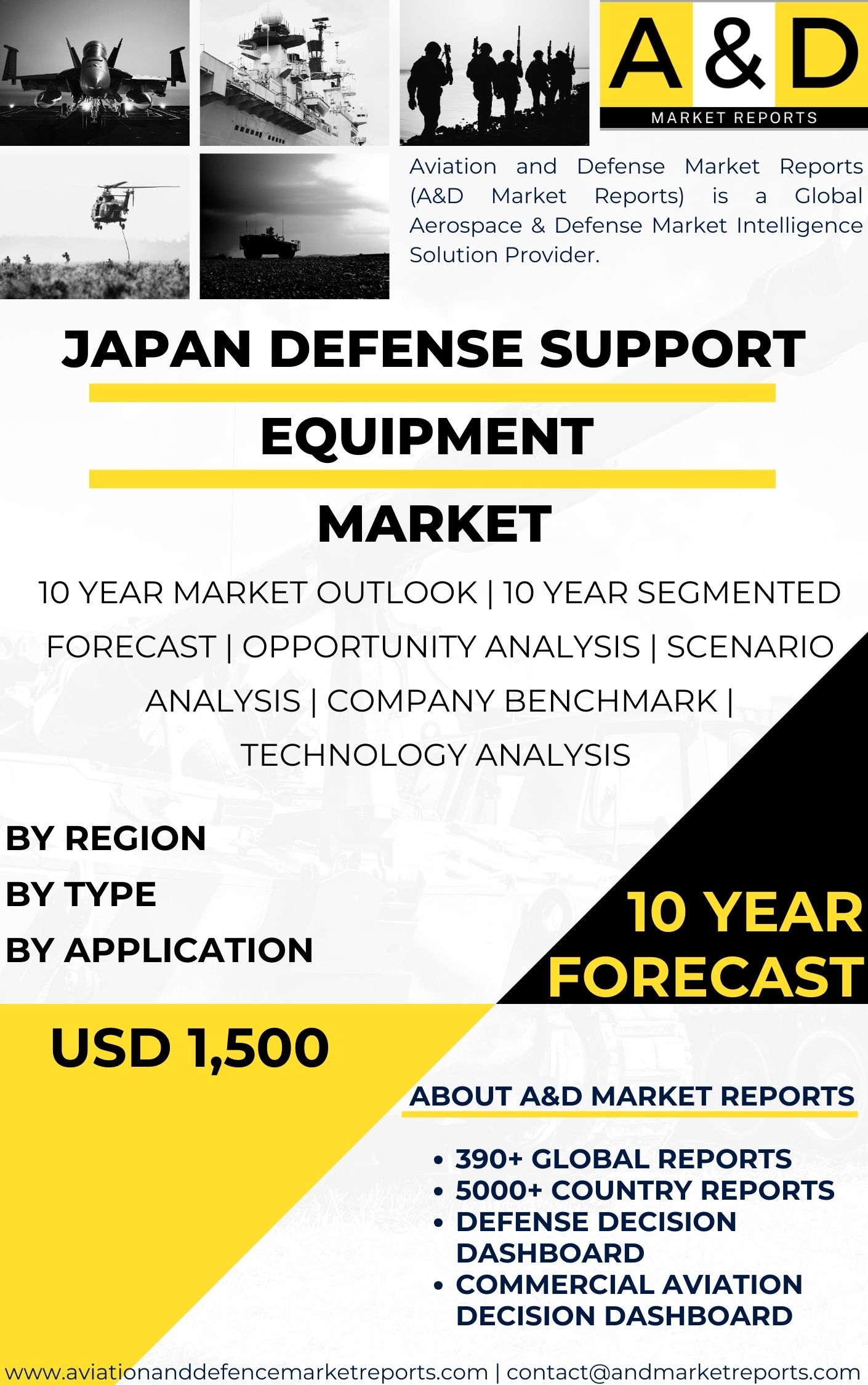
Japan Defense Support Equipment Market Overview is a strategically important segment of the country’s defense ecosystem, focused on ensuring operational readiness, sustainment, and efficiency of the Japan Self-Defense Forces. This market covers equipment that supports daily military operations rather than frontline combat, making it essential for force availability and mission continuity. Demand is closely linked to government defense spending, modernization initiatives, and regional security considerations that emphasize preparedness and deterrence.
Japan Defense Support Equipment Market Scope and Applications
The market includes a wide range of systems such as ground support vehicles, power generation units, fuel handling systems, maintenance and repair tools, and auxiliary logistics equipment. These assets support air, land, and naval forces by enabling aircraft servicing, vehicle maintenance, cargo handling, and rapid deployment. Ground support equipment plays a critical role in sustaining operations at bases, ports, and forward locations, ensuring that combat platforms remain mission-ready.
Japan Defense Support Equipment Market Technology Trends
Technological advancement is a key driver in this market. Japan’s defense industry is integrating automation, digital monitoring, and modular designs to improve reliability and flexibility. Equipment is increasingly designed for ease of maintenance, longer service life, and adaptability across multiple mission profiles. While diesel-powered systems remain prominent due to their durability, there is growing interest in energy-efficient solutions and digitally enabled systems that support predictive maintenance and asset monitoring.
Japan Defense Support Equipment Market Industrial Landscape
Japan benefits from a balanced industrial structure that includes large defense manufacturers and specialized smaller firms. Major companies contribute system integration expertise and large-scale production capabilities, while niche players focus on customization and innovation. Government-backed collaboration and selective international partnerships strengthen the supply chain and allow access to advanced technologies while maintaining security and domestic control.
Japan Defense Support Equipment Market Strategic Drivers
Regional geopolitical tensions in the Asia-Pacific reinforce the importance of logistics, maintenance, and sustainment capabilities. Japan’s defense strategy recognizes that effective support equipment is foundational to combat readiness. As a result, procurement priorities extend beyond weapons systems to include infrastructure and auxiliary equipment that enable prolonged and flexible military operations across diverse environments.
Market Sustainability and Efficiency
Sustainability considerations are gaining importance in procurement decisions. Energy consumption, emissions, and lifecycle costs increasingly influence equipment design and selection. Japan’s focus on efficiency supports the adoption of advanced materials, improved power management systems, and condition-based maintenance technologies that reduce downtime and extend equipment lifespan.
Market Challenges and Outlook
The market faces challenges such as budgetary discipline, regulatory complexity, and the need to balance domestic production with controlled imports. Supply chain risks and compliance with strict safety and export regulations also shape market dynamics. Despite these constraints, rising defense budgets and continued modernization provide a stable growth outlook.
Market Outlook
Overall, the Defense Support Equipment market in Japan remains a critical pillar of national defense capability. Its evolution reflects a strong emphasis on readiness, technological sophistication, and operational resilience. Continued investment in modern, reliable, and efficient support systems will ensure that the Japan Self-Defense Forces maintain high levels of effectiveness in an increasingly complex security environment.