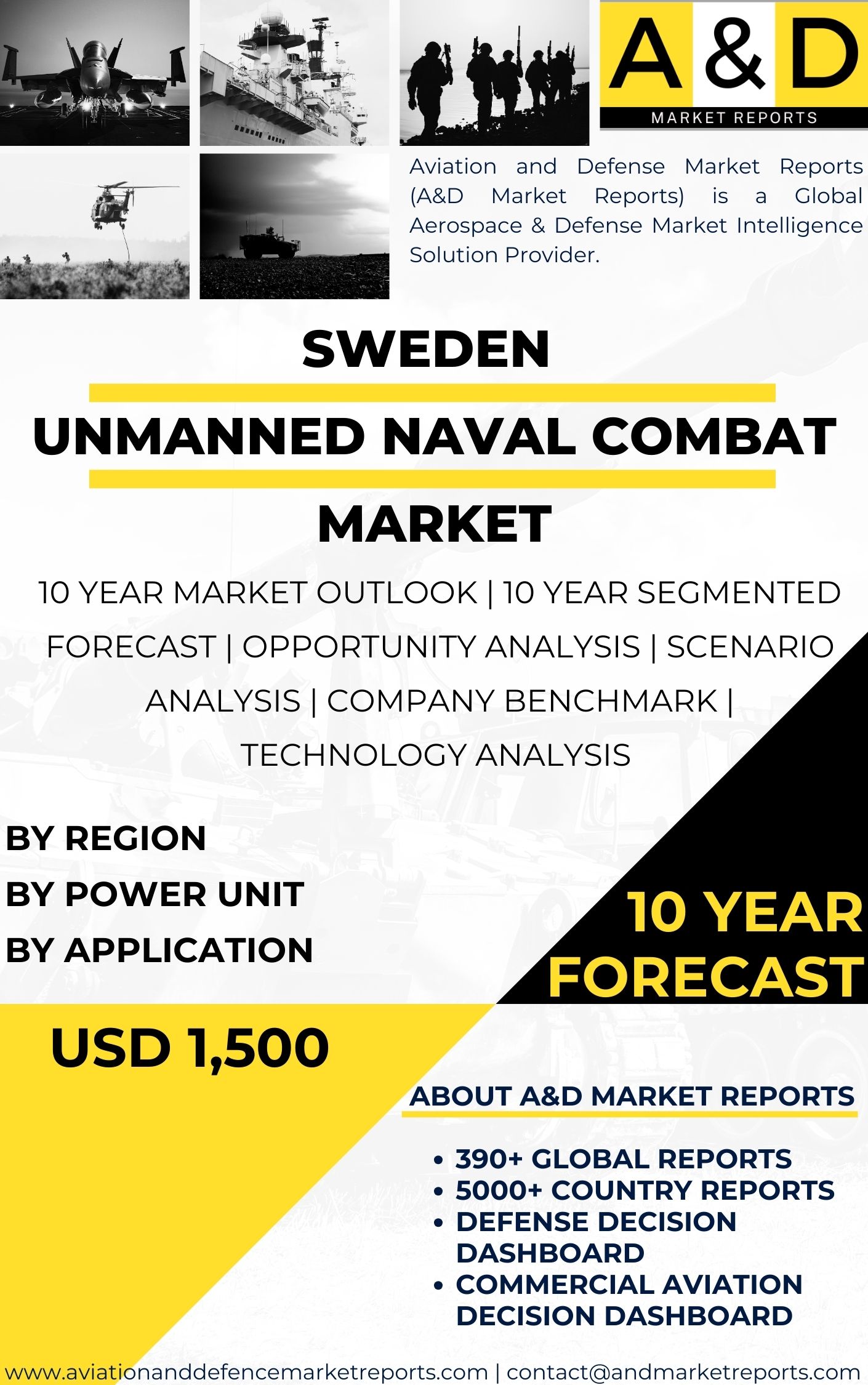
Sweden Unmanned Naval Combat Market

$1,500.00

Enquire Now

The unmanned naval combat market in Sweden reflects a dynamic and rapidly evolving sector driven by the country?s strategic focus on modernizing its naval capabilities with cutting-edge autonomous technologies. This market encompasses various unmanned systems including surface vessels, underwater vehicles, and aerial drones designed for a wide range of operational roles such as surveillance, reconnaissance, mine countermeasures, electronic warfare, and offensive strike missions. Sweden?s naval forces increasingly rely on these unmanned platforms to extend their operational reach and presence in maritime domains without exposing human crews to risk, while enhancing situational awareness and reaction capabilities across vast and contested waters.

Go To Global Report Page Track this market real time on DDD

Description

The unmanned naval combat market in Sweden reflects a dynamic and rapidly evolving sector driven by the country?s strategic focus on modernizing its naval capabilities with cutting-edge autonomous technologies. This market encompasses various unmanned systems including surface vessels, underwater vehicles, and aerial drones designed for a wide range of operational roles such as surveillance, reconnaissance, mine countermeasures, electronic warfare, and offensive strike missions. Sweden?s naval forces increasingly rely on these unmanned platforms to extend their operational reach and presence in maritime domains without exposing human crews to risk, while enhancing situational awareness and reaction capabilities across vast and contested waters.

Sweden’s defense industry, led by firms like Saab, plays a pivotal role in this sector through the development and manufacturing of versatile unmanned combat boats and submarines equipped with advanced autonomy and combat management systems. These platforms integrate multiple mission capabilities, allowing them to perform tasks from patrol and intelligence gathering to mine hunting and coordinated strike operations. The combat boats from Saab?s Docksta shipyard are an example of leveraging high maneuverability, advanced sensor suites, and weapons systems suitable for littoral and open sea conditions, aligning well with Sweden’s maritime defense needs.

Technological innovation is central to the Swedish unmanned naval combat market. The efforts include development of comprehensive autonomous control systems that enable safe, reliable, and interoperable operations for unmanned surface and underwater vessels. These systems support a broad spectrum of missions such as intelligence gathering, target acquisition, reconnaissance (ISTAR), electronic warfare, as well as search and rescue and logistical support. The integration of artificial intelligence and networked operations enhances the combat effectiveness of unmanned platforms, enabling them to operate collaboratively in swarms or coordinated units, thereby offering strategic advantages in layered maritime defense scenarios.

Geopolitical factors and regional security concerns significantly influence market growth. Sweden’s geographical location and its interests in safeguarding maritime routes, territorial waters, and resource-rich marine areas motivate continuous investments in naval autonomy. The complexity of modern maritime threats, including asymmetric challenges such as piracy and underwater mines, drives the need for unmanned systems that can perform high-risk missions with persistence and precision. These systems allow for rapid deployment and adaptive responses to emerging threats, ensuring resilience and situational dominance in contested seaways.

The market is also shaped by increasing defense budgets aimed at modernizing Sweden?s naval fleet. The Swedish Defence Materiel Administration has been actively procuring new unmanned combat boats and expanding the capabilities of its naval forces with state-of-the-art platforms that emphasize flexibility, survivability, and interoperability with conventional naval assets. This approach supports a strategy that combines traditional manned vessels with unmanned systems, creating a more agile and effective maritime defense posture.

Moreover, collaborations and partnerships between Swedish defense companies and international technology firms are enhancing innovation and market reach. These partnerships foster the integration of third-party capabilities into autonomous systems, creating scalable and versatile solutions that provide tactical advantages while reducing reliance on large active manpower. The continuous advancement in autonomous ocean core technologies underlines Sweden?s commitment to leading in naval autonomy, with a focus on secure, adaptable platforms capable of handling evolving mission demands in complex maritime environments.

Sweden?s unmanned naval combat market also benefits from global trends emphasizing the transition toward unmanned and autonomous systems in naval warfare. Such technologies are recognized for their potential to transform traditional naval combat paradigms by reducing risks to personnel, improving surveillance coverage, and enhancing operational efficiency. The use of unmanned vehicles aligns with broader defense modernization trends seen among advanced militaries worldwide, reflecting a strategic shift to distributed, networked, and multi-domain operations.

In essence, the unmanned naval combat market in Sweden is characterized by its commitment to technological leadership, strategic autonomy, and flexibility in addressing complex maritime threats. Swedish defense firms continue to innovate in autonomous surface and underwater vessels, ensuring the nation?s naval forces remain capable of defense and deterrence. The integration of these systems into Sweden’s naval doctrine enhances maritime security, reinforces national sovereignty, and contributes to stability in the Baltic and broader maritime regions. These developments position Sweden as a noteworthy player within the global market for unmanned naval combat systems, with a clear focus on supporting future naval operational concepts through advanced autonomy and networked combat capabilities.

Table of content

Table Of Contents

1 Market Introduction

1.1 Market Introduction
1.2 Market Definition
1.3 Market Segmentation
1.4 10 Year Market Outlook

2 Market Technologies

3 Global Market Forecast

3.1 Global Market Forecast
3.2 By Power Unit
3.3 By Application

4 Europe Market Trends & Forecast

4.1 Drivers, Restraints And Challenges
4.2 PEST
4.3 Market Forecast
4.3.1 Market Forecast By Power Unit
4.3.2 Market Forecast By Application
4.4 Scenario Analysis
4.5 Key Companies& Profiling

5 Sweden Analysis

5.1 Current Levels Of Technology Maturation In This Market
5.2 Market Forecast
5.2.1 Market Forecast By Power Unit
5.2.2 Market Forecast By Application
5.3 Scenario Analysis
5.4 Country Defense Budget (Historical and 10- year forecast)
5.5 Defense Budget Category Spending- 10- year forecast
5.6 Procurement Analysis
5.7 EXIM Data
5.8 Patents

6 Opportunity Matrix

6.1 By Power Unit
6.2 By Application

7 Scenario Analysis

7.1 Scenario 1

7.1.1 By Power Unit (Scenario-1)
7.1.2 By Application (Scenario-1)

7.2 Scenario 2

7.2.1 By Power Unit (Scenario-2)
7.2.2 By Application (Scenario-2)

8 Company Benchmark

9 Strategic Conclusions

10 About Aviation And Defense Market Reports

Segments

By Power Unit
By Application

List of Tables

Table1: Global Market Forecast, Unmanned Naval Combat Market
Table2: Europe Market Forecast, Unmanned Naval Combat Market
Table3: Europe Market Forecast, By Power Unit
Table4: Europe Market Forecast, By Application
Table5: Europe, Scenario Analysis
Table6: Sweden Market Forecast, Unmanned Naval Combat Market
Table7: Sweden Market Forecast, By Power Unit
Table8: Sweden Market Forecast, By Application
Table9: Sweden, Scenario Analysis
Table 10: Sweden Defense Budget 10 Year Forecast
Table 11: Sweden, Defense Budget Category Spending- 10- year forecast
Table 12: Sweden, Procurement Analysis
Table 13: Sweden, EXIM Data Analysis
Table 14: Sweden, Opportunity Analysis, By Power Unit
Table 15: Sweden, Opportunity Analysis, By Application
Table 16: Sweden, Scenario Analysis, By Power Unit
Table 17: Sweden, Scenario Analysis, By Application

List of Figures

Figure 1: Market Segmentation, Sweden Unmanned Naval Combat Market
Figure 2: Key Technology Analysis, Unmanned Naval Combat Market
Figure 3: Global Market Forecast, Unmanned Naval Combat Market
Figure 4: Europe, Market Forecast, Unmanned Naval Combat Market
Figure 5: Europe, Market Forecast, By Power Unit
Figure 6: Europe, Market Forecast, By Application
Figure 7: Europe, Scenario Analysis
Figure 8: Sweden, Market Forecast, Unmanned Naval Combat Market
Figure 9: Sweden, Market Forecast, By Power Unit
Figure 10: Sweden, Market Forecast, By Application
Figure 11: Sweden, Scenario Analysis
Figure 12: Sweden, Defense Budget 10 Year Forecast
Figure 13: Sweden, Defense Budget Category Spending- 10- year forecast
Figure 14: Sweden, Procurement Analysis
Figure 15: Sweden, EXIM Data Analysis
Figure 16: Sweden, Opportunity Analysis, By Power Unit
Figure 17: Sweden, Opportunity Analysis, By Application
Figure 18: Sweden, Scenario Analysis, By Power Unit
Figure 19: Sweden, Scenario Analysis, By Application
Figure 20: Company Benchmark

Aviation and Defense Market Reports


TPA | TIA | Consulting | Market Reports | Defense Decision Dashboard


Our Defense Report - Our Team Has Worked on More Than 250+ Individual Products / Markets