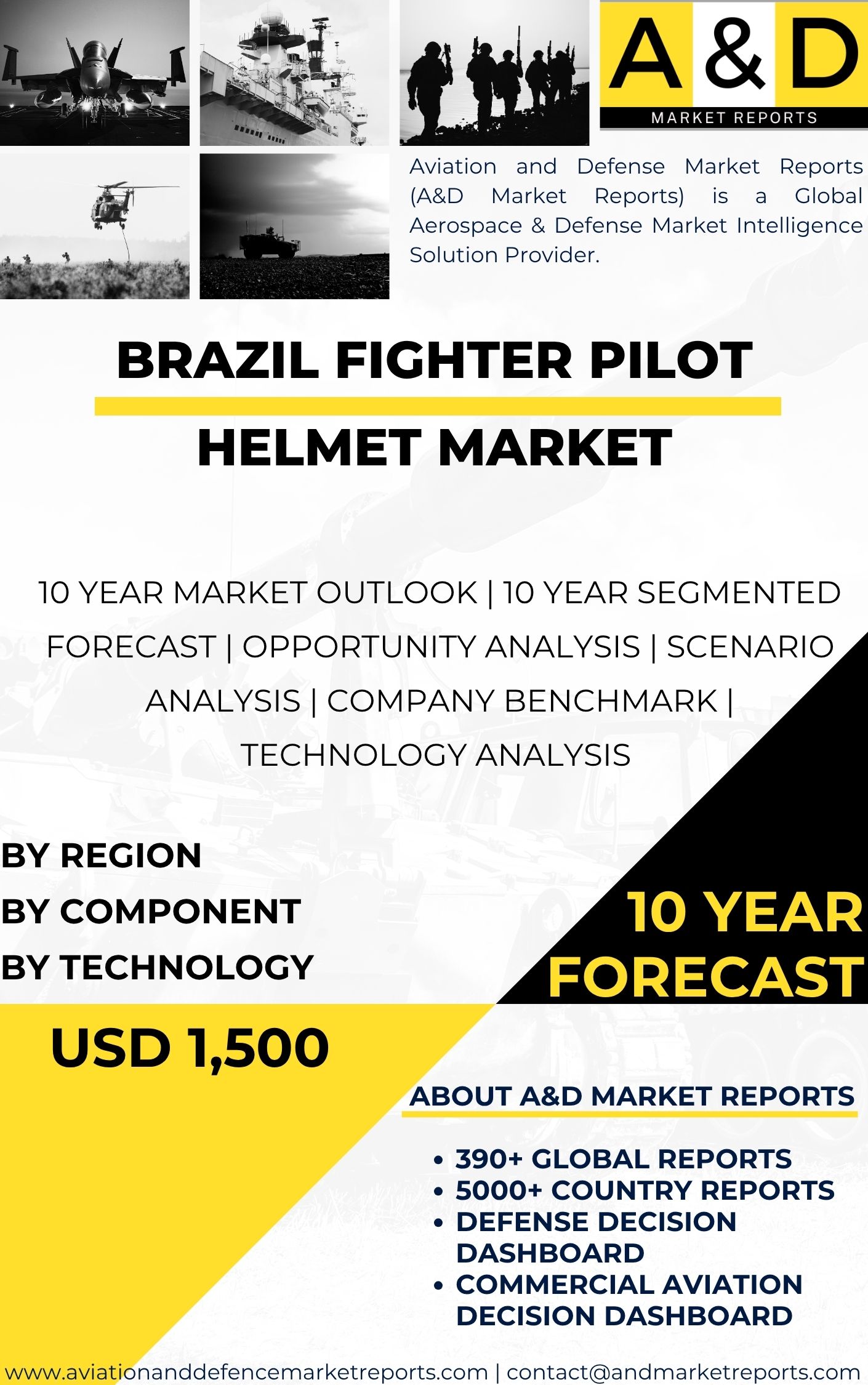
Brazil Fighter Pilot Helmet Market

$1,500.00

Enquire Now

The fighter pilot helmet market in Brazil reflects a growing and progressively sophisticated sector, driven by advances in technology, increased defense expenditure, and the modernization efforts of the Brazilian Air Force. These helmets, vital for aerial combat, are no longer just protective headgear but multifunctional systems that significantly enhance the pilot’s situational awareness, communication capabilities, and operational efficiency. Brazil?s strategic military priorities and its focus on strengthening air defense capabilities have fostered demand for advanced pilot helmets, integrating cutting-edge features like helmet-mounted displays, real-time data feeds, and enhanced targeting systems.

Go To Global Report Page Track this market real time on DDD

Description

The fighter pilot helmet market in Brazil reflects a growing and progressively sophisticated sector, driven by advances in technology, increased defense expenditure, and the modernization efforts of the Brazilian Air Force. These helmets, vital for aerial combat, are no longer just protective headgear but multifunctional systems that significantly enhance the pilot’s situational awareness, communication capabilities, and operational efficiency. Brazil?s strategic military priorities and its focus on strengthening air defense capabilities have fostered demand for advanced pilot helmets, integrating cutting-edge features like helmet-mounted displays, real-time data feeds, and enhanced targeting systems.

Brazilian fighter pilot helmets are designed to withstand the high-G forces and extreme conditions typical of high-performance aircraft operations, ensuring pilot safety while providing comprehensive ergonomic comfort to sustain prolonged missions. The market?s growth is linked closely to the adoption of technologies that augment pilot interface with cockpit systems, allowing seamless information flow from aircraft sensors and avionics directly into the helmet. This integration supports faster decision-making and improves combat effectiveness in complex aerial environments.

The evolution of these helmets in Brazil includes the introduction of modular designs that allow customization depending on mission specifics or aircraft types, from supersonic jets to multirole fighters. Manufacturers focus on lightweight materials, such as advanced composites and carbon fiber, enhancing durability and durability while minimizing pilot fatigue. Additionally, the helmets are increasingly equipped with sophisticated communication systems, noise reduction features, and night vision compatibility to meet the diverse operational scenarios encountered by Brazilian fighter pilots.

Brazil?s fighter pilot helmet market also benefits from the global trend of incorporating augmented reality and enhanced visual aids directly within the helmet visor, which provides augmented flight data, threat identification, and targeting cues. These systems reduce the pilot?s reliance on cockpit instruments and heads-down viewing, greatly improving situational awareness and response times. The pilot helmets become a critical node in the network-centric warfare environment, enabling pilots to receive and share battlefield information instantly.

Local defense initiatives and collaboration with international technology providers have helped Brazil acquire access to advanced helmet designs and tailor them to national operational requirements. This trend includes partnerships with global aerospace and defense firms that supply helmets with the latest innovations, balanced by local manufacturing efforts to support domestic defense industry capabilities and reduce dependence on imports. The domestic market, while influenced by global technological developments, is also shaped by Brazil’s specific environmental conditions, combat doctrines, and budget considerations.

Comfort and ergonomics receive notable attention in design and specification processes to accommodate the diverse physiological profiles of Brazilian pilots, including adjustments for fitting and weight distribution. The helmets are crafted to provide maximum protection without compromising mobility or causing strain during high-speed maneuvers. This ensures that pilots maintain peak cognitive and physical performance throughout demanding sorties.

The Brazilian fighter pilot helmet market also anticipates growth through increasing pilot training programs and modernization of legacy fleets. Training simulators and live flight exercises demand helmets capable of interfacing with virtual systems and telemetry, pushing manufacturers to innovate with connectivity and adaptability features. The rise in advanced avionics and the gradual introduction of next-generation fighter aircraft support this trend, underscoring the importance of helmets as integrated hubs of pilot-system interaction.

Brazil?s geopolitical landscape and regional security concerns contribute to sustained investment in air combat readiness. This organizational focus further drives the demand for helmets with ballistic protection and advanced countermeasure integrations, ensuring survivability in hostile airspace. Enhanced ballistic protection materials and systems within the helmets are crucial for pilot safety during combat engagements or emergency scenarios.

The market?s competitive environment includes a blend of multinational suppliers and national enterprises, each striving to deliver cutting-edge technology tailored to Brazilian defense needs. Pricing strategies, certification standards, and the capacity for comprehensive after-sales support are significant factors influencing procurement decisions. Additionally, lifecycle management and upgrade potential factor heavily into the adoption of new helmet systems, given the long operational use expected in military aviation.

In summary, Brazil’s fighter pilot helmet market is defined by its adoption of advanced protective technologies, integration with aircraft systems for enhanced pilot awareness and command, and a strong focus on ergonomic design tailored to pilot needs. The market is shaped by national security imperatives, technological collaboration, and the drive towards modernization of air combat assets, making these helmets indispensable tools in Brazil?s defense aviation strategy. The evolution of this market continues to align with global defense trends that emphasize pilot survivability, combat readiness, and operational superiority through technological innovation and system integration within pilot helmets.

Table of content

Table Of Contents

1 Market Introduction

1.1 Market Introduction
1.2 Market Definition
1.3 Market Segmentation
1.4 10 Year Market Outlook

2 Market Technologies

3 Global Market Forecast

3.1 Global Market Forecast
3.2 By Technology
3.3 By Component

4 South?America Market Trends & Forecast

4.1 Drivers, Restraints And Challenges
4.2 PEST
4.3 Market Forecast
4.3.1 Market Forecast By Technology
4.3.2 Market Forecast By Component
4.4 Scenario Analysis
4.5 Key Companies& Profiling

5 Brazil Analysis

5.1 Current Levels Of Technology Maturation In This Market
5.2 Market Forecast
5.2.1 Market Forecast By Component
5.2.2 Market Forecast By Technology
5.3 Scenario Analysis
5.4 Country Defense Budget (Historical and 10- year forecast)
5.5 Defense Budget Category Spending- 10- year forecast
5.6 Procurement Analysis
5.7 EXIM Data
5.8 Patents

6 Opportunity Matrix

6.1 By Technology
6.2 By Component

7 Scenario Analysis

7.1 Scenario 1

7.1.1 By Technology (Scenario-1)
7.1.2 By Component (Scenario-1)

7.2 Scenario 2

7.2.1 By Technology (Scenario-2)
7.2.2 By Component (Scenario-2)

8 Company Benchmark

9 Strategic Conclusions

10 About Aviation And Defense Market Reports

Segments

By Component
By Technology

List of Tables

Table1: Global Market Forecast, Fighter Pilot Helmet Market
Table2: South?America Market Forecast, Fighter Pilot Helmet Market
Table3: South?America Market Forecast, By Component
Table4: South?America Market Forecast, By Technology
Table5: South?America, Scenario Analysis
Table6: Brazil Market Forecast, Fighter Pilot Helmet Market
Table7: Brazil Market Forecast, By Component
Table8: Brazil Market Forecast, By Technology
Table9: Brazil, Scenario Analysis
Table 10: Brazil Defense Budget 10 Year Forecast
Table 11: Brazil, Defense Budget Category Spending- 10- year forecast
Table 12: Brazil, Procurement Analysis
Table 13: Brazil, EXIM Data Analysis
Table 14: Brazil, Opportunity Analysis, By Component
Table 15: Brazil, Opportunity Analysis, By Technology
Table 16: Brazil, Scenario Analysis, By Component
Table 17: Brazil, Scenario Analysis, By Technology

List of Figures

Figure 1: Market Segmentation, Brazil Fighter Pilot Helmet Market
Figure 2: Key Technology Analysis, Fighter Pilot Helmet Market
Figure 3: Global Market Forecast, Fighter Pilot Helmet Market
Figure 4: South?America, Market Forecast, Fighter Pilot Helmet Market
Figure 5: South?America, Market Forecast, By Component
Figure 6: South?America, Market Forecast, By Technology
Figure 7: South?America, Scenario Analysis
Figure 8: Brazil, Market Forecast, Fighter Pilot Helmet Market
Figure 9: Brazil, Market Forecast, By Component
Figure 10: Brazil, Market Forecast, By Technology
Figure 11: Brazil, Scenario Analysis
Figure 12: Brazil, Defense Budget 10 Year Forecast
Figure 13: Brazil, Defense Budget Category Spending- 10- year forecast
Figure 14: Brazil, Procurement Analysis
Figure 15: Brazil, EXIM Data Analysis
Figure 16: Brazil, Opportunity Analysis, By Component
Figure 17: Brazil, Opportunity Analysis, By Technology
Figure 18: Brazil, Scenario Analysis, By Component
Figure 19: Brazil, Scenario Analysis, By Technology
Figure 20: Company Benchmark

Aviation and Defense Market Reports


TPA | TIA | Consulting | Market Reports | Defense Decision Dashboard


Our Defense Report - Our Team Has Worked on More Than 250+ Individual Products / Markets