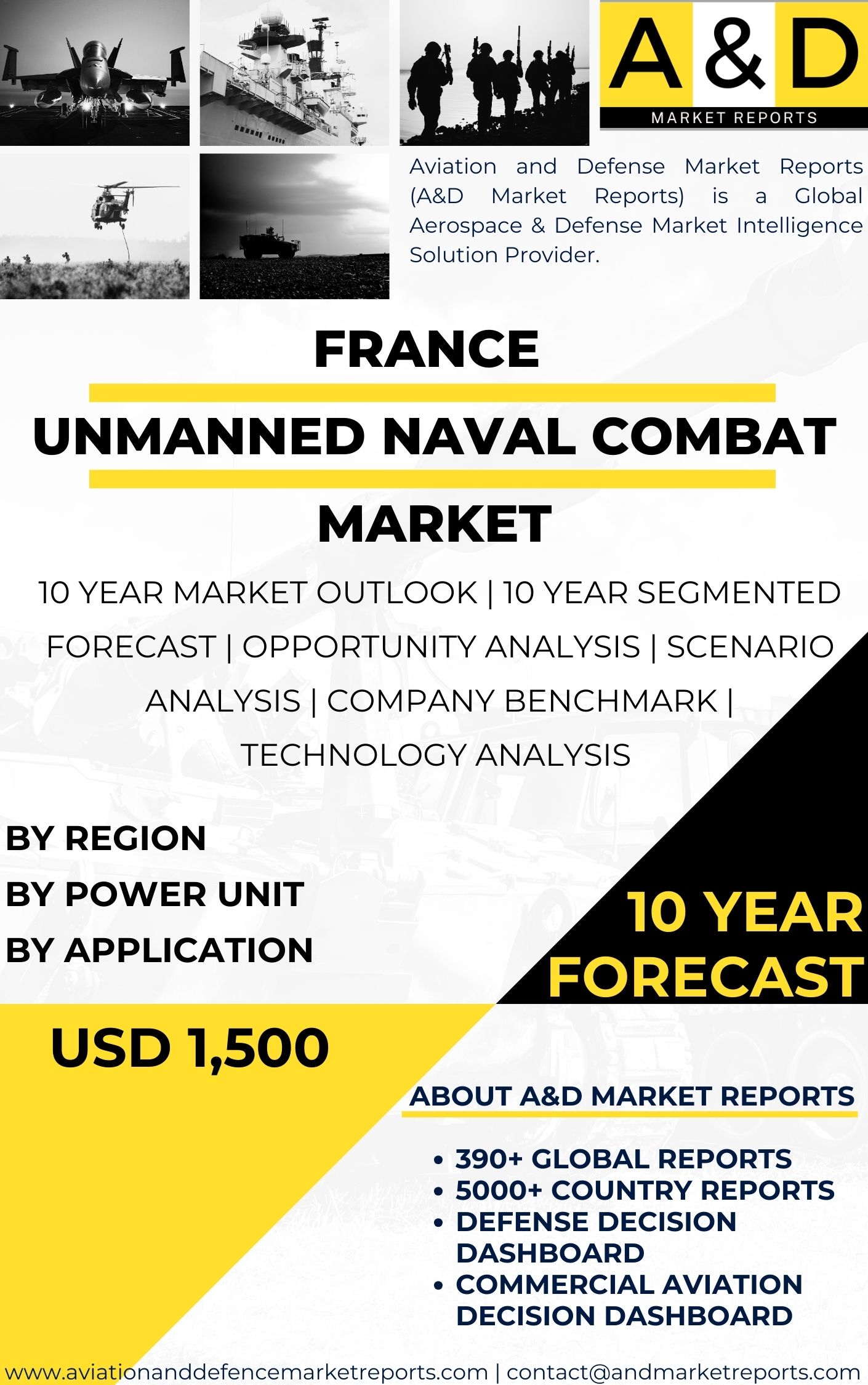
France Unmanned Naval Combat Market

$1,500.00

Enquire Now

Unmanned Naval Combat Market in France is a rapidly advancing and strategically vital sector, emblematic of the nation?s pursuit of cutting-edge military innovation and maritime security excellence. Rooted in France?s longstanding naval tradition and its role as a prominent maritime power, this market reflects a holistic approach to modern naval warfare that integrates unmanned systems, artificial intelligence, and advanced sensor technologies. Unmanned naval combat platforms?ranging from surface vessels (USVs) to underwater autonomous vehicles?are poised to transform traditional warfare paradigms, increasing operational flexibility, reducing risk to personnel, and multiplying the effectiveness of naval forces. This sector?s evolution is driven by strategic imperatives including the protection of maritime routes, power projection, anti-access/area denial (A2/AD) capabilities, and enhanced situational awareness in contested environments.

Go To Global Report Page Track this market real time on DDD

Description

Market Overview and Strategic Importance

The France Unmanned Naval Combat  represents a fast-evolving and strategically important defense segment. It reflects France’s ambition to maintain technological superiority in maritime security. Rooted in a strong naval heritage, the market integrates unmanned platforms with AI and advanced sensors. These systems enhance operational flexibility while reducing risks to personnel. Unmanned surface and underwater vehicles expand surveillance and combat reach. They reshape traditional naval warfare concepts. Strategic drivers include sea lane protection and power projection.

Defense Policy and Industrial Ecosystem

French defense policy emphasizes sovereign capability combined with European cooperation. Institutions such as the DGA play a central role in guiding development and procurement. Major industry players like Naval Group and ECA Group anchor the market’s growth. Collaboration focuses on modular and interoperable unmanned platforms. These systems are designed to operate alongside manned naval assets. Integration enhances endurance and mission effectiveness. The ecosystem reflects France’s commitment to maritime technological leadership.

Historical Evolution and Capability Maturation

Historically, France’s unmanned naval efforts began with remotely operated systems. Over time, these evolved into highly autonomous combat-capable platforms. This evolution mirrors global trends but remains shaped by French sovereignty priorities. Continuous testing and live exercises refine operational reliability. Systems are developed for coastal and blue-water missions alike. NATO interoperability remains a guiding principle. Multi-mission versatility defines modern French unmanned naval platforms.

Economic and Industrial Significance

Economically, the sector supports a high-value maritime and defense industrial base. It connects shipyards, system integrators, and advanced technology startups. Innovation spillovers benefit civilian maritime sectors such as offshore energy. Government policy prioritizes resilient domestic supply chains. Export potential strengthens France’s global defense footprint. Regulatory frameworks balance competitiveness with security controls. The market thus reinforces industrial and strategic resilience.

Technology Trends and Operational Integration

Technological progress drives momentum in autonomous navigation and AI-based target recognition. Secure communication systems are designed to withstand electronic warfare. Multi-domain interoperability allows coordination with air and subsurface assets. Data feeds enhance real-time situational awareness. Modular payloads enable rapid mission adaptation. Stealth and endurance remain design priorities. These trends define the next generation of naval combat systems.

Regulatory, Ethical, and Operational Challenges

Regulatory acceptance and maritime safety remain key considerations. Stakeholders address environmental impact and human-machine teaming concepts. Ethical frameworks guide autonomous decision-making processes. Compliance with international maritime law is emphasized. Integration doctrines aim to minimize risks to civilian traffic. Public and allied acceptance supports legitimacy. These efforts ensure responsible and sustainable deployment.

Strategic Outlook and Future Trajectory

France’s unmanned naval combat market aligns with long-term defense ambitions. It supports maritime dominance in contested operational theaters. Continued innovation ensures adaptability against evolving threats. Multinational cooperation strengthens system credibility. The market blends sovereignty with alliance interoperability. Future growth will emphasize autonomy and resilience. It stands as a cornerstone of France’s naval defense vision.
Table of content

Table Of Contents

1 Market Introduction

1.1 Market Introduction
1.2 Market Definition
1.3 Market Segmentation
1.4 10 Year Market Outlook

2 Market Technologies

3 Global Market Forecast

3.1 Global Market Forecast
3.2 By Type
3.3 By Range

4 Europe Market Trends & Forecast

4.1 Drivers, Restraints And Challenges
4.2 PEST
4.3 Market Forecast
4.3.1 Market Forecast By Type
4.3.2 Market Forecast By Range
4.4 Scenario Analysis
4.5 Key Companies& Profiling

5 France Analysis

5.1 Current Levels Of Technology Maturation In This Market
5.2 Market Forecast
5.2.1 Market Forecast By Type
5.2.2 Market Forecast By Range
5.3 Scenario Analysis
5.4 Country Defense Budget (Historical and 10- year forecast)
5.5 Defense Budget Category Spending- 10- year forecast
5.6 Procurement Analysis
5.7 EXIM Data
5.8 Patents

6 Opportunity Matrix

6.1 By Type
6.2 By Range

7 Scenario Analysis

7.1 Scenario 1

7.1.1 By Type (Scenario-1)
7.1.2 By Range (Scenario-1)

7.2 Scenario 2

7.2.1 By Type (Scenario-2)
7.2.2 By Range (Scenario-2)

8 Company Benchmark

9 Strategic Conclusions

10 About Aviation And Defense Market Reports

Segments

By Power Unit
By Application

List of Tables

Table1: Global Market Forecast, Unmanned Naval Combat Market
Table2: Europe Market Forecast, Unmanned Naval Combat Market
Table3: Europe Market Forecast, By Power Unit
Table4: Europe Market Forecast, By Application
Table5: Europe, Scenario Analysis
Table6: France Market Forecast, Unmanned Naval Combat Market
Table7: France Market Forecast, By Power Unit
Table8: France Market Forecast, By Application
Table9: France, Scenario Analysis
Table 10: France Defense Budget 10 Year Forecast
Table 11: France, Defense Budget Category Spending- 10- year forecast
Table 12: France, Procurement Analysis
Table 13: France, EXIM Data Analysis
Table 14: France, Opportunity Analysis, By Power Unit
Table 15: France, Opportunity Analysis, By Application
Table 16: France, Scenario Analysis, By Power Unit
Table 17: France, Scenario Analysis, By Application

List of Figures

Figure 1: Market Segmentation, France Unmanned Naval Combat Market
Figure 2: Key Technology Analysis, Unmanned Naval Combat Market
Figure 3: Global Market Forecast, Unmanned Naval Combat Market
Figure 4: Europe, Market Forecast, Unmanned Naval Combat Market
Figure 5: Europe, Market Forecast, By Power Unit
Figure 6: Europe, Market Forecast, By Application
Figure 7: Europe, Scenario Analysis
Figure 8: France, Market Forecast, Unmanned Naval Combat Market
Figure 9: France, Market Forecast, By Power Unit
Figure 10: France, Market Forecast, By Application
Figure 11: France, Scenario Analysis
Figure 12: France, Defense Budget 10 Year Forecast
Figure 13: France, Defense Budget Category Spending- 10- year forecast
Figure 14: France, Procurement Analysis
Figure 15: France, EXIM Data Analysis
Figure 16: France, Opportunity Analysis, By Power Unit
Figure 17: France, Opportunity Analysis, By Application
Figure 18: France, Scenario Analysis, By Power Unit
Figure 19: France, Scenario Analysis, By Application
Figure 20: Company Benchmark