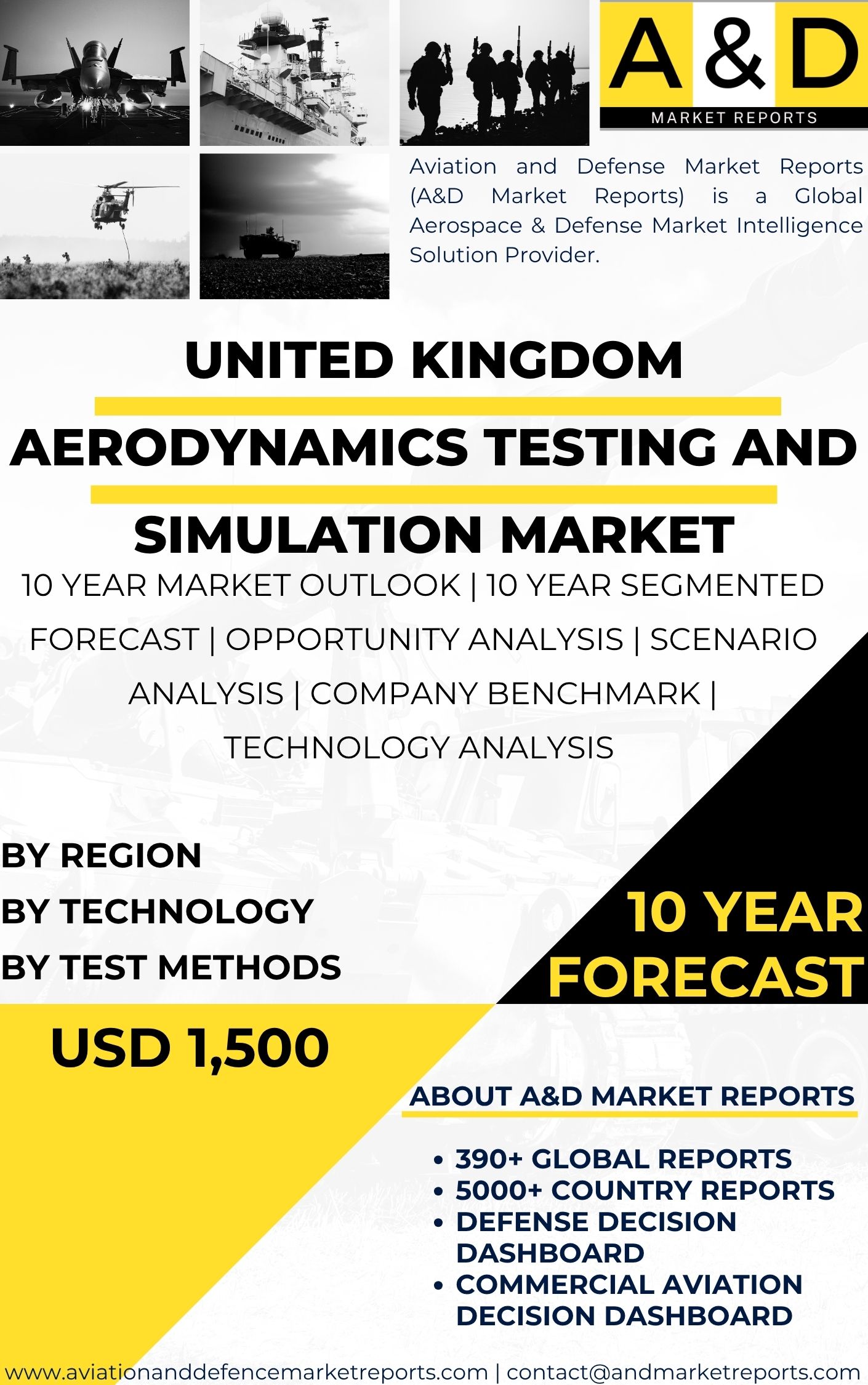
United Kingdom Aerodynamics Testing and Simulation

$1,500.00

Enquire Now

Aerodynamics testing and simulation in the United Kingdom encompasses a sophisticated blend of experimental and computational methods designed to understand and optimize the behavior of air flow around objects, particularly vehicles and aircraft. This field integrates both physical testing in advanced facilities and computer-based simulations to achieve detailed insights into aerodynamic forces, flow patterns, and performance impacts. The UK hosts a range of renowned research groups, facilities, and private companies that contribute extensively to this domain, applying their expertise across aerospace, automotive, rail transport, and maritime sectors.

Go To Global Report Page Track this market real time on DDD

Description

Aerodynamics Testing and Simulation in the United Kingdom

Aerodynamics Testing and Simulation covers a wide range of experimental and digital methods used to study airflow around vehicles, aircraft, and other engineered systems. This field combines physical tests in advanced facilities with computational modelling to understand drag, lift, pressure changes, and flow behavior. The UK hosts several leading research centers, private companies, and specialized laboratories that support industries such as aerospace, automotive, rail transport, and maritime engineering. Their combined efforts help improve performance, reduce energy use, and enhance safety across different sectors.

Experimental Methods in Aerodynamics Testing and Simulation in the United Kingdom

Physical testing remains a core part of aerodynamics testing and simulation in the United Kingdom, with facilities that support full-scale and model-scale experiments. Wind tunnels and moving-model rigs help measure key aerodynamic forces, surface pressure patterns, and real-world flow effects. The University of Birmingham, for example, runs advanced rigs that simulate how vehicles move relative to their environment. These systems capture slipstream behavior, crosswinds, and transient events that affect trains and high-speed vehicles. Such tests provide valuable data about stability and performance under varying environmental conditions.

Computational Approaches in Aerodynamics Testing and Simulation in the United Kingdom

Computational Fluid Dynamics (CFD) plays an essential role in aerodynamics testing and simulation in the United Kingdom. UK universities and companies use methods like RANS and LES to model airflow with high precision. These simulations are useful for scenarios that are costly or unsafe to recreate in physical tests, such as extreme weather or unusual flight conditions. High-performance computing resources make it possible to run detailed simulations that show flow separation, turbulence, and pressure changes. This approach supports faster design cycles and helps engineers test multiple design options without needing physical prototypes.

Specialized Facilities Supporting Aerodynamics Testing and Simulation in the United Kingdom

The United Kingdom hosts several advanced facilities that strengthen aerodynamics testing and simulation capabilities across automotive, aerospace, and motorsport industries. One of the most notable examples is the Catesby Tunnel, an underground testing facility designed for full-scale vehicle aerodynamic assessments in a highly controlled environment. The tunnel provides stable atmospheric conditions, minimal external interference, and consistent airflow characteristics that allow engineers to conduct highly accurate and repeatable aerodynamic measurements. Its quiet surroundings and controlled temperature conditions help researchers gather reliable data throughout the year. These advantages make the facility one of the most advanced aerodynamic testing environments in Europe and an important asset for vehicle development and performance optimization.

Academic Contributions to Aerodynamics Testing and Simulation in the United Kingdom

Universities across the United Kingdom play a major role in advancing aerodynamics testing and simulation through research, technical education, and innovation programs. Academic institutions offer specialized courses in aerospace engineering, computational fluid dynamics, fluid mechanics, and flight dynamics that prepare students to work with both physical and digital aerodynamic testing systems. Research activities focus on areas such as turbulence modeling, airflow optimization, aerodynamic stability, and advanced vehicle design. Students gain practical experience through wind tunnel experiments, CFD simulations, laboratory testing, and collaborative engineering projects. These programs help develop a highly skilled workforce that supports technological advancement across aerospace, automotive, marine, and defense industries.

Wind Tunnel Resources for Aerodynamics Testing and Simulation in the United Kingdom

Wind tunnel testing continues to play a central role in aerodynamics testing and simulation activities throughout the United Kingdom. Facilities such as the Wolfson Unit at the University of Southampton provide independent aerodynamic testing services for industries including aerospace, marine engineering, motorsport, and commercial transportation. These facilities perform force measurements, flow visualization studies, and aerodynamic performance analysis for aircraft components, ships, sailing yachts, and advanced vehicle designs. Researchers often combine wind tunnel testing with towing tank experiments to study the interaction between aerodynamic and hydrodynamic forces. This integrated approach improves predictions related to vehicle resistance, steering performance, stability, and overall operational efficiency.

Industrial Applications of Aerodynamics Testing and Simulation in the United Kingdom

Private engineering firms and technology companies also contribute significantly to aerodynamics testing and simulation in the United Kingdom by offering consultancy, testing, and research services for commercial and defense sectors. These companies evaluate wind loads on buildings, optimize airflow around aircraft and vehicle components, and support the development of efficient transportation systems. Many organizations combine wind tunnel experiments, computational fluid dynamics simulations, and advanced data analysis techniques to improve product performance, fuel efficiency, safety, and reliability. Their work supports faster development cycles, reduced design risks, and improved operational performance across industries ranging from automotive manufacturing to defense engineering.

Integrated Methods in Aerodynamics Testing and Simulation in the United Kingdom

One of the major strengths of aerodynamics testing and simulation in the United Kingdom is the integration of computational and experimental engineering methods. Engineers use wind tunnel results to validate CFD models and create highly accurate digital twins capable of predicting real-world aerodynamic behavior. This combined methodology improves confidence in engineering decisions and allows designers to optimize vehicle shapes for greater efficiency, lower drag, reduced noise, and improved stability. Integrated aerodynamic analysis also supports innovation in electric vehicles, next-generation aircraft, sustainable transportation systems, and advanced defense platforms where performance and energy efficiency are critical priorities.

Future Outlook for Aerodynamics Testing and Simulation in the United Kingdom

The future of aerodynamics testing and simulation in the United Kingdom remains highly promising due to strong collaboration between universities, research institutions, government agencies, and private industry partners. Continued investment in advanced testing facilities, high-performance computing systems, and new materials research helps maintain the UK’s leadership position in aerodynamic innovation. These developments support the creation of cleaner transportation technologies, safer aircraft systems, and more efficient vehicle designs across multiple sectors. As industries continue prioritizing sustainability, energy efficiency, and high-performance engineering, aerodynamics testing and simulation will remain a critical part of the United Kingdom’s long-term technological and industrial strategy.

Table of content

Table Of Contents

1 Market Introduction

1.1 Market Introduction
1.2 Market Definition
1.3 Market Segmentation
1.4 10 Year Market Outlook

2 Market Technologies

3 Global Market Forecast

3.1 Global Market Forecast
3.2 By Test Methods
3.3 By Technology

4 Europe Market Trends & Forecast

4.1 Drivers, Restraints And Challenges
4.2 PEST
4.3 Market Forecast
4.3.1 Market Forecast By Test Methods
4.3.2 Market Forecast By Technology
4.4 Scenario Analysis
4.5 Key Companies& Profiling

5 United Kingdom Analysis

5.1 Current Levels Of Technology Maturation In This Market
5.2 Market Forecast
5.2.1 Market Forecast By Test Methods
5.2.2 Market Forecast By Technology
5.3 Scenario Analysis
5.4 Country Defense Budget (Historical and 10- year forecast)
5.5 Defense Budget Category Spending- 10- year forecast
5.6 Procurement Analysis
5.7 EXIM Data
5.8 Patents

6 Opportunity Matrix

6.1 By Test Methods
6.2 By Technology

7 Scenario Analysis

7.1 Scenario 1

7.1.1 By Test Methods (Scenario-1)
7.1.2 By Technology (Scenario-1)

7.2 Scenario 2

7.2.1 By Test Methods (Scenario-2)
7.2.2 By Technology (Scenario-2)

8 Company Benchmark

9 Strategic Conclusions

10 About Aviation And Defense Market Reports

Segments

By Test Methods
By Technology

List of Tables

Table1: Global Market Forecast, Aerodynamics Testing and Simulation
Table2: Europe Market Forecast, Aerodynamics Testing and Simulation
Table3: Europe Market Forecast, By Test Methods
Table4: Europe Market Forecast, By Technology
Table5: Europe, Scenario Analysis
Table6: United Kingdom Market Forecast, Aerodynamics Testing and Simulation
Table7: United Kingdom Market Forecast, By Test Methods
Table8: United Kingdom Market Forecast, By Technology
Table9: United Kingdom, Scenario Analysis
Table 10: United Kingdom Defense Budget 10 Year Forecast
Table 11: United Kingdom, Defense Budget Category Spending- 10- year forecast
Table 12: United Kingdom, Procurement Analysis
Table 13: United Kingdom, EXIM Data Analysis
Table 14: United Kingdom, Opportunity Analysis, By Test Methods
Table 15: United Kingdom, Opportunity Analysis, By Technology
Table 16: United Kingdom, Scenario Analysis, By Test Methods
Table 17: United Kingdom, Scenario Analysis, By Technology
List of Figures

Figure 1: Market Segmentation, United Kingdom Aerodynamics Testing and Simulation
Figure 2: Key Technology Analysis, Aerodynamics Testing and Simulation
Figure 3: Global Market Forecast, Aerodynamics Testing and Simulation
Figure 4: Europe, Market Forecast, Aerodynamics Testing and Simulation
Figure 5: Europe, Market Forecast, By Test Methods
Figure 6: Europe, Market Forecast, By Technology
Figure 7: Europe, Scenario Analysis
Figure 8: United Kingdom, Market Forecast, Aerodynamics Testing and Simulation
Figure 9: United Kingdom, Market Forecast, By Test Methods
Figure 10: United Kingdom, Market Forecast, By Technology
Figure 11: United Kingdom, Scenario Analysis
Figure 12: United Kingdom, Defense Budget 10 Year Forecast
Figure 13: United Kingdom, Defense Budget Category Spending- 10- year forecast
Figure 14: United Kingdom, Procurement Analysis
Figure 15: United Kingdom, EXIM Data Analysis
Figure 16: United Kingdom, Opportunity Analysis, By Test Methods
Figure 17: United Kingdom, Opportunity Analysis, By Technology
Figure 18: United Kingdom, Scenario Analysis, By Test Methods
Figure 19: United Kingdom, Scenario Analysis, By Technology
Figure 20: Company Benchmark

Aviation and Defense Market Reports


TPA | TIA | Consulting | Market Reports | Defense Decision Dashboard


Our Defense Report - Our Team Has Worked on More Than 250+ Individual Products / Markets