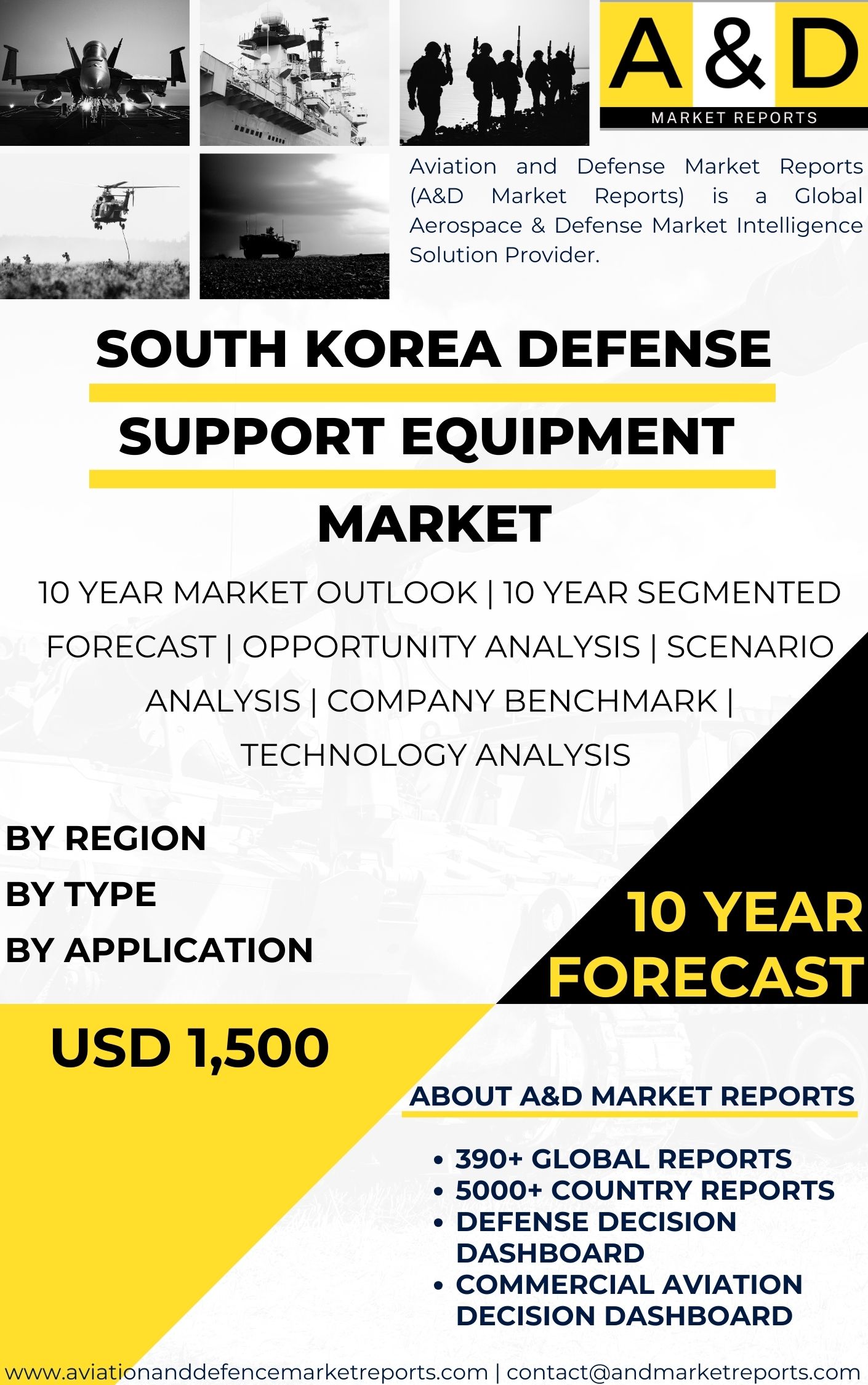
South Korea Defense Support Equipment Market

$1,500.00

Enquire Now

The Defense Support Equipment Market in South Korea is a vital and expanding sector closely tied to the country’s broader defense industry, which has experienced rapid modernization and autonomous growth over recent decades. South Korea, once highly dependent on foreign military supplies, especially from the United States, has developed a strong domestic defense manufacturing capability. This has been underpinned by government policies aimed at promoting indigenous production technologies, research and development, and defense industrial infrastructure, enabling the country to become the eighth largest weapons exporter globally. The defense support equipment segment plays a critical role in maintaining and operating various military systems, particularly those used in airfields, military bases, and logistics.

Go To Global Report Page Track this market real time on DDD

Description

Defense Support Equipment Market in South Korea: Overview

The Defense Support Equipment Market in South Korea is an important and fast-growing segment of the defense industry. The market supports military operations across airfields, bases, and logistics centers.

South Korea has reduced its reliance on foreign suppliers over the years. Strong government support has helped build a capable domestic defense industry. Local manufacturing, research, and infrastructure development drive this progress.

Defense support equipment plays a key role in keeping military systems operational and ready.

Key Drivers of the Defense Support Equipment Market in South Korea

Rising Defense Budgets and Security Needs

South Korea continues to increase defense spending. Regional security risks require constant readiness and system upgrades.

Defense modernization programs focus on efficient and reliable support equipment. These systems ensure smooth daily military operations.

Government Support for Indigenous Production

The government promotes local manufacturing through funding and policy support. Programs such as the Yulgok Plan aim to strengthen domestic capabilities.

Major companies like Hanwha Defense, Korea Aerospace Industries, LIG Nex1, and Hyundai Rotem benefit from this strategy.

Types of Defense Support Equipment in South Korea

Ground Support Equipment

Ground support equipment includes:

  • Aircraft loaders

  • Tugs and tractors

  • Ground power units

  • Air start units

  • Maintenance tools

These systems support aircraft and land-based platforms.

Logistics and Base Support Systems

Defense bases rely on support equipment for transport, storage, and maintenance. Efficient logistics improve response time and readiness.

Technology Trends in Defense Support Equipment Market in South Korea

Automation and Robotics

Automation improves speed and safety. Robotic systems reduce manpower needs and human error.

Manufacturers now design smarter support systems for demanding conditions.

Electrification and Sustainability

Electric and hybrid vehicles are replacing diesel systems. This shift reduces emissions and noise.

Air transport hubs like Incheon International Airport already use electric support vehicles. Defense facilities are following this trend.

Market Size and Growth Outlook

The Defense Support Equipment Market in South Korea reached about USD 2.8 billion in 2024. The market is expected to approach USD 4 billion in the coming years.

Growth is driven by:

  • Defense modernization programs

  • Higher government spending

  • Rising exports of military platforms

Each exported platform increases demand for compatible support equipment.

Defense Contracts and Industry Resilience

Major defense firms secure long-term contracts for aircraft, artillery, and vehicles. These contracts include maintenance and operational support.

The pandemic caused temporary disruption. However, government intervention helped stabilize production and demand.

This resilience supports steady market growth.

Role of Defense Support Equipment in Military Logistics

Support equipment ensures:

  • Fast aircraft turnaround

  • Reliable power and fueling

  • Efficient transport within bases

These functions are vital for military readiness. Automation and advanced systems improve performance under pressure.

Future Outlook of the Defense Support Equipment Market in South Korea

The Defense Support Equipment Market in South Korea will continue to expand. Demand will rise for automated, electric, and multi-role systems.

Companies that invest in innovation and compliance will lead the market. Strong government backing and export growth will further support expansion.

South Korea remains focused on building a self-reliant and advanced defense industry capable of meeting future challenges.
Table of content

Table Of Contents

1 Market Introduction

1.1 Market Introduction
1.2 Market Definition
1.3 Market Segmentation
1.4 10 Year Market Outlook

2 Market Technologies

3 Global Market Forecast

3.1 Global Market Forecast
3.2 By Type
3.3 By Application

4 APAC Market Trends & Forecast

4.1 Drivers, Restraints And Challenges
4.2 PEST
4.3 Market Forecast
4.3.1 Market Forecast By Type
4.3.2 Market Forecast By Application
4.4 Scenario Analysis
4.5 Key Companies& Profiling

5 South Korea Analysis

5.1 Current Levels Of Technology Maturation In This Market
5.2 Market Forecast
5.2.1 Market Forecast By Type
5.2.2 Market Forecast By Application
5.3 Scenario Analysis
5.4 Country Defense Budget (Historical and 10- year forecast)
5.5 Defense Budget Category Spending- 10- year forecast
5.6 Procurement Analysis
5.7 EXIM Data
5.8 Patents

6 Opportunity Matrix

6.1 By Type
6.2 By Application

7 Scenario Analysis

7.1 Scenario 1

7.1.1 By Type (Scenario-1)
7.1.2 By Application (Scenario-1)

7.2 Scenario 2

7.2.1 By Type (Scenario-2)
7.2.2 By Application (Scenario-2)

8 Company Benchmark

9 Strategic Conclusions

10 About Aviation And Defense Market Reports

Segments

By Type
By Application

List of Tables

Table1: Global Market Forecast, Defense Support Equipment Market
Table2: APAC Market Forecast, Defense Support Equipment Market
Table3: APAC Market Forecast, By Type
Table4: APAC Market Forecast, By Application
Table5: APAC, Scenario Analysis
Table6: South Korea Market Forecast, Defense Support Equipment Market
Table7: South Korea Market Forecast, By Type
Table8: South Korea Market Forecast, By Application
Table9: South Korea, Scenario Analysis
Table 10: South Korea Defense Budget 10 Year Forecast
Table 11: South Korea, Defense Budget Category Spending- 10- year forecast
Table 12: South Korea, Procurement Analysis
Table 13: South Korea, EXIM Data Analysis
Table 14: South Korea, Opportunity Analysis, By Type
Table 15: South Korea, Opportunity Analysis, By Application
Table 16: South Korea, Scenario Analysis, By Type
Table 17: South Korea, Scenario Analysis, By Application

List of Figures

Figure 1: Market Segmentation, South Korea Defense Support Equipment Market
Figure 2: Key Technology Analysis, Defense Support Equipment Market
Figure 3: Global Market Forecast, Defense Support Equipment Market
Figure 4: APAC, Market Forecast, Defense Support Equipment Market
Figure 5: APAC, Market Forecast, By Type
Figure 6: APAC, Market Forecast, By Application
Figure 7: APAC, Scenario Analysis
Figure 8: South Korea, Market Forecast, Defense Support Equipment Market
Figure 9: South Korea, Market Forecast, By Type
Figure 10: South Korea, Market Forecast, By Application
Figure 11: South Korea, Scenario Analysis
Figure 12: South Korea, Defense Budget 10 Year Forecast
Figure 13: South Korea, Defense Budget Category Spending- 10- year forecast
Figure 14: South Korea, Procurement Analysis
Figure 15: South Korea, EXIM Data Analysis
Figure 16: South Korea, Opportunity Analysis, By Type
Figure 17: South Korea, Opportunity Analysis, By Application
Figure 18: South Korea, Scenario Analysis, By Type
Figure 19: South Korea, Scenario Analysis, By Application
Figure 20: Company Benchmark

Aviation and Defense Market Reports


TPA | TIA | Consulting | Market Reports | Defense Decision Dashboard


Our Defense Report - Our Team Has Worked on More Than 250+ Individual Products / Markets