
Description
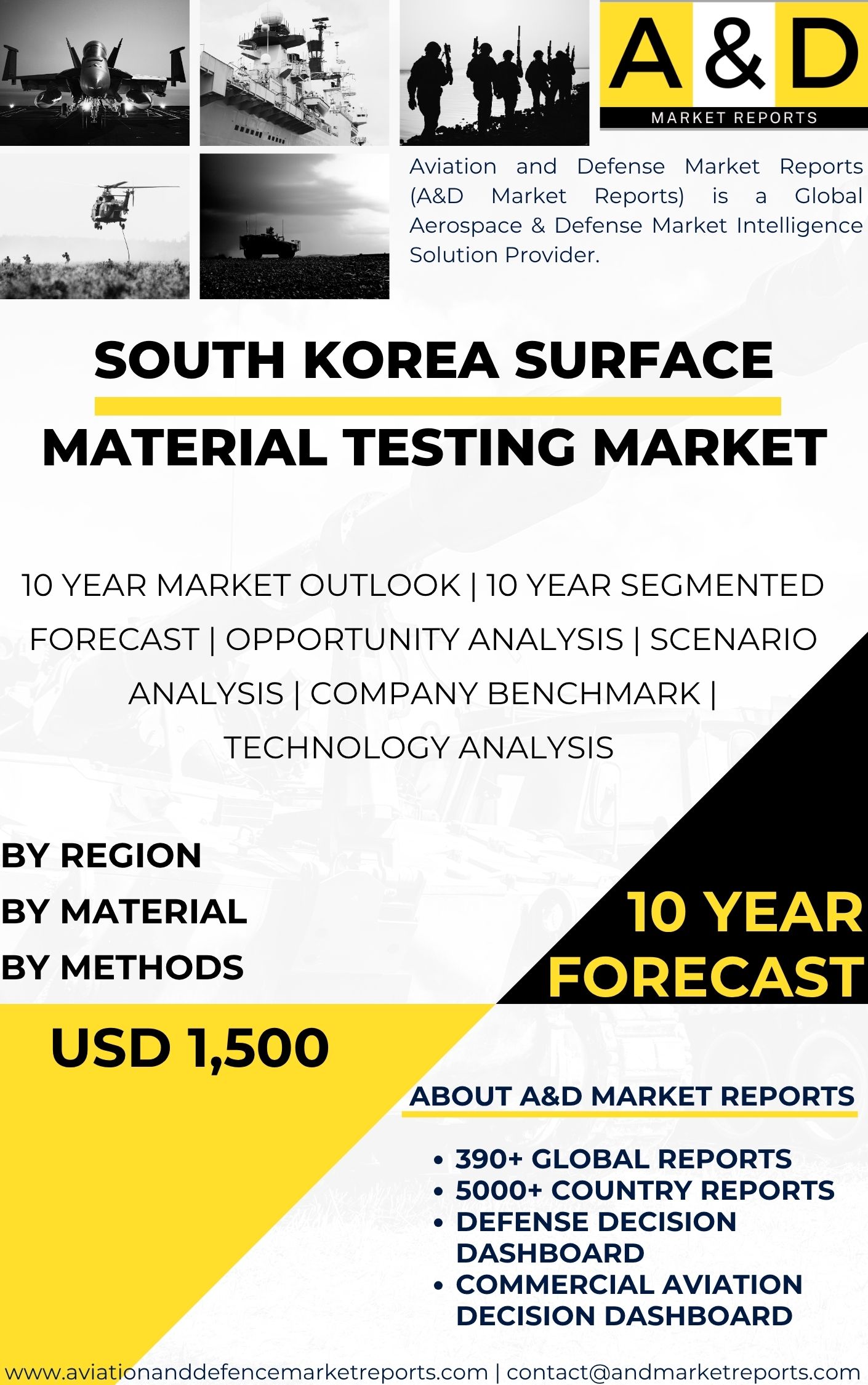
Surface Material Testing Market in South Korea Overview
The Surface Material Testing Market in South Korea is a critical part of the country’s aerospace and defense materials ecosystem. It supports the evaluation and validation of materials used in aircraft, naval vessels, missiles, armored vehicles, and other defense platforms. Reliable surface testing ensures that materials meet strict requirements for strength, durability, corrosion resistance, and operational safety. As South Korea continues to expand its aerospace and defense manufacturing capabilities, the importance of advanced material testing technologies continues to grow. These testing processes help manufacturers improve component reliability, extend service life, and maintain high performance in demanding operational environments.
Market Size and Growth Drivers
South Korea’s aerospace and defense materials sector continues to experience strong growth, driven by increasing investments in advanced manufacturing and indigenous defense programs. The growing use of lightweight and high-strength materials is creating additional demand for sophisticated testing solutions. Aerospace and defense manufacturers are adopting advanced alloys, composites, and engineered materials to improve fuel efficiency, increase payload capacity, and enhance overall system performance. Surface material testing plays a key role in validating these materials and ensuring they meet operational and regulatory requirements before deployment.
Adoption of Advanced Materials
The widespread use of titanium alloys, aluminum alloys, thermoplastic composites, and other advanced materials is transforming aerospace and defense manufacturing in South Korea. These materials offer significant benefits in terms of weight reduction, structural strength, and durability. However, their performance depends heavily on material quality and surface integrity. Surface material testing helps engineers identify weaknesses, verify manufacturing quality, and confirm long-term reliability. As material technologies continue to evolve, testing requirements become more complex and essential.
Mechanical and Structural Testing Methods
Mechanical and structural testing forms the foundation of surface material evaluation. Engineers perform tensile, compression, hardness, fatigue, and impact tests to determine how materials respond to operational stresses. These testing methods help establish performance limits, identify potential failure points, and support certification processes. The results also assist manufacturers in optimizing material selection and improving product designs. By validating structural performance, these tests contribute directly to the safety and reliability of aerospace and defense systems.
Microscopic and Surface Analysis
Advanced microscopic analysis techniques allow engineers to examine material surfaces at a detailed level. These methods help identify cracks, defects, bonding issues, and surface irregularities that may affect performance. Surface uniformity, coating adhesion, and microstructural integrity are critical factors for aerospace and defense applications. Early detection of defects reduces the risk of component failure and improves overall system reliability. As manufacturing tolerances become tighter, microscopic analysis continues to play an increasingly important role in quality assurance.
Non-Destructive Testing Technologies
Non-destructive testing technologies are widely used throughout South Korea’s aerospace and defense industries because they allow components to be inspected without causing damage. Techniques such as ultrasonic testing, X-ray inspection, thermal imaging, and eddy current testing help identify hidden flaws and structural weaknesses. These methods protect valuable components while ensuring compliance with safety and performance requirements. Non-destructive testing also supports routine inspections throughout a platform’s operational life, helping organizations detect problems before they become critical.
Fighter Aircraft and Defense Applications
The Surface Material Testing Market in South Korea supports major aerospace and defense programs, including advanced fighter aircraft development. Platforms such as the KF-21 Boramae require extensive material validation because airframes, engines, and structural components operate under extreme conditions. Surface testing ensures that these materials can withstand high temperatures, aerodynamic stresses, and combat environments. Reliable material performance is essential for maintaining aircraft safety, mission effectiveness, and long-term operational readiness.
Naval Platform Applications
South Korea’s naval modernization efforts also contribute significantly to demand for surface material testing. Naval vessels operate in highly corrosive marine environments that can affect structural integrity over time. Surface testing helps evaluate protective coatings, corrosion resistance, impact durability, and material performance under maritime conditions. These evaluations improve vessel longevity, reduce maintenance costs, and enhance operational reliability. As naval programs become more advanced, testing requirements continue to increase.
Unmanned and Stealth System Requirements
The growing use of unmanned systems and stealth technologies is creating new opportunities for advanced material testing. Unmanned aerial vehicles rely heavily on lightweight composite materials that require rigorous quality control and validation. Surface testing ensures proper bonding strength, fatigue resistance, and long-term durability. Stealth platforms use specialized radar-absorbent materials whose surface characteristics directly influence detection resistance. Testing verifies the effectiveness of these materials and supports the development of low-observable defense systems.
Research, Development, and Government Support
South Korea continues to invest heavily in research, testing infrastructure, and advanced material development. Government-supported programs encourage collaboration between research institutions, universities, and defense manufacturers to develop innovative testing methods and standards. These initiatives strengthen domestic capabilities, reduce dependence on foreign technologies, and support export competitiveness. Testing laboratories are increasingly adopting advanced equipment and internationally recognized procedures to improve quality assurance and certification capabilities.
Market Challenges
Despite strong growth prospects, the market faces several challenges. Advanced testing equipment requires significant capital investment, making adoption costly for smaller organizations. The increasing complexity of modern materials also creates additional testing requirements and demands specialized expertise. New manufacturing methods, including additive manufacturing and advanced composite production, introduce variables that require updated testing protocols. Addressing these challenges requires continuous investment in technology, workforce development, and research initiatives.
Technology Trends and Innovation
Technological innovation is transforming the surface material testing market in South Korea. Automation systems improve testing efficiency and reduce human error, while artificial intelligence enhances defect detection and data analysis capabilities. Advanced analytics help engineers make faster decisions and identify potential issues more accurately. Digital twin technologies are also gaining importance, enabling engineers to simulate material behavior and predict performance before physical testing begins. These innovations improve quality control and reduce development costs across the aerospace and defense sectors.
Future Outlook of the Market
The Surface Material Testing Market in South Korea is expected to experience strong long-term growth as aerospace, defense, and advanced manufacturing programs continue to expand. Increasing use of high-performance materials, growing demand for quality assurance, and continued investments in research and development will support market growth. Automated testing systems, artificial intelligence, and digital engineering technologies will play an increasingly important role in future testing operations. With strong government support, expanding industrial capabilities, and a focus on technological innovation, South Korea is well positioned to strengthen its leadership in advanced surface material testing and support the next generation of aerospace and defense systems.