
Description
Market Overview and Strategic Potential
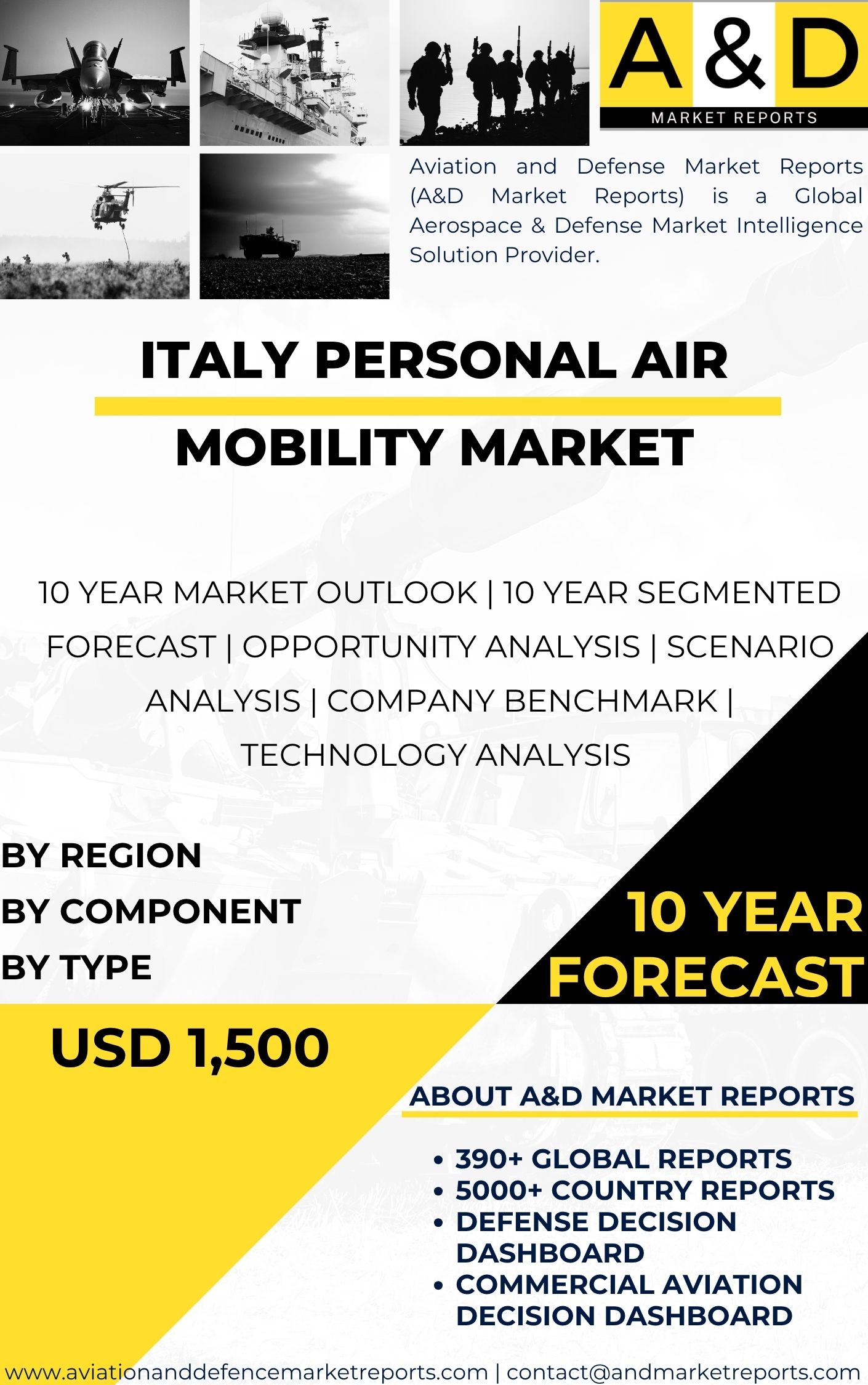
The Italy Personal Air Mobility in Italy is an emerging, multi-disciplinary ecosystem that brings together aviation, urban planning, energy, and advanced manufacturing. It aims to transform short-range transport, especially in congested cities, island regions, and tourism-heavy destinations. Personal air mobility includes electric vertical take-off and landing aircraft, commonly known as electric vertical take-off and landing aircraft, along with small piloted or semi-autonomous vehicles used for air taxis, logistics, and emergency services. Italy’s geography, with dense historic cities and island regions, creates both opportunities and challenges. On one hand, PAM can reduce road congestion and improve connectivity. On the other hand, it must comply with strict heritage protection, noise limits, and complex airspace conditions.
Ecosystem and Infrastructure Development
The Italian PAM market consists of several interconnected components. These include aircraft manufacturing, certification processes, infrastructure development, and airspace management. Italian aerospace companies and engineering firms play a strong role in designing airframes and propulsion systems. However, regulatory clarity is essential for growth. Authorities must define clear certification standards and operational rules. Cooperation with European Union Aviation Safety Agency helps ensure harmonized regulations across Europe. Infrastructure is another key factor. Vertiports, charging stations, and passenger hubs must be developed carefully. In addition, these facilities need to integrate with existing transport systems while addressing urban planning and community concerns.
Technological Innovations and Advancements
Technology is a major driver of growth in Italy’s PAM market. Improvements in battery energy density enable longer flight times and better efficiency. Distributed electric propulsion systems enhance safety and reduce noise levels. In addition, hydrogen fuel cells are being explored for extended range operations. Autonomous flight systems and lightweight composite materials further improve performance. Italy’s expertise in advanced manufacturing supports these developments. Integration with European air traffic systems, such as U-space, is also important. This requires reliable communication systems, detect-and-avoid technologies, and strong cybersecurity measures. As a result, collaboration between industry and government becomes essential.
Market Applications and Use Cases
The PAM market in Italy supports a wide range of applications. Air taxi services offer fast travel for business professionals within cities. Island connectivity services link mainland areas with regions like Sardinia and Sicily. Emergency medical services benefit from faster patient transport, especially in remote or mountainous areas. In addition, tourism applications provide unique aerial experiences over scenic regions. Public sector use cases include disaster response and search-and-rescue missions. These diverse applications expand market potential. Therefore, PAM is not limited to luxury travel but also serves critical public needs.
Economic Factors and Business Models
Economic viability is a key factor in the growth of Italy’s PAM market. The cost per trip must be competitive to attract users. High utilization rates and scalable operations are essential for profitability. Battery swapping and fast charging solutions help reduce downtime. In addition, streamlined certification and pilot training lower operational costs. Business models such as shared mobility and partnerships with airlines can improve scalability. For example, PAM services can act as feeders to regional airports. As a result, integration with existing transport networks enhances overall efficiency.
Sustainability and Public Acceptance
Sustainability and public acceptance are critical for long-term success. PAM systems must minimize noise and emissions to gain community support. This is especially important in Italy’s historic cities and densely populated areas. Safety is another major concern. Operators must demonstrate high reliability through training and operational standards. In addition, integration with emergency services builds trust among the public. EU policies and funding programs also influence development. Therefore, environmental and social factors play a key role in shaping the market.
Regulatory Framework and Policy Support
A strong regulatory framework is essential for the development of PAM in Italy. National and European authorities must establish clear guidelines for operations, safety, and certification. Policies should support innovation while ensuring public safety. Collaboration between regulators, industry, and municipalities is necessary to address challenges. In addition, cross-border coordination within Europe enables standardized operations. This reduces complexity for manufacturers and operators. As a result, regulatory support acts as a foundation for market growth.
Future Outlook and Growth Potential
The future of Italy’s personal air mobility market appears promising. Continued investment in technology and infrastructure will drive expansion. Tourism demand and geographic challenges create strong use-case opportunities. In addition, industrial capabilities support local manufacturing and innovation. However, success depends on coordination across multiple stakeholders. Industry players, regulators, and energy providers must work together. With the right approach, PAM can become a practical and scalable solution. Overall, it has the potential to transform mobility while respecting Italy’s unique environment and heritage.