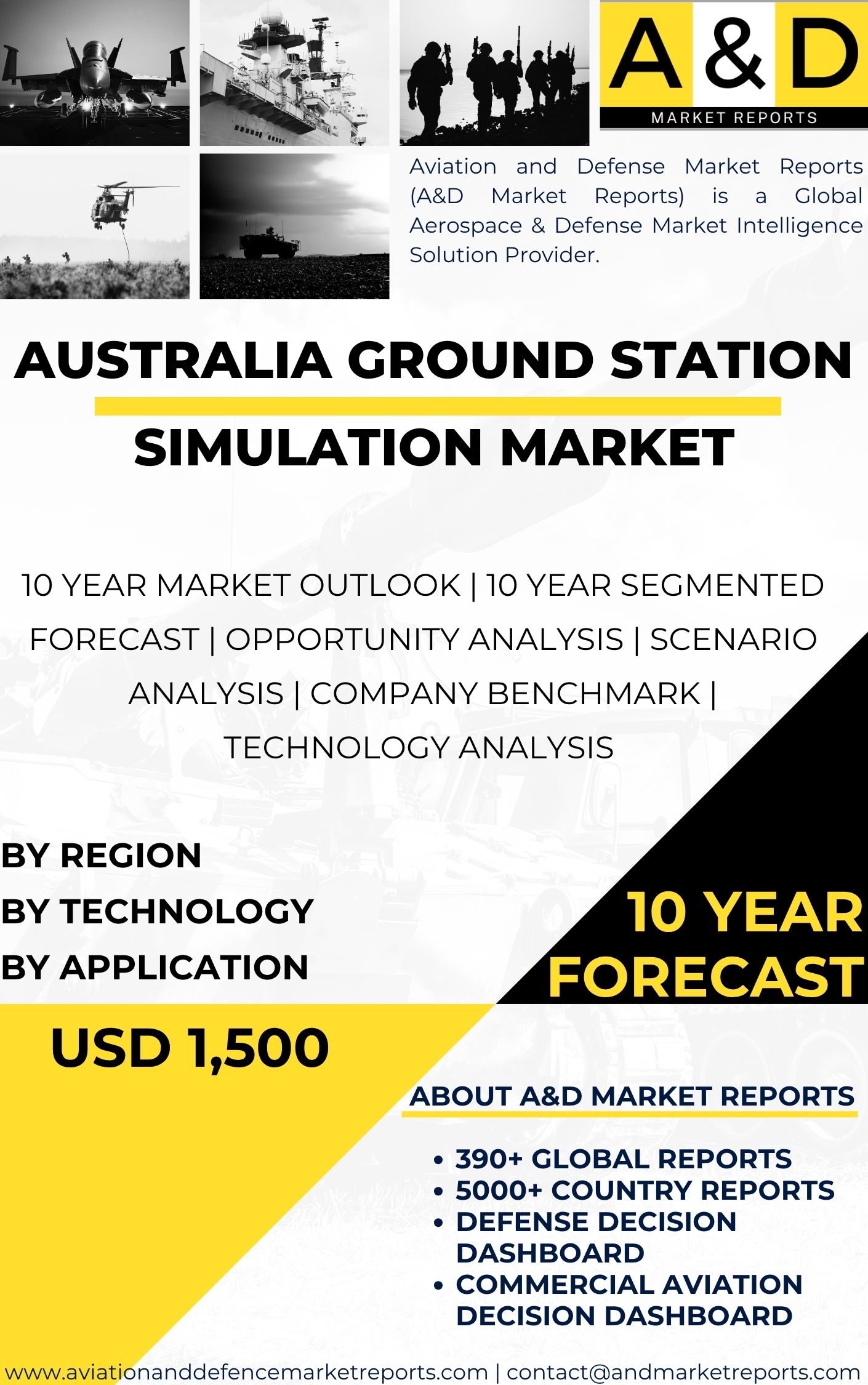
Australia Ground Station Simulation Market

$1,500.00

Enquire Now

Ground Station Simulation Market in Australia is steadily evolving driven by the country’s growing interest and investment in satellite technologies and space infrastructure. Ground stations are vital components in the space ecosystem as they serve as the interface between satellites orbiting in space and terrestrial networks on Earth. These stations handle critical tasks including satellite command and control, data reception, processing, and telemetry, making them indispensable for a variety of applications from defense to telecommunications and scientific research.

Go To Global Report Page Track this market real time on DDD

Description

Ground Station Simulation Market in Australia is steadily evolving driven by the country’s growing interest and investment in satellite technologies and space infrastructure. Ground stations are vital components in the space ecosystem as they serve as the interface between satellites orbiting in space and terrestrial networks on Earth. These stations handle critical tasks including satellite command and control, data reception, processing, and telemetry, making them indispensable for a variety of applications from defense to telecommunications and scientific research.

Australia?s geographic location affords it a strategic advantage, positioning the nation as a key player in the Asia-Pacific region for satellite ground operations. The market benefits from well-established ground station networks capable of supporting diverse satellite constellations, including traditional large satellites as well as emerging smallsat deployments. These networks enable the country to provide services in Earth observation, weather forecasting, environmental monitoring, navigation, and telecommunications, each requiring sophisticated simulation capabilities to ensure efficient and safe satellite management.

Simulation technologies in ground station operations are becoming increasingly advanced and crucial due to the need for testing and training without risking actual satellite systems. Ground Station Simulation involves the use of highly sophisticated software and hardware systems that replicate satellite communication links, signal processing, telemetry, and command functions. This allows operators to validate mission plans, train personnel in simulated environments, and troubleshoot potential issues before live operation, thereby enhancing mission reliability and reducing operational risks.

One of the significant drivers of this market in Australia is the increasing demand for satellite-based services tailored to address local challenges. In fields such as defense and national security, simulation systems play a pivotal role in preparing operators to handle secure communication, satellite surveillance, and reconnaissance tasks under various scenarios. The telecommunications sector also relies on ground station simulations to optimize satellite communication links that extend broadband connectivity, especially to remote and rural areas where terrestrial infrastructure is limited.

Technological advancements are reshaping ground station simulation by incorporating artificial intelligence, machine learning, and cloud computing. AI integration enhances simulation by enabling anomaly detection, predictive maintenance, and automation of complex operational workflows. Cloud-based platforms facilitate scalability and accessibility, allowing multiple operators and stakeholders to participate in simulations remotely. These technologies support the increasing complexity of satellite constellations and the need for more robust, flexible ground control capabilities.

Furthermore, Australia’s government initiatives aimed at expanding the space industry infrastructure and fostering innovation significantly support market growth. Collaborative efforts between government agencies, research institutions, and private companies drive development and deployment of novel simulation solutions. This cooperation extends internationally through partnerships with space agencies and satellite operators worldwide, promoting knowledge exchange and accelerating technological progress.

The emergence of small satellite constellations necessitates the development of modular, flexible simulation systems that can cater to varying mission sizes and configurations. The miniaturization of hardware, combined with software-defined radios and multi-band antenna technology, enhances the adaptability and functionality of ground station simulations. Cybersecurity remains a priority, with simulation platforms integrating advanced encryption and secure communication protocols to protect sensitive satellite command and control operations from cyber threats.

Challenges faced by the market include supply chain disruptions impacting hardware availability, regulatory hurdles related to spectrum management, and the relatively high cost of sophisticated simulation setups. Addressing these challenges through diversified supplier bases, regulatory engagement, and public-private funding models is critical. Additionally, as the satellite industry grows, there is competitive pressure from emerging low-cost market players, pushing established providers to innovate and adopt more cost-effective simulation techniques.

The future outlook for the Ground Station Simulation Market in Australia is promising, driven by the increasing launch of satellite missions and the growing reliance on satellite data across multiple sectors. Simulation solutions will continue to evolve with advancements in digital twin technologies, enabling more accurate and dynamic replication of ground station operations. This evolution supports mixed-reality training environments that combine virtual and physical elements for superior operator preparedness.

Overall, the Ground Station Simulation Market in Australia is set for sustained growth, underpinned by strategic geographical advantages, technological innovation, government support, and a broad base of applications ranging from defense to environmental monitoring and commercial telecommunications. The integration of cutting-edge technology and collaborative efforts will enhance Australia?s capabilities in space ground operations, positioning the country as a regional hub for satellite ground station simulation and control services. This will contribute to the broader global space industry while addressing specific regional needs with tailored satellite solutions.

Table of content

Table Of Contents

1 Market Introduction

1.1 Market Introduction
1.2 Market Definition
1.3 Market Segmentation
1.4 10 Year Market Outlook

2 Market Technologies

3 Global Market Forecast

3.1 Global Market Forecast
3.2 By Technology
3.3 By Application

4 APAC Market Trends & Forecast

4.1 Drivers, Restraints And Challenges
4.2 PEST
4.3 Market Forecast
4.3.1 Market Forecast By Technology
4.3.2 Market Forecast By Application
4.4 Scenario Analysis
4.5 Key Companies& Profiling

5 Australia Analysis

5.1 Current Levels Of Technology Maturation In This Market
5.2 Market Forecast
5.2.1 Market Forecast By Technology
5.2.2 Market Forecast By Application
5.3 Scenario Analysis
5.4 Country Defense Budget (Historical and 10- year forecast)
5.5 Defense Budget Category Spending- 10- year forecast
5.6 Procurement Analysis
5.7 EXIM Data
5.8 Patents

6 Opportunity Matrix

6.1 By Technology
6.2 By Application

7 Scenario Analysis

7.1 Scenario 1

7.1.1 By Technology (Scenario-1)
7.1.2 By Application (Scenario-1)

7.2 Scenario 2

7.2.1 By Technology (Scenario-2)
7.2.2 By Application (Scenario-2)

8 Company Benchmark

9 Strategic Conclusions

10 About Aviation And Defense Market Reports

Segments

By Application
By Technology

List of Tables

Table1: Global Market Forecast, Ground Station Simulation Market
Table2: APAC Market Forecast, Ground Station Simulation Market
Table3: APAC Market Forecast, By Application
Table4: APAC Market Forecast, By Technology
Table5: APAC, Scenario Analysis
Table6: Australia Market Forecast, Ground Station Simulation Market
Table7: Australia Market Forecast, By Application
Table8: Australia Market Forecast, By Technology
Table9: Australia, Scenario Analysis
Table 10: Australia Defense Budget 10 Year Forecast
Table 11: Australia, Defense Budget Category Spending- 10- year forecast
Table 12: Australia, Procurement Analysis
Table 13: Australia, EXIM Data Analysis
Table 14: Australia, Opportunity Analysis, By Application
Table 15: Australia, Opportunity Analysis, By Technology
Table 16: Australia, Scenario Analysis, By Application
Table 17: Australia, Scenario Analysis, By Technology

List of Figures

Figure 1: Market Segmentation, Australia Ground Station Simulation Market
Figure 2: Key Technology Analysis, Ground Station Simulation Market
Figure 3: Global Market Forecast, Ground Station Simulation Market
Figure 4: APAC, Market Forecast, Ground Station Simulation Market
Figure 5: APAC, Market Forecast, By Application
Figure 6: APAC, Market Forecast, By Technology
Figure 7: APAC, Scenario Analysis
Figure 8: Australia, Market Forecast, Ground Station Simulation Market
Figure 9: Australia, Market Forecast, By Application
Figure 10: Australia, Market Forecast, By Technology
Figure 11: Australia, Scenario Analysis
Figure 12: Australia, Defense Budget 10 Year Forecast
Figure 13: Australia, Defense Budget Category Spending- 10- year forecast
Figure 14: Australia, Procurement Analysis
Figure 15: Australia, EXIM Data Analysis
Figure 16: Australia, Opportunity Analysis, By Application
Figure 17: Australia, Opportunity Analysis, By Technology
Figure 18: Australia, Scenario Analysis, By Application
Figure 19: Australia, Scenario Analysis, By Technology
Figure 20: Company Benchmark

Aviation and Defense Market Reports


TPA | TIA | Consulting | Market Reports | Defense Decision Dashboard


Our Defense Report - Our Team Has Worked on More Than 250+ Individual Products / Markets