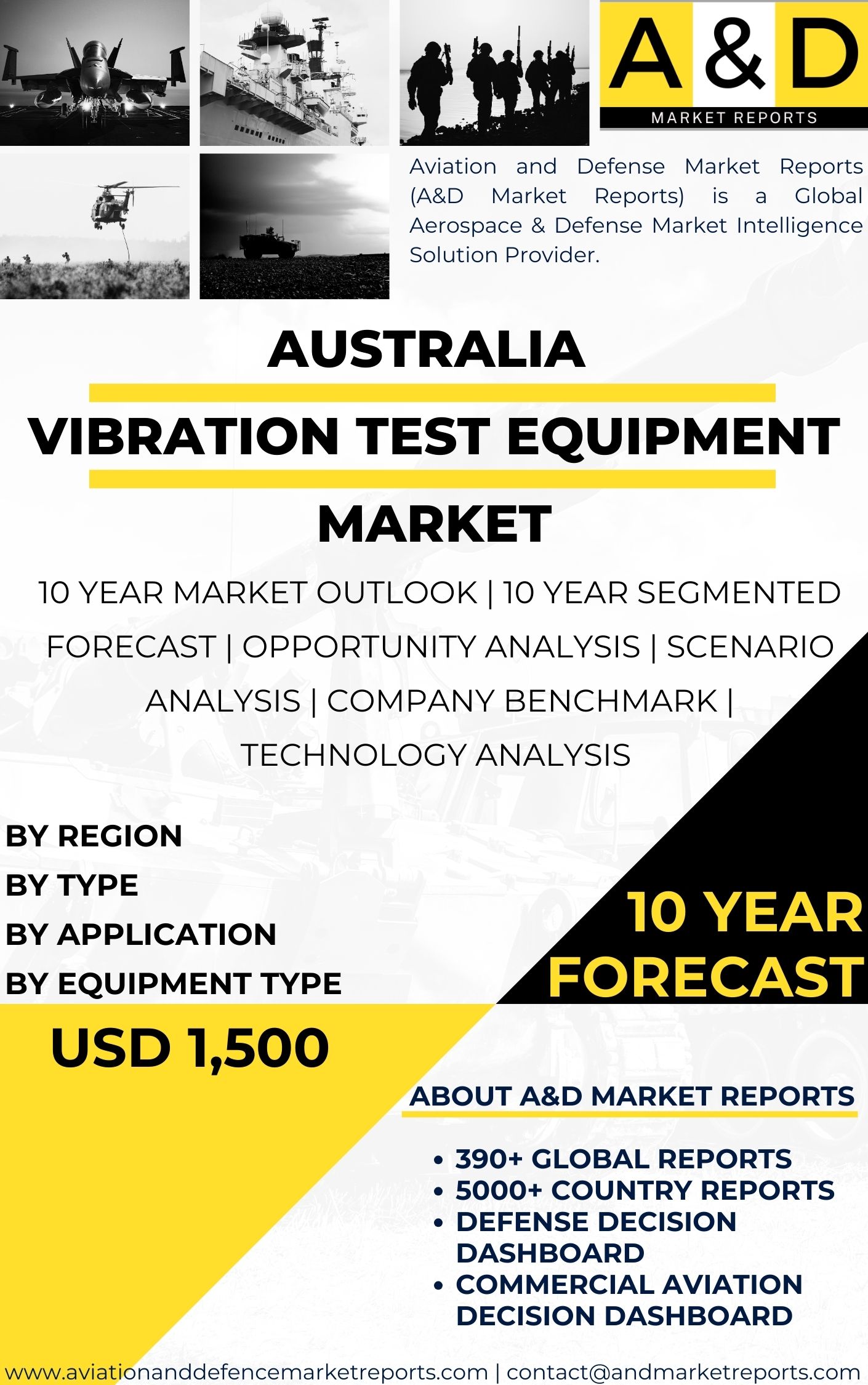
Australia Vibration Test Equipment

$1,500.00

Enquire Now
Category: Tag: Report ID: ANDCAU0215

The vibration test equipment market in Australia is an important segment within the broader testing and industrial equipment industry. This market involves devices and systems designed to simulate and measure the effects of vibration on products and components, ensuring their durability and reliability under conditions they might face during real-world use. The use of such equipment spans multiple industries including automotive, aerospace, defense, electronics, and manufacturing, making it vital for assessing product performance and safety.

Go To Global Report Page Track this market real time on DDD

Description

The vibration test equipment market in Australia is an important segment within the broader testing and industrial equipment industry. This market involves devices and systems designed to simulate and measure the effects of vibration on products and components, ensuring their durability and reliability under conditions they might face during real-world use. The use of such equipment spans multiple industries including automotive, aerospace, defense, electronics, and manufacturing, making it vital for assessing product performance and safety.

In Australia, the demand for vibration test equipment is driven by the need for rigorous product testing as manufacturers aim to comply with international quality and safety standards. The automotive sector, which requires testing for vehicle parts against road-induced vibrations, is a significant contributor to market demand. Aerospace and defense industries in the country also heavily utilize these testing devices to validate that components can withstand vibrations experienced in flight and combat environments. Additionally, the electronics sector, with its sensitivity to vibration-induced damage, relies on this equipment for product assurance.

The vibration test equipment typically consists of vibration shakers or tables capable of producing controlled vibrations at various frequencies and amplitudes. These systems use electrodynamic or hydraulic actuators and can simulate different vibration profiles including sinusoidal, random, and shock vibrations. Innovations in the sector include portable systems, real-time software integration, and the incorporation of smart technologies like IoT for enhanced monitoring and automation of the testing process.

Technological advancements have played a key role in market growth, enabling more precise and versatile vibration testing. Modern vibration test equipment can simulate a wide range of dynamic conditions, from low-frequency oscillations to high-impact shocks, which helps manufacturers identify potential defects early. This contributes not only to improving product quality but also to reducing costly recalls and warranty claims. Automation and integration with production lines reduce testing time and increase throughput, which is especially beneficial in industries with high production volumes.

Another important factor supporting the growth of vibration test equipment in Australia is the increasing focus on environmental and regulatory compliance. Standards such as MIL-STD for military equipment and ISO specifications for calibration and testing emphasize the necessity for rigorous vibration testing. Compliance with these standards ensures that Australian manufacturers can maintain competitiveness in global markets by delivering products that meet international requirements.

The Australian market also benefits from a skilled engineering workforce and growing industrial activities, particularly in advanced manufacturing sectors. However, there are challenges related to shortages of specialized personnel skilled in vibration testing, which can constrain market expansion. To address this, companies and educational institutions are increasingly investing in training and upskilling to meet the market’s technical demands.

Emerging trends include the rise of portable vibration testing systems, which offer flexibility for on-site testing and rapid diagnostics without the need for transporting products to dedicated labs. Furthermore, the integration of real-time data analysis and predictive maintenance capabilities using AI and machine learning is transforming how vibration testing is conducted. These advancements enable proactive issue detection and improve the overall efficiency of testing operations.

Australia’s geographical position and industrial profile place it as a significant market within the Asia-Pacific region, which is witnessing rapid growth due to increased manufacturing activities and industrialization. This growth trajectory is supported by investments in infrastructure, defense modernization programs, and a push towards advanced automotive and aerospace manufacturing. The market’s expansion in Australia reflects these broader regional trends, alongside increasing regulatory enforcement and quality assurance requirements.

Overall, the vibration test equipment market in Australia is characterized by steady growth fueled by technological innovation, cross-industry demand, and regulatory adherence. Key sectors like automotive, aerospace, and defense continue to drive demand, while advancements in portable and smart testing solutions are shaping the market’s future landscape. Challenges such as skilled labor shortages and supply chain constraints exist but are being managed through strategic investments and training initiatives, positioning the market for sustained development. These dynamics underscore the critical role of vibration test equipment in ensuring that Australian manufactured products meet safety, quality, and durability standards in increasingly competitive global markets.

Table of content

Table Of Contents

1 Market Introduction

1.1 Market Introduction
1.2 Market Definition
1.3 Market Segmentation
1.4 10 Year Market Outlook

2 Market Technologies

3 Global Market Forecast

3.1 Global Market Forecast
3.2 By Type
3.3 By Application

4 APAC Market Trends & Forecast

4.1 Drivers, Restraints And Challenges
4.2 PEST
4.3 Market Forecast
4.3.1 Market Forecast By Type
4.3.2 Market Forecast By Application
4.4 Scenario Analysis
4.5 Key Companies& Profiling

5 Australia Analysis

5.1 Current Levels Of Technology Maturation In This Market
5.2 Market Forecast
5.2.1 Market Forecast By Type
5.2.2 Market Forecast By Application
5.3 Scenario Analysis
5.4 Country Defense Budget (Historical and 10- year forecast)
5.5 Defense Budget Category Spending- 10- year forecast
5.6 Procurement Analysis
5.7 EXIM Data
5.8 Patents

6 Opportunity Matrix

6.1 By Type
6.2 By Application

7 Scenario Analysis

7.1 Scenario 1

7.1.1 By Type (Scenario-1)
7.1.2 By Application (Scenario-1)

7.2 Scenario 2

7.2.1 By Type (Scenario-2)
7.2.2 By Application (Scenario-2)

8 Company Benchmark

9 Strategic Conclusions

10 About Aviation And Defense Market Reports

Segments

By Type
By Application

List of Tables

Table1: Global Market Forecast, Vibration Test Equipment
Table2: APAC Market Forecast, Vibration Test Equipment
Table3: APAC Market Forecast, By Type
Table4: APAC Market Forecast, By Application
Table5: APAC, Scenario Analysis
Table6: Australia Market Forecast, Vibration Test Equipment
Table7: Australia Market Forecast, By Type
Table8: Australia Market Forecast, By Application
Table9: Australia, Scenario Analysis
Table 10: Australia Defense Budget 10 Year Forecast
Table 11: Australia, Defense Budget Category Spending- 10- year forecast
Table 12: Australia, Procurement Analysis
Table 13: Australia, EXIM Data Analysis
Table 14: Australia, Opportunity Analysis, By Type
Table 15: Australia, Opportunity Analysis, By Application
Table 16: Australia, Scenario Analysis, By Type
Table 17: Australia, Scenario Analysis, By Application

List of Figures

Figure 1: Market Segmentation, Australia Vibration Test Equipment
Figure 2: Key Technology Analysis, Vibration Test Equipment
Figure 3: Global Market Forecast, Vibration Test Equipment
Figure 4: APAC, Market Forecast, Vibration Test Equipment
Figure 5: APAC, Market Forecast, By Type
Figure 6: APAC, Market Forecast, By Application
Figure 7: APAC, Scenario Analysis
Figure 8: Australia, Market Forecast, Vibration Test Equipment
Figure 9: Australia, Market Forecast, By Type
Figure 10: Australia, Market Forecast, By Application
Figure 11: Australia, Scenario Analysis
Figure 12: Australia, Defense Budget 10 Year Forecast
Figure 13: Australia, Defense Budget Category Spending- 10- year forecast
Figure 14: Australia, Procurement Analysis
Figure 15: Australia, EXIM Data Analysis
Figure 16: Australia, Opportunity Analysis, By Type
Figure 17: Australia, Opportunity Analysis, By Application
Figure 18: Australia, Scenario Analysis, By Type
Figure 19: Australia, Scenario Analysis, By Application
Figure 20: Company Benchmark