
Description
What Are Advanced Inertial Sensors?
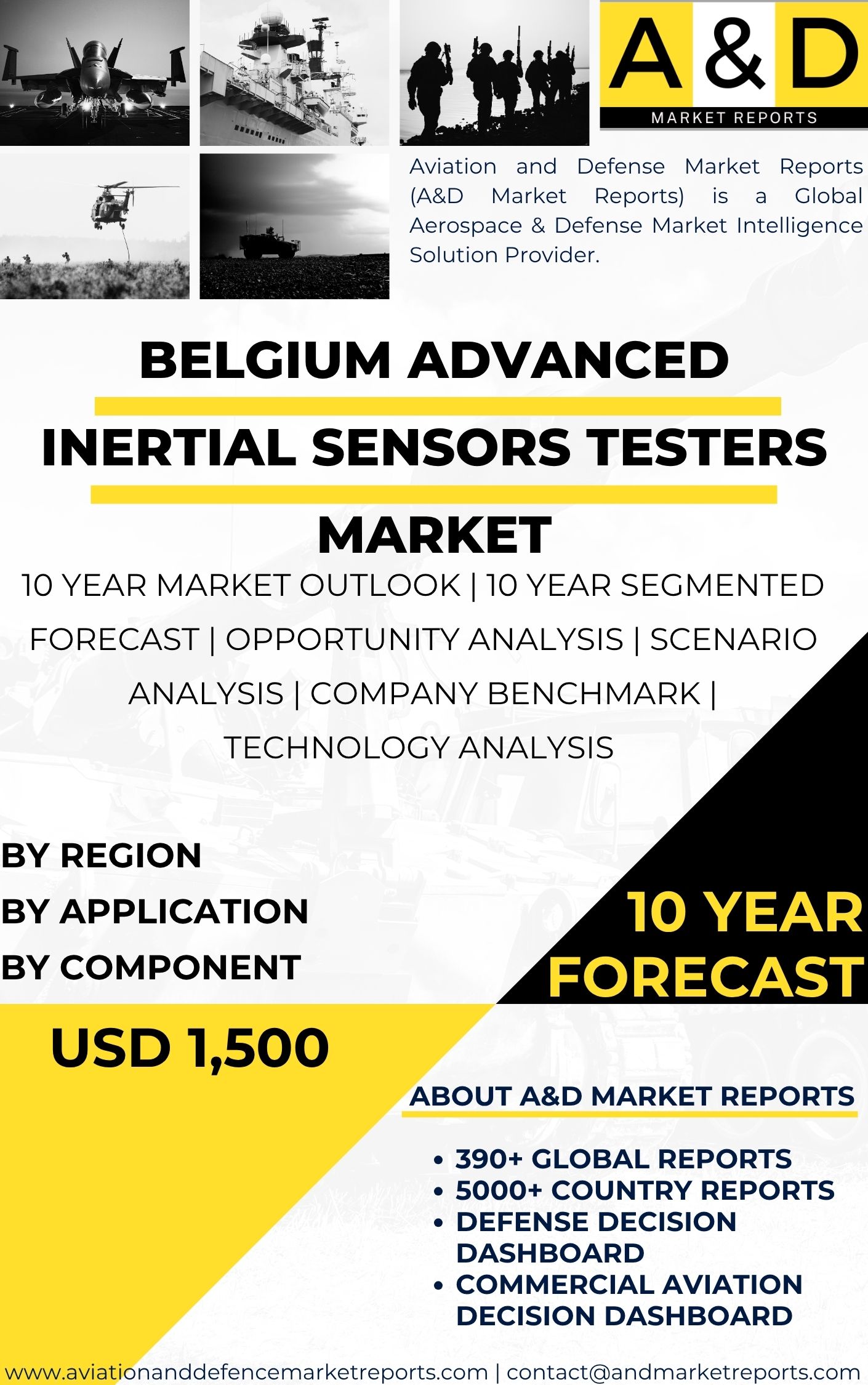
Belgium Advanced Inertial Sensors Testers Market is a critical segment of its defense landscape. These specialized tools test navigation, guidance, and control systems. Inertial sensors include two main devices:
-
Accelerometers: Devices that measure tracking and acceleration.
-
Gyroscopes: Sensors that measure orientation and rotation.
Together, these components form the backbone of modern inertial navigation systems. Military forces deploy them inside fighter jets, missiles, naval ships, submarines, and tanks. Their accuracy remains fundamental when enemies jam or degrade GPS signals. Testing these sensors ensures total mission reliability on modern battlefields.
Critical Metrics That Engineers Test
Belgian sensor testers evaluate several highly precise performance metrics. They verify how a sensor reacts to extreme stress before deployment. Specifically, these systems check the following factors:
-
Bias Stability: The sensor’s baseline accuracy over time.
-
Drift Characteristics: How much the sensor wanders off course.
-
Environmental Response: Reaction to heavy vibrations, sudden shocks, and temperature changes.
[Apply Vibration & Heat] ➔ [Measure Sensor Drift] ➔ [Analyze Bias Stability] ➔ [Certify System]
Furthermore, civil aviation and space programs rely heavily on these testing systems. Validated inertial sensors play a key role in commercial flight controls and satellite navigation.
The Evolution of Digital Testing
The increasing sophistication of modern sensors heavily shapes the Belgian market. The industry is moving away from old mechanical gyroscopes. Instead, developers now use advanced ring laser gyroscopes and micro-electromechanical systems (MEMS).
Consequently, testing technologies must evolve to handle these diverse tools. Belgian research centers routinely collaborate with European partners to design modular tester architectures. Today, automated testing systems dominate the local market. These modern setups integrate real-time data analysis to reduce human error and accelerate certification cycles.
Digital Twins and Simulated Environments
The adoption of digital twins is another defining feature of Belgium’s market. Engineers also use hardware-in-the-loop simulation within their infrastructure. By creating virtual replicas of sensor systems, Belgian engineers can simulate thousands of harsh operational scenarios. This digital step happens long before physical validation, saving time and money.
Tech Highlight: Artificial intelligence now helps analyze sensor data to catch tiny anomalies that humans might miss.
Ultimately, this AI-driven data supports predictive maintenance. It successfully extends the overall lifecycle of expensive inertial navigation hardware.
Beating Electronic Warfare Threats
NATO’s heavy emphasis on resilient navigation solutions drives the operational necessity of these testers. On modern battlefields, electronic warfare is incredibly common. Relying solely on GPS signals creates a dangerous vulnerability.
Therefore, testing advanced inertial sensors ensures Belgian forces can operate with precision in denied environments. Validated sensors guarantee safe air travel and highly accurate satellite positioning.
Overcoming High Industry Costs
The market still faces a few tough challenges. Calibrating ultra-precise sensors requires massive complexity. Furthermore, setting up this advanced infrastructure demands large initial investments. Technologies also move fast, requiring constant upgrades.
Despite these hurdles, Belgium maintains a strong academic base in physics and engineering. Access to EU-level funding for advanced navigation projects further sustains steady growth. The result is a robust local market that secures Belgium’s defense capabilities.