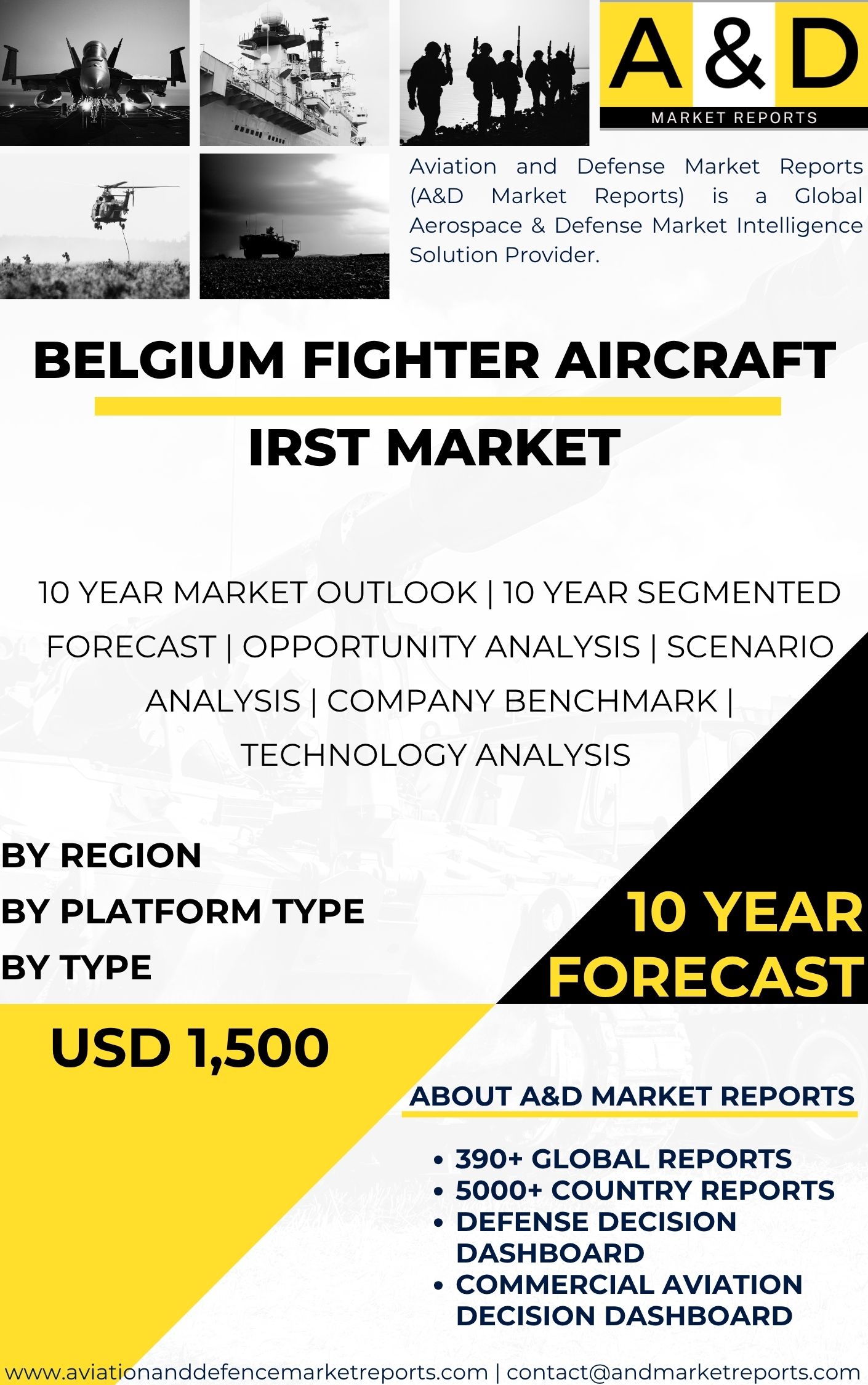
Belgium Fighter Aircraft IRST Market

$1,500.00

Enquire Now
Category: Tag: Report ID: ANDCBE0193

Belgium?s fighter aircraft IRST (Infrared Search and Track) market represents a critical area of investment in modern aerial combat capabilities, reflecting the nation?s focus on enhancing situational awareness, threat detection, and combat effectiveness. IRST systems are passive sensor technologies that detect and track airborne targets using infrared radiation emitted by aircraft, missiles, and other aerial objects. Unlike radar, these systems do not emit signals, making them less susceptible to electronic countermeasures and providing a stealthy means of detecting threats in complex airspaces. Belgium, as a NATO member, integrates IRST systems into its multirole and fighter aircraft fleets to ensure interoperability with allied forces and to enhance operational readiness in both defensive and offensive missions. The market is shaped by the need for advanced sensors capable of operating across various environmental conditions, from low-visibility cloud cover to high-altitude operations, ensuring reliable target acquisition and tracking.

Go To Global Report Page Track this market real time on DDD

Description

Stealth Tracking in Contested Airspaces

Belgium Fighter Aircraft IRST Market represents a critical area of investment in modern aerial combat. This specialized sector reflects the nation’s focus on enhancing threat detection and combat effectiveness.

First of all, IRST systems are entirely passive sensor technologies. They detect and track airborne targets by scanning for infrared radiation emitted by hostile aircraft and missiles.

Consequently, unlike traditional radar arrays, these passive systems do not emit any signals. This silent operation makes them less susceptible to enemy electronic countermeasures.

Therefore, they provide a highly stealthy means of detecting threats in complex airspaces. As a NATO member, Belgium integrates advanced IRST systems directly into its multirole and fifth-generation fighter aircraft fleets. This integration ensures seamless tactical interoperability with allied forces during defensive missions.

Multi-Band Infrared and Target Discrimination

Furthermore, the Belgian IRST market heavily emphasizes technological sophistication, including long-range detection and high-resolution imaging. Modern IRST pods incorporate dual-band or multi-band infrared sensors.

As a result, these sensors can detect subtle heat signatures across multiple wavelengths simultaneously. This multi-band capability improves target discrimination and reduces susceptibility to thermal decoys or enemy flares.

In addition, direct integration with cockpit displays and helmet-mounted systems provides pilots with real-time targeting information. This immediate display enhances decision-making speed and rapid engagement tracking.

To achieve this precision, Belgian defense contractors collaborate closely with European aerospace partners. Together, they develop flexible sensor platforms that meet strict NATO standards. These advanced networks deploy on frontline fighter jets and specialized surveillance aircraft to strengthen national air defense.

Multi-Layered Sensing and Integration Hurdles

Moreover, strict operational requirements constantly drive the expansion of the Belgian IRST market. Air forces place an immense emphasis on the rapid detection of conventional and asymmetric threats. For instance, these systems must quickly track low-observable cruise missiles and small unmanned aerial vehicles.

Therefore, engineers increasingly link IRST hardware with missile warning networks, electronic warfare suites, and traditional radar. This cross-connection creates a robust, multi-layered detection network that dramatically enhances situational awareness.

Similarly, Belgium invests heavily in flight simulation and training programs. These courses ensure that pilots can effectively operate IRST-equipped aircraft without compromising operational security.

However, notable market challenges still exist for domestic procurement teams. The primary hurdles include high capital acquisition costs and complex software integration with legacy aircraft architectures.

In conclusion, continuous government support and a clear focus on research and development keep Belgium at the forefront of aerospace technology. These combined forces sustain a credible, future-proof aerial threat detection capability.
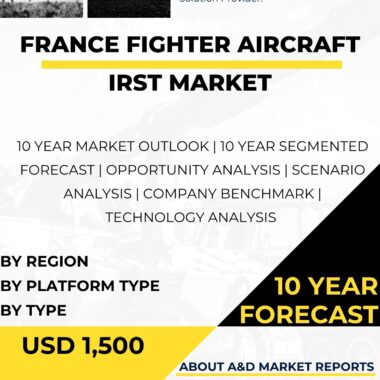
Table of content

Table Of Contents

1 Market Introduction

1.1 Market Introduction
1.2 Market Definition
1.3 Market Segmentation
1.4 10 Year Market Outlook

2 Market Technologies

3 Global Market Forecast

3.1 Global Market Forecast
3.2 By Platform
3.3 By Type

4 Europe Market Trends & Forecast

4.1 Drivers, Restraints And Challenges
4.2 PEST
4.3 Market Forecast
4.3.1 Market Forecast By Platform
4.3.2 Market Forecast By Type
4.4 Scenario Analysis
4.5 Key Companies& Profiling

5 Belguim Analysis

5.1 Current Levels Of Technology Maturation In This Market
5.2 Market Forecast
5.2.1 Market Forecast By Type
5.2.2 Market Forecast By Platform
5.3 Scenario Analysis
5.4 Country Defense Budget (Historical and 10- year forecast)
5.5 Defense Budget Category Spending- 10- year forecast
5.6 Procurement Analysis
5.7 EXIM Data
5.8 Patents

6 Opportunity Matrix

6.1 By Platform
6.2 By Type

7 Scenario Analysis

7.1 Scenario 1

7.1.1 By Platform (Scenario-1)
7.1.2 By Type (Scenario-1)

7.2 Scenario 2

7.2.1 By Platform (Scenario-2)
7.2.2 By Type (Scenario-2)

8 Company Benchmark

9 Strategic Conclusions

10 About Aviation And Defense Market Reports

Segments

By Type
By Platform Type

List of Tables

Table1: Global Market Forecast, Fighter Aircraft IRST
Table2: Europe Market Forecast, Fighter Aircraft IRST
Table3: Europe Market Forecast, By Type
Table4: Europe Market Forecast, By Platform Type
Table5: Europe, Scenario Analysis
Table6: Belguim Market Forecast, Fighter Aircraft IRST
Table7: Belguim Market Forecast, By Type
Table8: Belguim Market Forecast, By Platform Type
Table9: Belguim, Scenario Analysis
Table 10: Belguim Defense Budget 10 Year Forecast
Table 11: Belguim, Defense Budget Category Spending- 10- year forecast
Table 12: Belguim, Procurement Analysis
Table 13: Belguim, EXIM Data Analysis
Table 14: Belguim, Opportunity Analysis, By Type
Table 15: Belguim, Opportunity Analysis, By Platform Type
Table 16: Belguim, Scenario Analysis, By Type
Table 17: Belguim, Scenario Analysis, By Platform Type

List of Figures

Figure 1: Market Segmentation, Belguim Fighter Aircraft IRST
Figure 2: Key Technology Analysis, Fighter Aircraft IRST
Figure 3: Global Market Forecast, Fighter Aircraft IRST
Figure 4: Europe, Market Forecast, Fighter Aircraft IRST
Figure 5: Europe, Market Forecast, By Type
Figure 6: Europe, Market Forecast, By Platform Type
Figure 7: Europe, Scenario Analysis
Figure 8: Belguim, Market Forecast, Fighter Aircraft IRST
Figure 9: Belguim, Market Forecast, By Type
Figure 10: Belguim, Market Forecast, By Platform Type
Figure 11: Belguim, Scenario Analysis
Figure 12: Belguim, Defense Budget 10 Year Forecast
Figure 13: Belguim, Defense Budget Category Spending- 10- year forecast
Figure 14: Belguim, Procurement Analysis
Figure 15: Belguim, EXIM Data Analysis
Figure 16: Belguim, Opportunity Analysis, By Type
Figure 17: Belguim, Opportunity Analysis, By Platform Type
Figure 18: Belguim, Scenario Analysis, By Type
Figure 19: Belguim, Scenario Analysis, By Platform Type
Figure 20: Company Benchmark

Aviation and Defense Market Reports


TPA | TIA | Consulting | Market Reports | Defense Decision Dashboard


Our Defense Report - Our Team Has Worked on More Than 250+ Individual Products / Markets