Belguim Ground Station Simulation Market

$1,500.00

Enquire Now

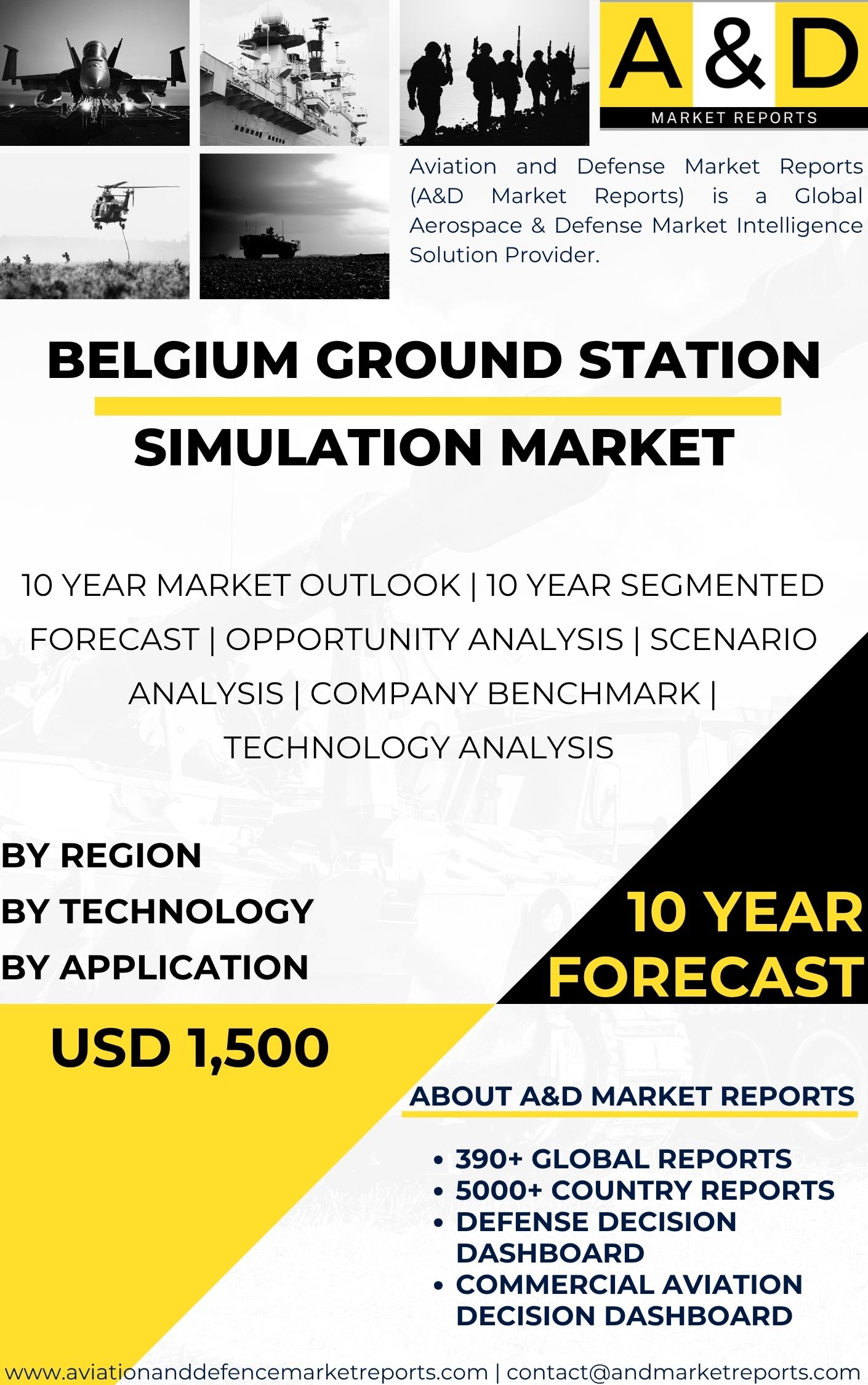
Belgium?s ground station simulation market is emerging as a vital component of its broader aerospace and defense simulation ecosystem, supporting both military and civilian applications. Ground stations play a crucial role in satellite communications, unmanned aerial vehicle (UAV) operations, and space missions, acting as the command, control, and data relay hubs. Simulation systems for ground stations are designed to replicate real-world conditions, enabling operators to train personnel, validate system performance, and test interoperability before deploying in live environments. For Belgium, a nation that participates in NATO, European Union defense projects, and international space initiatives, investment in ground station simulation provides strategic value by enhancing operational readiness, reducing risks, and optimizing resources.

Go To Global Report Page Track this market real time on DDD

Description

Belgium?s ground station simulation market is emerging as a vital component of its broader aerospace and defense simulation ecosystem, supporting both military and civilian applications. Ground stations play a crucial role in satellite communications, unmanned aerial vehicle (UAV) operations, and space missions, acting as the command, control, and data relay hubs. Simulation systems for ground stations are designed to replicate real-world conditions, enabling operators to train personnel, validate system performance, and test interoperability before deploying in live environments. For Belgium, a nation that participates in NATO, European Union defense projects, and international space initiatives, investment in ground station simulation provides strategic value by enhancing operational readiness, reducing risks, and optimizing resources.

The demand for ground station simulation in Belgium is driven by the increasing reliance on space-based assets and unmanned systems. Satellites are essential for communications, navigation, reconnaissance, and earth observation, while UAVs depend on robust ground control stations for real-time mission management. With the rise of hybrid and asymmetric threats, protecting and ensuring the resilience of these systems is critical. Simulation offers a safe and cost-effective environment to train operators in managing complex scenarios, such as cyberattacks, signal interference, or equipment failures. It also helps validate ground station software and hardware, ensuring compatibility with various satellite and UAV platforms used by Belgium and its NATO allies.

Belgium?s defense sector has been progressively adopting advanced simulation technologies to align with its modernization efforts. Ground station simulators are increasingly software-defined and modular, enabling customization for different mission profiles, frequencies, and operational conditions. These simulators often include 3D visualization, scenario generation, and hardware-in-the-loop testing, allowing operators to experience realistic mission scenarios. Belgium?s collaboration with European partners such as France, Germany, and the Netherlands further enhances interoperability requirements, making ground station simulation an indispensable tool for multinational missions.

The market is also supported by Belgium?s growing involvement in space activities. With the European Space Agency (ESA) having a strong presence in Europe and Belgian companies contributing to space technology supply chains, ground station simulation ensures effective integration of Belgian systems into broader European space operations. Training ground personnel in handling satellite launches, orbital maneuvers, and data collection becomes more effective with simulation, which replicates contingencies that may not be feasible or safe to recreate in real operations.

Technological innovation is also shaping the market. Belgium is adopting digital twin technology, where a virtual model of a ground station is created to simulate, monitor, and optimize operations in real time. Artificial intelligence is being integrated into simulators to generate adaptive training scenarios and to analyze operator responses, improving performance assessment and readiness. Furthermore, cybersecurity modules are increasingly incorporated into ground station simulation to prepare operators for electronic warfare and hacking threats, which are becoming more prevalent in the digital battlespace.

Despite its advantages, the Belgian ground station simulation market faces challenges, including high costs of development, integration complexity with legacy systems, and the need for continuous updates to reflect evolving satellite technologies. However, these challenges are mitigated by EU-level funding, NATO standardization requirements, and Belgium?s strategic focus on strengthening its defense and space-related industries. In this context, the market is poised for steady growth, with Belgian firms and research institutions contributing to innovation while also benefiting from international partnerships.
Table of content

Table Of Contents

1 Market Introduction

1.1 Market Introduction
1.2 Market Definition
1.3 Market Segmentation
1.4 10 Year Market Outlook

2 Market Technologies

3 Global Market Forecast

3.1 Global Market Forecast
3.2 By Technology
3.3 By Application

4 Europe Market Trends & Forecast

4.1 Drivers, Restraints And Challenges
4.2 PEST
4.3 Market Forecast
4.3.1 Market Forecast By Technology
4.3.2 Market Forecast By Application
4.4 Scenario Analysis
4.5 Key Companies& Profiling

5 Belguim Analysis

5.1 Current Levels Of Technology Maturation In This Market
5.2 Market Forecast
5.2.1 Market Forecast By Technology
5.2.2 Market Forecast By Application
5.3 Scenario Analysis
5.4 Country Defense Budget (Historical and 10- year forecast)
5.5 Defense Budget Category Spending- 10- year forecast
5.6 Procurement Analysis
5.7 EXIM Data
5.8 Patents

6 Opportunity Matrix

6.1 By Technology
6.2 By Application

7 Scenario Analysis

7.1 Scenario 1

7.1.1 By Technology (Scenario-1)
7.1.2 By Application (Scenario-1)

7.2 Scenario 2

7.2.1 By Technology (Scenario-2)
7.2.2 By Application (Scenario-2)

8 Company Benchmark

9 Strategic Conclusions

10 About Aviation And Defense Market Reports

Segments

By Application
By Technology

List of Tables

Table1: Global Market Forecast, Ground Station Simulation Market
Table2: Europe Market Forecast, Ground Station Simulation Market
Table3: Europe Market Forecast, By Application
Table4: Europe Market Forecast, By Technology
Table5: Europe, Scenario Analysis
Table6: Belguim Market Forecast, Ground Station Simulation Market
Table7: Belguim Market Forecast, By Application
Table8: Belguim Market Forecast, By Technology
Table9: Belguim, Scenario Analysis
Table 10: Belguim Defense Budget 10 Year Forecast
Table 11: Belguim, Defense Budget Category Spending- 10- year forecast
Table 12: Belguim, Procurement Analysis
Table 13: Belguim, EXIM Data Analysis
Table 14: Belguim, Opportunity Analysis, By Application
Table 15: Belguim, Opportunity Analysis, By Technology
Table 16: Belguim, Scenario Analysis, By Application
Table 17: Belguim, Scenario Analysis, By Technology

List of Figures

Figure 1: Market Segmentation, Belguim Ground Station Simulation Market
Figure 2: Key Technology Analysis, Ground Station Simulation Market
Figure 3: Global Market Forecast, Ground Station Simulation Market
Figure 4: Europe, Market Forecast, Ground Station Simulation Market
Figure 5: Europe, Market Forecast, By Application
Figure 6: Europe, Market Forecast, By Technology
Figure 7: Europe, Scenario Analysis
Figure 8: Belguim, Market Forecast, Ground Station Simulation Market
Figure 9: Belguim, Market Forecast, By Application
Figure 10: Belguim, Market Forecast, By Technology
Figure 11: Belguim, Scenario Analysis
Figure 12: Belguim, Defense Budget 10 Year Forecast
Figure 13: Belguim, Defense Budget Category Spending- 10- year forecast
Figure 14: Belguim, Procurement Analysis
Figure 15: Belguim, EXIM Data Analysis
Figure 16: Belguim, Opportunity Analysis, By Application
Figure 17: Belguim, Opportunity Analysis, By Technology
Figure 18: Belguim, Scenario Analysis, By Application
Figure 19: Belguim, Scenario Analysis, By Technology
Figure 20: Company Benchmark