
Description
Belgium’s Personal Air Mobility Market: Next-Gen Transit
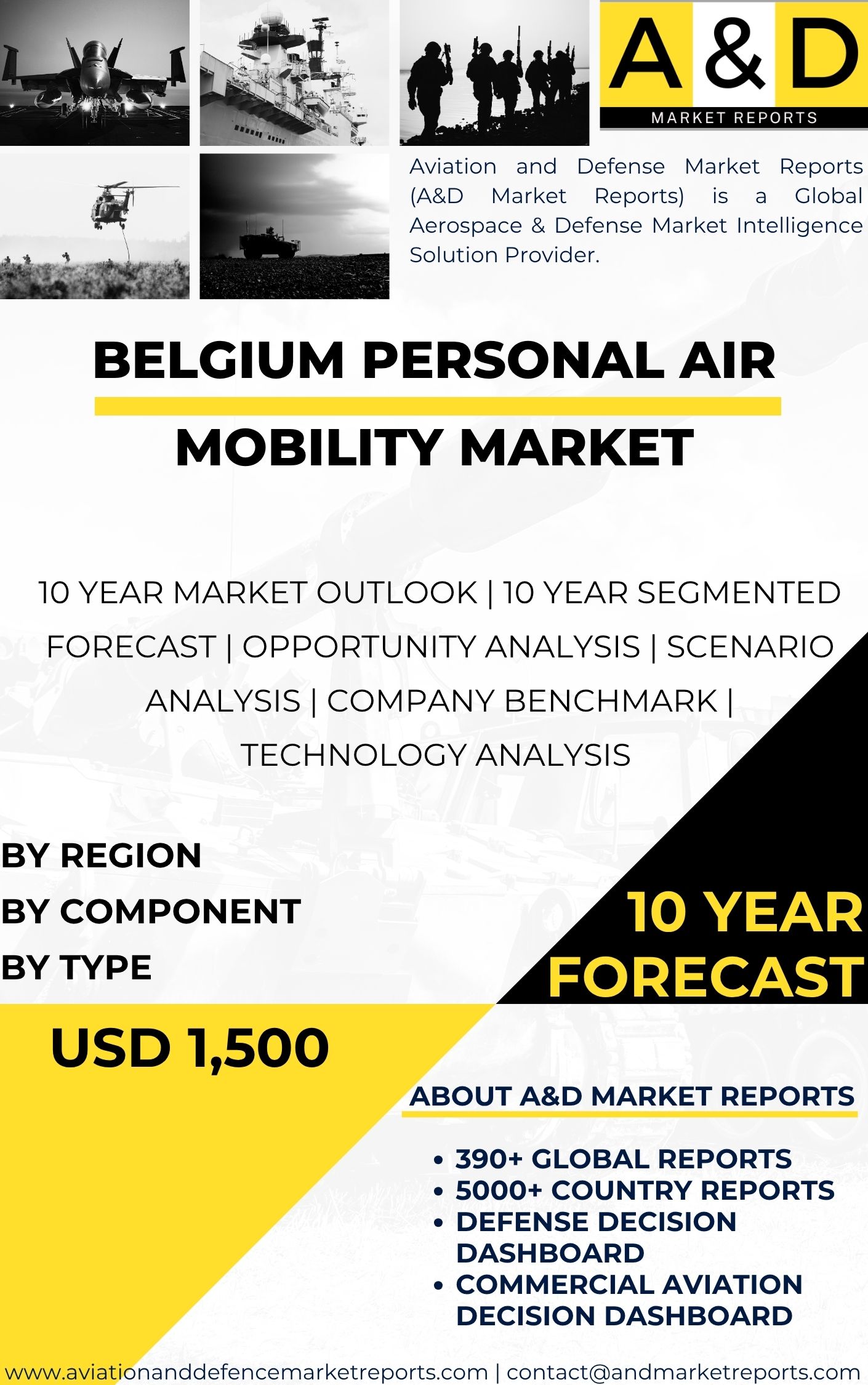
Belgium Personal Air Mobility Market is gradually emerging as a dynamic segment of the country’s broader aerospace sector. This shift occurs as cities seek smart ways to expand their urban transportation ecosystems. Primarily, rapid technological innovation and a growing focus on sustainable transportation solutions drive this evolution.
Personal air mobility encompasses several advanced technologies. These options include electric vertical takeoff and landing (eVTOL) aircraft, small autonomous aerial vehicles, and innovative air transport solutions. Engineers design these platforms specifically for short-range travel within urban, suburban, and peri-urban areas.
Currently, the market is highly relevant to Belgium’s dense urban centers, such as Brussels, Antwerp, and Ghent. Chronic traffic congestion and limited ground infrastructure create strong incentives for alternative aerial transportation solutions in these cities.
Therefore, both public and private stakeholders are actively exploring PAM networks. They want to improve regional mobility, slash daily travel times, and enhance overall urban connectivity. Most importantly, they aim to achieve these goals while simultaneously reducing environmental impacts.
Technical Foundations, Automation, and Regional Flight Trials
The Belgian personal air mobility market is evolving rapidly due to key technological advancements. Today, developers focus heavily on electric propulsion, advanced battery density, autonomous navigation, and lightweight composite materials. Electric and hybrid-electric propulsion systems are at the absolute forefront of this development. These clean systems allow next-generation vehicles to achieve vertical takeoff capabilities while maintaining ultra-low noise levels and zero direct emissions.
To accelerate these designs, Belgium’s engineering institutions and defense contractors collaborate closely with European industry leaders. Together, they test and certify eVTOL designs for operational safety, energy efficiency, and strict environmental compliance.
These validation efforts are pushing beyond theory into real-world airspace. For example, Belgium is participating actively in the cross-border Electrifly project. This pioneering initiative launched zero-emission electric test flights linking Liège directly with nearby Maastricht and Aachen.
Additionally, simulation-based training, advanced flight control systems, and autonomous flight software remain critical components. These technologies ensure reliable and safe vehicle operations in complex urban environments with variable weather conditions and high-density air traffic.
Regulatory Paradigms, Drone Strategy 2.0, and Testing Hubs
Regulatory frameworks act as both a key driver and a major challenge in Belgium’s personal air mobility market. The European Union Aviation Safety Agency (EASA) provides overarching certification and strict safety standards for eVTOL platforms. Concurrently, Belgium’s national aviation authorities work tirelessly to integrate these technologies into existing airspace management systems.
To structure this integration safely, Belgium relies heavily on the European Union’s Drone Strategy 2.0 framework. Under this plan, authorities are designing specialized urban air mobility corridors and digital traffic management systems. These tools ensure that low-altitude air routes link seamlessly with existing public transportation networks.
To safely test these concepts, the country utilizes world-class infrastructure like Droneport Sint-Truiden. Located at a former military airport, this facility provides a dedicated, segregated testing airspace. This space allows innovators to safely operate automated aircraft and test drone-based emergency response networks.
Ultimately, public acceptance, safety assurance, and robust cybersecurity remain vital to long-term market growth. In conclusion, Belgium’s active participation in European urban air mobility testing corridors positions the country as a growing hub for innovative personal air transit.