
Description
Belgium’s Situational Awareness Market: Unified Intelligence
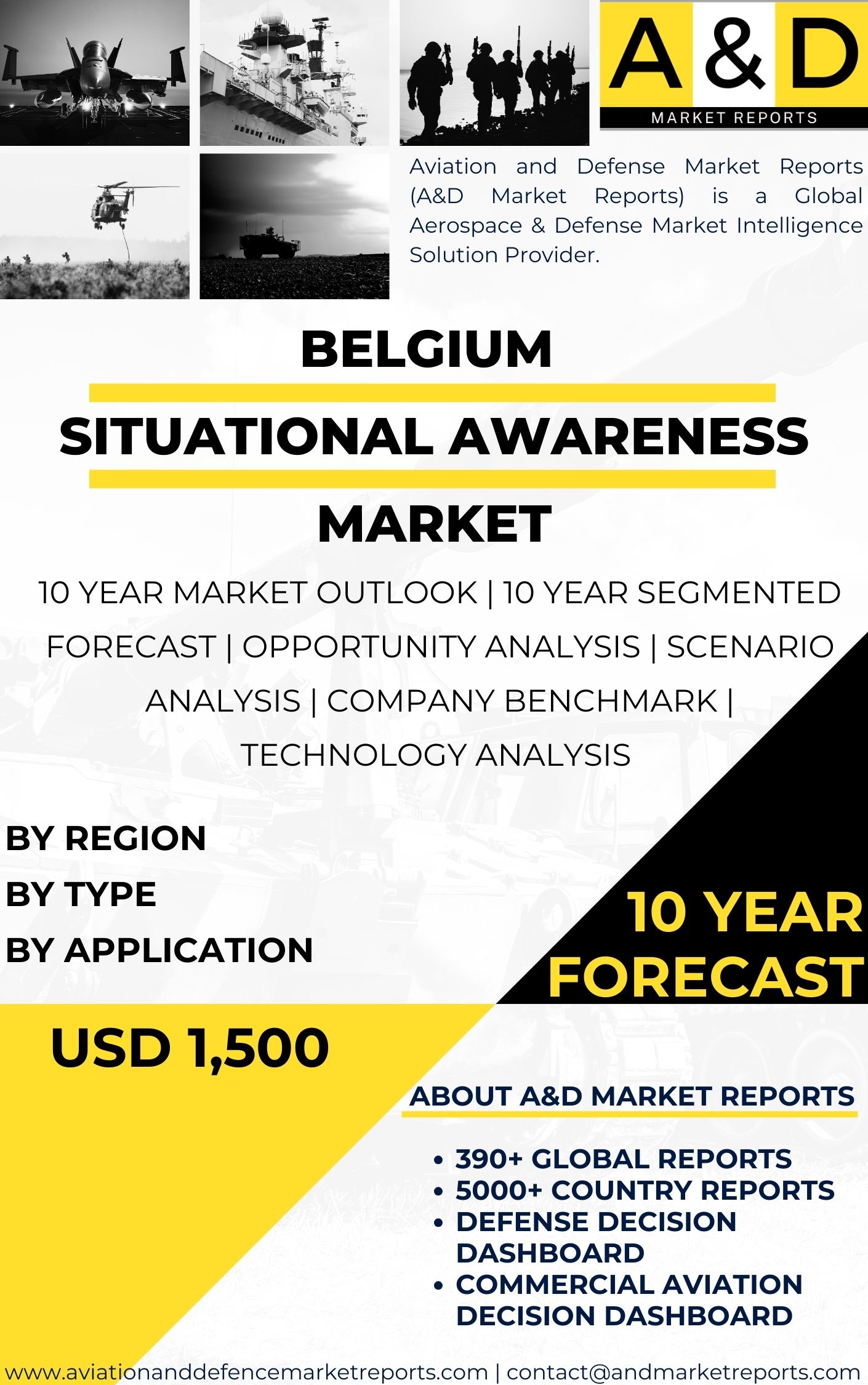
Belgium Situational Awareness Market encompasses a broad suite of advanced technologies, software systems, and data solutions. Primarily, these platforms provide a comprehensive, real-time understanding of highly complex operational environments. Consequently, they support vital missions across military, internal security, and civil protection domains.
Situational awareness systems integrate massive streams of data from multiple disparate sources. These inputs include advanced electro-optical sensors, wide-area surveillance networks, tactical radar, and secure communication links. Additionally, they process geographic information systems (GIS) and raw military intelligence feeds.
By unifying these feeds, the software successfully presents actionable, simplified information for decision-makers. Today, the Belgian armed forces, federal law enforcement agencies, and critical infrastructure operators rely heavily on these solutions. They utilize them to accelerate threat detection, streamline response coordination, and maximize overall operational efficiency.
Artificial Intelligence, Sensor Fusion, and Counter-Drone Networks
Rapid advancements in sensor fusion, artificial intelligence (AI), machine learning, and big data analytics actively drive this market. These computing technologies enable advanced predictive analysis, automated anomaly detection, and automated decision-making support.
Therefore, Belgium’s defense sector focuses heavily on developing modular, interoperable platforms that can integrate smoothly across the air, land, sea, and cyber domains. Command and control (C2) centers, mobile operation units, and unmanned systems utilize these platforms to maintain a single, shared operational picture.
This technological push is accelerating rapidly due to severe security threats. For instance, following illegal drone flights over sensitive military installations, Belgium launched a massive €1.1 billion ($1.3 billion) counter-drone tender. This 10-year project will combine active and passive detection sensors with an AI-driven command and control system to link all air-defense assets.
To capture this market, major industrial players are joining forces. For example, Anduril Industries, Nokia Belgium, and COBBS Belux formed a high-tech defense consortium. This group integrates multi-source sensor fusion software with secure Nokia communications to protect Belgian airspace. Concurrently, the military is expanding its long-range surveillance capabilities by deploying advanced MQ-9B SkyGuardian persistent drones to support regional NATO intelligence networks.
Cybersecurity Frameworks and Human-Machine Horizons
Despite this strong momentum, the situational awareness market still faces notable challenges. These primary hurdles include managing massive volumes of raw incoming data, ensuring system interoperability between allied forces, and protecting networks against hostile cyber threats.
To actively address these digital vulnerabilities, the newly established Belgian Cyber Command (BECYBERCOM) coordinates defense operations across the electromagnetic spectrum. This specialized command ensures that data-sharing networks remain highly resilient, even under intense electronic warfare or network-compromised conditions.
Additionally, continuous innovation in sensor hardware, data-processing algorithms, and human-machine interfaces remains absolutely necessary. These regular updates maintain operational effectiveness and prevent cognitive overload for screen operators.
In conclusion, collaborative efforts between Belgian defense manufacturers, national research centers, and European partners accelerate local innovation. Ultimately, these steady technological investments ensure that Belgium’s security personnel maintain peak operational readiness, rapid decision-making speed, and high mission success rates.