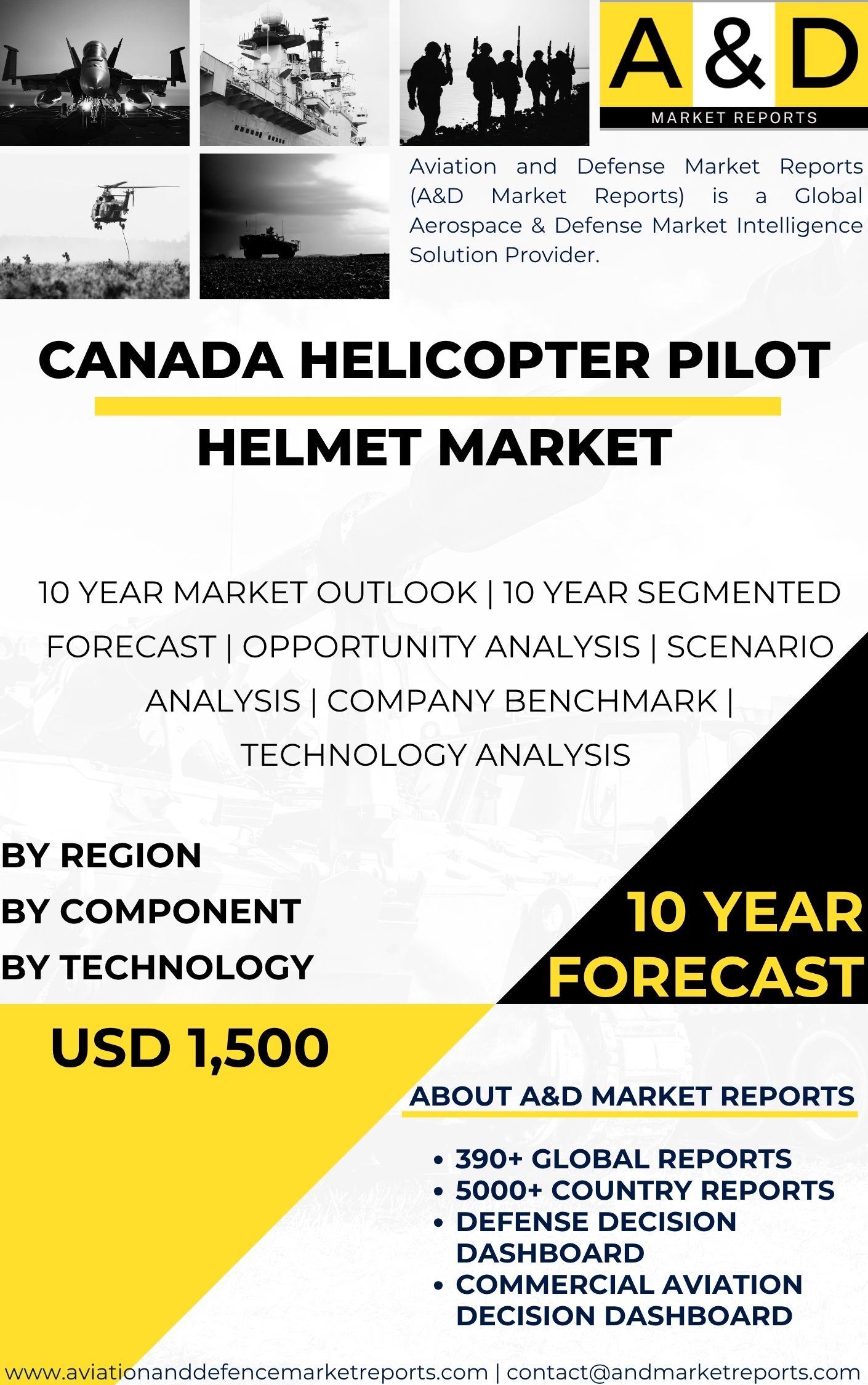
Canada Helicopter Pilot Helmet Market

$1,500.00

Enquire Now

The helicopter pilot helmet market in the Canada shares similarities with its fighter pilot counterpart but has distinct characteristics rooted in the unique roles and operational environments faced by rotary-wing aviators. Helicopter pilots often operate at lower altitudes and in more challenging terrain conditions, which means their helmets are optimized for different performance features. From a historical perspective, early helicopter pilot helmets were simple adaptations, but over time, design has become highly specialized to suit missions ranging from combat insertion to medical evacuation and reconnaissance. Protection remains a core function, but these helmets also prioritize communication clarity, integration with night vision devices, and the ability to withstand long periods of wear in sometimes cramped or turbulent cockpit spaces. One of the noteworthy aspects of this market is the emphasis on acoustic protection, shielding pilots from rotor, engine, and environmental noise while ensuring crystal-clear communication with ground units and other aircraft. Modular accessory capabilities, including mounts for imaging devices and heads-up displays, are also increasingly in demand, reflecting the growing need for situational awareness in complex missions. In the U.S., the market is bolstered not only by military needs but also by law enforcement, homeland security, and civilian applications such as firefighting and search-and-rescue missions.

Go To Global Report Page Track this market real time on DDD

Description

Distinct Operational Role and Market Position

The Canada Helicopter Pilot Helmet shares some similarities with fighter pilot systems. However, it is shaped by the specific needs of rotary-wing operations. Helicopter pilots often fly at lower altitudes and navigate complex terrain such as mountains, forests, and urban zones. Therefore, helmet design focuses on different performance priorities. Historically, early helicopter helmets were simple adaptations of fixed-wing designs. Over time, they evolved into specialized systems tailored for missions like combat insertion, medical evacuation, reconnaissance, and disaster response. Protection remains essential, yet operational adaptability now defines the market.

Protection, Communication, and Mission Integration

Modern helicopter pilot helmets combine safety with advanced communication features. Because helicopter cockpits generate intense rotor and engine noise, acoustic protection is a major focus. At the same time, pilots must maintain clear communication with ground teams and other aircraft. As a result, manufacturers invest in high-quality noise attenuation and integrated audio systems. In addition, compatibility with night vision devices is crucial for low-light and night missions. Many helmets now include modular mounts for imaging equipment and heads-up display options. These features enhance situational awareness during complex operations.

Diverse Applications Across Sectors

In Canada, the market extends beyond military use. Law enforcement agencies, homeland security units, firefighting teams, and search-and-rescue organizations also require advanced helmet systems. This broader demand encourages design diversity and flexible configurations. For example, civilian rescue missions may prioritize communication clarity and lightweight comfort. Meanwhile, military operations may require added ballistic protection and advanced display integration. Because of these varied applications, manufacturers develop adaptable helmet platforms that serve multiple mission profiles.

Comfort, Ergonomics, and Long-Duration Performance

Helicopter pilots often conduct long sorties in physically demanding conditions. Consequently, comfort and ergonomic balance are critical design factors. Poor weight distribution can cause neck and shoulder strain, especially during turbulent flight. To address this, modern helmets feature improved padding systems and precise fitting mechanisms. Lightweight materials also reduce fatigue during extended missions. Furthermore, customization options allow pilots to adjust helmets for personal comfort and equipment compatibility. These ergonomic improvements directly enhance operational effectiveness.

Economic Impact and Industry Collaboration

The helicopter pilot helmet market supports a network of defense contractors and specialized technology firms. Large suppliers contribute manufacturing capacity and system integration expertise. At the same time, smaller companies focus on pilot ergonomics, audio systems, and visual technologies. This collaboration fosters innovation and steady market development. Although production volumes may be lower than commercial aviation equipment, the high level of specialization adds significant value to the aerospace and defense sector.

Technological Trends and Future Outlook

Current trends emphasize digital integration and real-time data visualization. Advanced acoustic engineering continues to improve communication clarity. Additionally, embedded data vision systems are transforming helmets into command and control interfaces. Rather than serving as simple protective shells, modern helmets now function as interactive mission tools. Looking ahead, further integration with aircraft systems and evolving sensor technologies will likely drive continued innovation. As helicopter missions grow more complex, helmet systems will remain central to pilot safety and operational performance.
Table of content

Table Of Contents

1 Market Introduction

1.1 Market Introduction
1.2 Market Definition
1.3 Market Segmentation
1.4 10 Year Market Outlook

2 Market Technologies

3 Global Market Forecast

3.1 Global Market Forecast
3.2 By Technology
3.3 By Component

4 North America Market Trends & Forecast

4.1 Drivers, Restraints And Challenges
4.2 PEST
4.3 Market Forecast
4.3.1 Market Forecast By Technology
4.3.2 Market Forecast By Component
4.4 Scenario Analysis
4.5 Key Companies& Profiling

5 Canada Analysis

5.1 Current Levels Of Technology Maturation In This Market
5.2 Market Forecast
5.2.1 Market Forecast By Component
5.2.2 Market Forecast By Technology
5.3 Scenario Analysis
5.4 Country Defense Budget (Historical and 10- year forecast)
5.5 Defense Budget Category Spending- 10- year forecast
5.6 Procurement Analysis
5.7 EXIM Data
5.8 Patents

6 Opportunity Matrix

6.1 By Technology
6.2 By Component

7 Scenario Analysis

7.1 Scenario 1

7.1.1 By Technology (Scenario-1)
7.1.2 By Component (Scenario-1)

7.2 Scenario 2

7.2.1 By Technology (Scenario-2)
7.2.2 By Component (Scenario-2)

8 Company Benchmark

9 Strategic Conclusions

10 About Aviation And Defense Market Reports

Segments

By Component
By Technology

List of Tables

Table1: Global Market Forecast, Helicopter Pilot Helmet Market
Table2: North America Market Forecast, Helicopter Pilot Helmet Market
Table3: North America Market Forecast, By Component
Table4: North America Market Forecast, By Technology
Table5: North America, Scenario Analysis
Table6: Canada Market Forecast, Helicopter Pilot Helmet Market
Table7: Canada Market Forecast, By Component
Table8: Canada Market Forecast, By Technology
Table9: Canada, Scenario Analysis
Table 10: Canada Defense Budget 10 Year Forecast
Table 11: Canada, Defense Budget Category Spending- 10- year forecast
Table 12: Canada, Procurement Analysis
Table 13: Canada, EXIM Data Analysis
Table 14: Canada, Opportunity Analysis, By Component
Table 15: Canada, Opportunity Analysis, By Technology
Table 16: Canada, Scenario Analysis, By Component
Table 17: Canada, Scenario Analysis, By Technology

List of Figures

Figure 1: Market Segmentation, Canada Helicopter Pilot Helmet Market
Figure 2: Key Technology Analysis, Helicopter Pilot Helmet Market
Figure 3: Global Market Forecast, Helicopter Pilot Helmet Market
Figure 4: North America, Market Forecast, Helicopter Pilot Helmet Market
Figure 5: North America, Market Forecast, By Component
Figure 6: North America, Market Forecast, By Technology
Figure 7: North America, Scenario Analysis
Figure 8: Canada, Market Forecast, Helicopter Pilot Helmet Market
Figure 9: Canada, Market Forecast, By Component
Figure 10: Canada, Market Forecast, By Technology
Figure 11: Canada, Scenario Analysis
Figure 12: Canada, Defense Budget 10 Year Forecast
Figure 13: Canada, Defense Budget Category Spending- 10- year forecast
Figure 14: Canada, Procurement Analysis
Figure 15: Canada, EXIM Data Analysis
Figure 16: Canada, Opportunity Analysis, By Component
Figure 17: Canada, Opportunity Analysis, By Technology
Figure 18: Canada, Scenario Analysis, By Component
Figure 19: Canada, Scenario Analysis, By Technology
Figure 20: Company Benchmark

Aviation and Defense Market Reports


TPA | TIA | Consulting | Market Reports | Defense Decision Dashboard


Our Defense Report - Our Team Has Worked on More Than 250+ Individual Products / Markets