
Description
Role of Military Sensors in Canada’s Defense
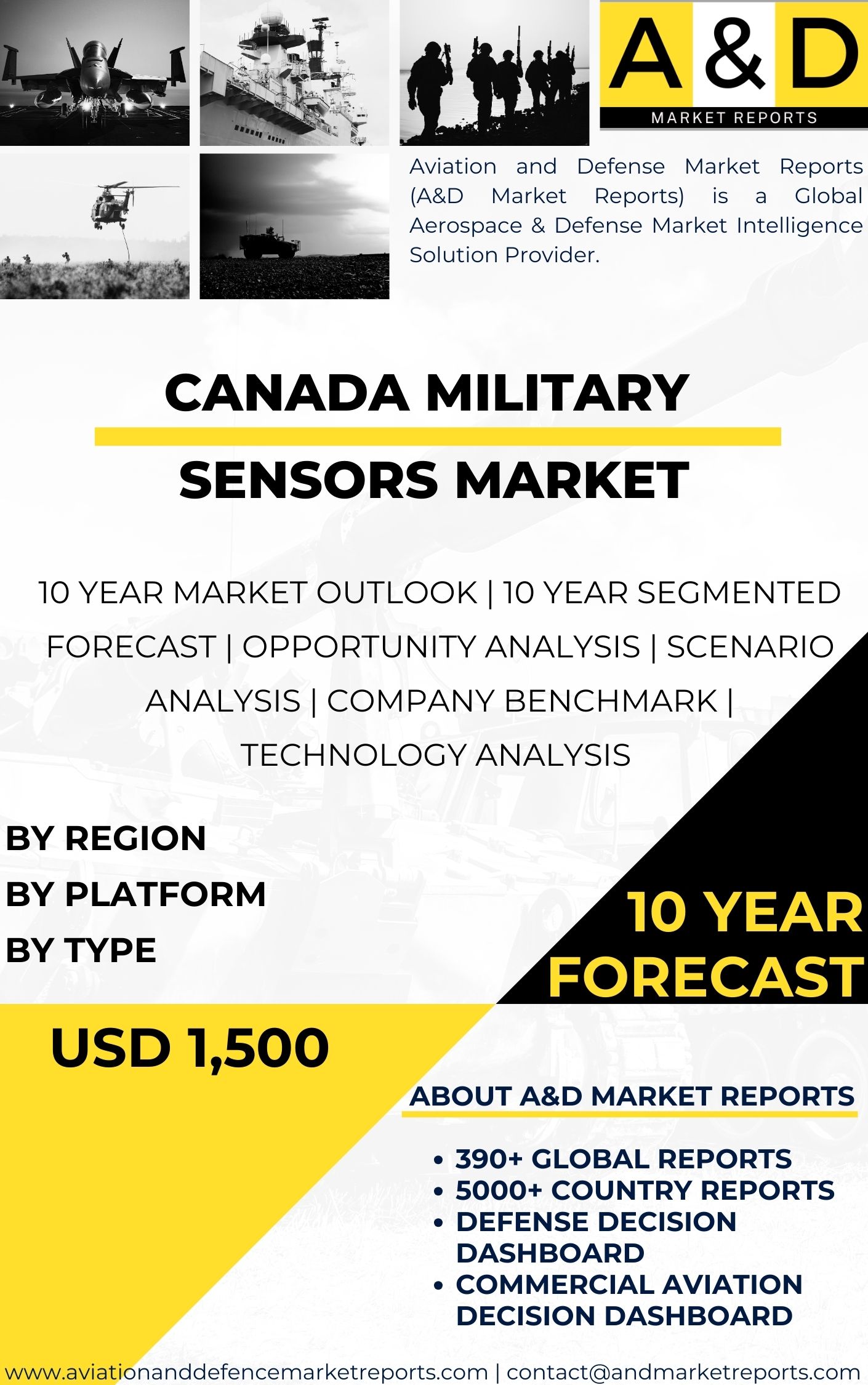
Canada Military sensors Market are key parts of Canada’s defense system. They provide important data and clear intelligence to the Canadian Armed Forces for many tasks, such as reconnaissance, surveillance, target detection, navigation, and threat identification. Because of this, they help forces understand what is happening around them. As a result, commanders can make quick and smart decisions. These sensors improve situational awareness and increase operational strength. In addition, they help Canada respond faster to modern security threats. As global risks continue to change, Canada upgrades its sensor systems to stay prepared. Therefore, advanced sensors support national security and protect the country’s interests.
Reconnaissance and Surveillance Applications
One of the main uses of military sensors in Canada is reconnaissance and surveillance. These sensors collect images and data in real time. Because they operate on land, in the air, at sea, and even in space, they give a full view of the operational environment. For example, ground-based sensors monitor border areas. At the same time, airborne and satellite sensors track movements over large regions. As a result, military leaders gain better awareness of possible threats. Furthermore, these systems help in disaster response and emergency support. Therefore, surveillance sensors play a vital role in daily defense operations.
Intelligence, Surveillance, and Reconnaissance Support
Military sensors also strengthen intelligence, surveillance, and reconnaissance missions. They gather key information during both domestic and overseas operations. For instance, they support border security and counterterrorism efforts. In addition, they assist law enforcement agencies when required. Because these sensors detect unusual activity early, they allow faster response. This improves national safety. Moreover, sensor data helps analysts study patterns and predict risks. As a result, Canada can act before threats grow larger. Therefore, ISR systems are central to modern defense planning.
Target Acquisition and Precision Operations
Military sensors play an active role in target acquisition. Systems such as radar, infrared devices, and laser tools detect and track hostile targets. Once identified, forces can engage with high accuracy. Because of this precision, operations reduce unwanted damage. In addition, accurate targeting increases mission success. These systems also work in difficult weather and low visibility conditions. As a result, military units maintain effectiveness at all times. Therefore, advanced targeting sensors improve both safety and performance in combat operations.
Navigation and Guidance Systems
Sensors also support navigation and guidance tasks. Inertial navigation systems and GPS tools provide exact position data. Terrain mapping sensors guide aircraft, ships, and ground vehicles through complex areas. Because of these tools, forces move safely in unfamiliar or risky environments. In addition, accurate navigation prevents operational errors. This ensures mission success. Furthermore, reliable guidance systems protect personnel and equipment. Therefore, navigation sensors are essential for smooth and secure military movement.
Contribution of the Canadian Defense Industry
Canada’s defense industry plays an active role in sensor development. Local companies work with research institutions and global partners. Through these partnerships, new technologies emerge. As a result, Canada stays competitive in sensor innovation. In addition, collaboration allows knowledge sharing and skill growth. This strengthens national expertise. Furthermore, investment in research supports long-term security goals. Therefore, industry participation helps maintain advanced and reliable military sensor systems.
Testing and Validation Standards
Military sensors must meet strict standards. For this reason, experts test them carefully before deployment. Engineers examine performance, accuracy, and durability. They also check resistance to harsh weather and electronic interference. Because of this testing, systems remain dependable in real missions. In addition, regular calibration keeps sensors precise. These steps reduce technical failures. Therefore, thorough validation ensures strong and secure defense capabilities.
Ethical and Legal Considerations
Canada also considers ethical and legal factors in sensor use. Protecting civilian privacy is very important. Therefore, authorities follow national and international laws. In addition, secure data handling protects sensitive information. Because of responsible management, public trust remains strong. Furthermore, clear guidelines prevent misuse of technology. As a result, military sensors operate within legal and ethical limits.
Integration of Advanced Technologies
Modern military sensors now include advanced digital tools. Enhanced signal processing improves detection speed and accuracy. Data fusion systems combine information from multiple sources. Because of this integration, decision-makers receive clear and complete intelligence. In addition, analytics tools help interpret large volumes of data quickly. As a result, operations become faster and more efficient. Therefore, technology integration strengthens overall defense readiness.
Networked Sensor Systems
Canada increasingly uses networked sensor systems. These systems connect multiple platforms and share data instantly. Because of seamless communication, military units coordinate better. In addition, integrated networks improve situational awareness across forces. This creates operational flexibility. Furthermore, connected systems allow joint missions between land, air, and naval units. As a result, defense operations become more unified and effective.
Support for International Partnerships
Military sensors also strengthen Canada’s partnerships with allied nations. Interoperable systems allow shared operations and joint exercises. Because equipment works together smoothly, cooperation improves. In addition, shared intelligence increases collective defense strength. This builds trust among partners. Furthermore, collaboration enhances global security efforts. Therefore, sensor compatibility supports international defense cooperation.
Future Sensor Technologies
Canada continues to explore future sensor technologies. Researchers study machine learning and adaptive sensor networks. These tools can process data faster and learn from patterns. Because of this, they respond better to changing threats. In addition, smart systems reduce human workload. This improves efficiency in complex environments. Furthermore, innovation ensures long-term readiness. Therefore, future-focused research keeps Canada prepared for emerging security challenges.
Conclusion
Military sensors remain vital to Canada’s defense strength. They support reconnaissance, surveillance, targeting, navigation, and threat detection. Because of these capabilities, the Canadian Armed Forces operate with greater awareness and precision. In addition, constant research and industry support keep technology up to date. Strict testing ensures reliability. Ethical practices maintain public trust. Moreover, advanced integration and international cooperation expand operational reach. As security challenges evolve, Canada continues to invest in modern sensor systems. Therefore, military sensors will remain central to national defense and long-term security planning.