
Description
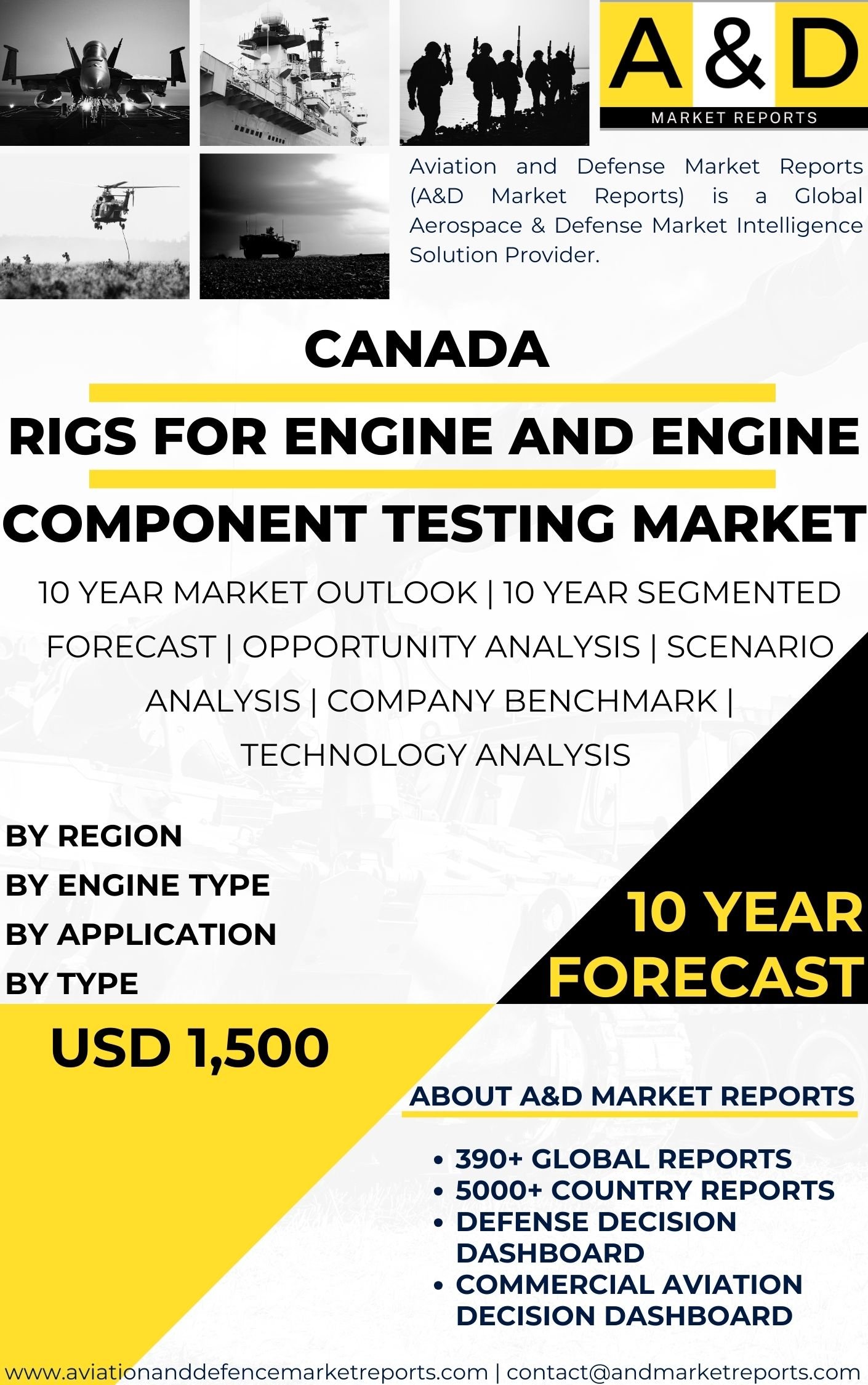
Engine and Engine Component Test Rig Market Overview in Canada
The market for Canada Rigs for engine aerospace and defense sectors represents a highly specialized and technologically advanced industry segment. These rigs support the development, certification, and long-term maintenance of aircraft propulsion systems. Engineers use them to simulate a wide range of operational stresses and environmental conditions under controlled settings. Consequently, manufacturers can validate engine performance, durability, and safety before real-world deployment. As propulsion systems grow more complex, demand for advanced and precise testing infrastructure continues to increase.
Engine Test Rig Configurations and Capabilities
Engine test rigs include diverse configurations tailored to propulsion types such as turbofans, turbojets, turboshafts, turboprops, and auxiliary power units. Each configuration allows controlled evaluation of engine behavior across varying throttle settings, simulated altitudes, temperature extremes, and vibration loads. In addition, component-level rigs focus on compressors, turbines, nozzles, seals, and bearings. These specialized platforms assess fatigue limits, wear rates, airflow efficiency, and structural integrity. Therefore, subsystem testing provides critical insights that improve overall engine reliability and fuel efficiency.
Data Acquisition and Control Integration
Modern engine test rigs integrate advanced data acquisition and control systems that enable real-time monitoring and operational precision. These systems measure fuel flow, shaft speeds, pressure ratios, temperature gradients, and emissions with high accuracy. As a result, engineers can evaluate performance against strict aerospace certification standards. Furthermore, digital platforms support modeling, automation, and predictive analytics. By detecting potential anomalies early, manufacturers reduce development risks and enhance test cycle efficiency.
Key Industry Participants
Leading companies such as Safran Test Cells, MDS Aero Support Corporation, Atec, and CEL Aerospace provide turnkey testing solutions across commercial and defense markets. These firms deliver services that include design, engineering, installation, commissioning, and lifecycle support. Moreover, specialized instrumentation providers enhance rig precision through advanced measurement technologies. Because propulsion requirements vary widely, customization remains a defining competitive factor.
Economic and Strategic Significance
Engine test rigs hold substantial economic and strategic value within aerospace and defense operations. They allow propulsion manufacturers and defense agencies to validate advanced engine designs under rigorous conditions. Therefore, organizations can ensure compliance with safety, performance, and emission regulations before certification. In defense contexts, reliable propulsion directly influences mission readiness and national security. Additionally, thorough endurance testing extends engine life cycles and reduces costly in-service failures, which lowers overall fleet maintenance burdens.
Innovation and Emerging Technologies
Technological innovation drives continuous evolution within the engine testing rig market. Manufacturers increasingly incorporate multi-physics simulation environments that combine mechanical, thermal, chemical, and acoustic stresses. These integrated systems replicate real-world operating conditions with greater realism. At the same time, additive manufacturing and hybrid-electric propulsion introduce new material behaviors that require updated testing approaches. Artificial intelligence, automation, and digital twin technologies further enhance diagnostics and shorten development timelines. Consequently, testing becomes more predictive, efficient, and data-driven.
Modularity, Scalability, and Mobility
Modern engine test rigs emphasize modular design and scalable configurations. This flexibility allows operators to adapt systems for different engine types and component sizes without major infrastructure changes. As a result, organizations optimize capital investment and increase utilization rates. In addition, mobile or deployable test rigs support field-level validation at military bases or production facilities. Therefore, mobility enhances operational flexibility while maintaining high testing standards.
Conclusion
Engine and engine component test rigs form a foundational pillar of Canada’s aerospace and defense ecosystem. They enable comprehensive validation of propulsion systems under simulated real-world conditions. Through advanced monitoring, automation, and compliance alignment, these rigs safeguard performance and mission reliability. As propulsion technologies advance toward greater efficiency and sustainability, testing infrastructure must evolve accordingly. Consequently, this market will remain strategically significant and technologically dynamic in the years ahead.