
Description
Market Overview and Strategic Importance
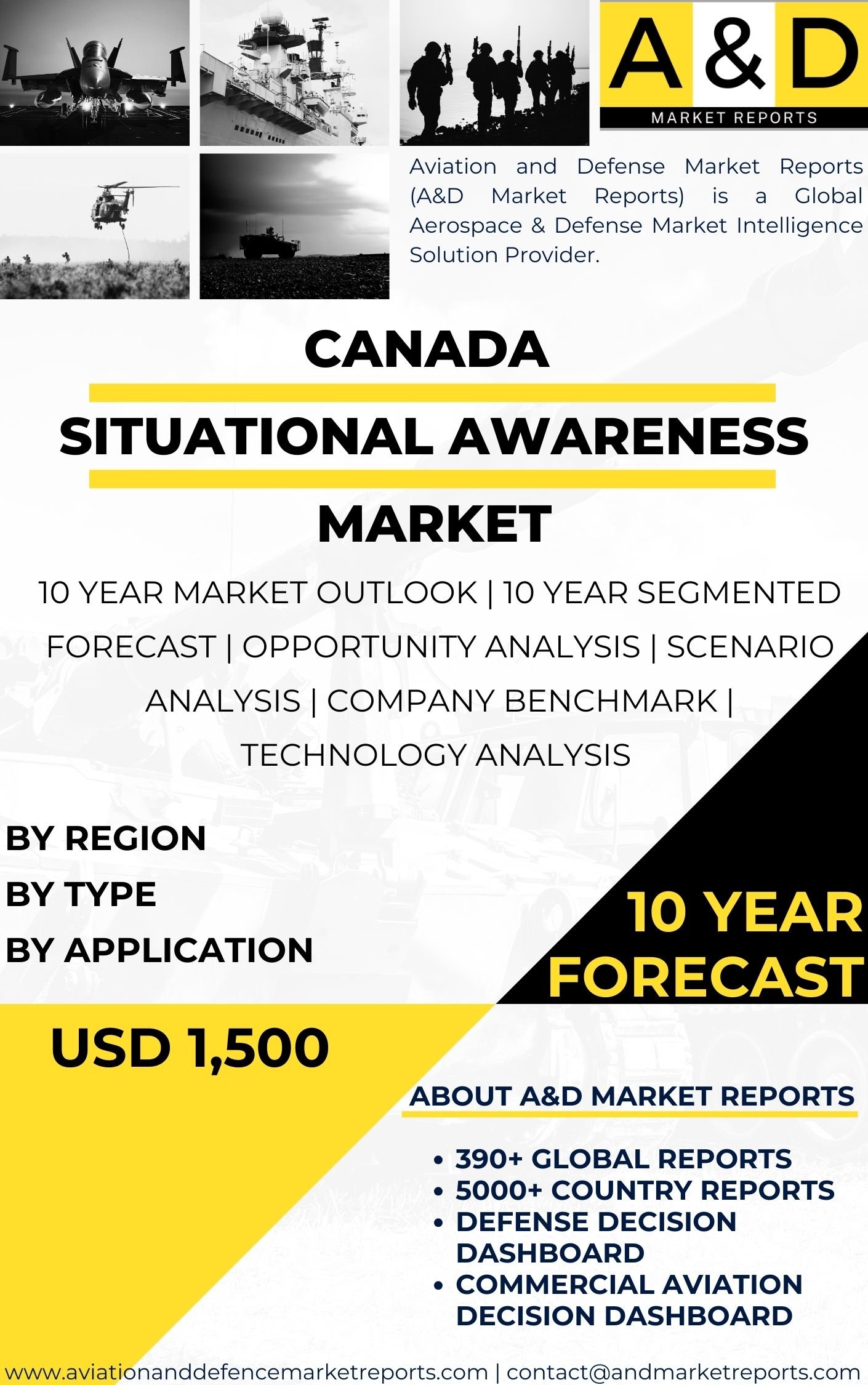
The situational awareness market within the Canada defense sector forms a foundational pillar of modern military capability. It centers on technologies that provide a comprehensive and real-time understanding of the operational environment across multiple domains. Because contemporary conflicts evolve rapidly, commanders require immediate access to accurate and actionable information. These systems enable faster decision-making, improved coordination, and reduced operational risk. In addition, situational awareness strengthens mission effectiveness by minimizing uncertainty on the battlefield. Therefore, it remains a cornerstone of defense modernization strategy.
Industry Structure and Key Participants
The market structure consists of major defense contractors, emerging technology startups, and research institutions working collaboratively. Organizations such as Lockheed Martin and L3Harris Technologies develop integrated command, control, communications, and intelligence solutions. These firms partner with software developers and sensor manufacturers to deliver unified platforms. Moreover, defense research agencies contribute innovation in artificial intelligence and advanced analytics. As a result, the ecosystem balances large-scale integration capability with agile technological advancement. This collaboration supports multi-domain operational readiness.
Core Technologies and System Characteristics
Situational awareness platforms integrate sensor networks, communication systems, data fusion engines, and visualization tools. Multi-sensor data from ground, air, maritime, space, and cyber domains is combined into unified operational pictures. Real-time analytics reduce decision latency and improve mission precision. In addition, secure communication channels ensure reliable information flow across units. User-centered interfaces and augmented visualization tools simplify complex data interpretation. Consequently, these systems enhance both human cognition and automated decision support.
Emerging Trends and Innovation Drivers
Artificial intelligence and machine learning increasingly automate threat detection and predictive analysis. Big data technologies process vast streams of operational information with improved speed and accuracy. Developers invest in cloud-enabled architectures and edge computing to support distributed operations. Furthermore, augmented reality displays and wearable systems enhance soldier-level awareness. Cybersecurity resilience also remains a top priority due to growing electronic warfare threats. These trends collectively shape the next generation of defense situational awareness capabilities.
Applications, Regulation, and Future Outlook
Applications extend from battlefield monitoring and electronic warfare to logistics coordination and joint task force operations. Military branches and allied forces depend on shared situational intelligence for synchronized action. Regulatory requirements mandate compliance with strict data security and interoperability standards. Supply chains must integrate advanced hardware, secure software, and resilient networking components. Technological progress emphasizes sensor miniaturization, adaptive communication protocols, and real-time collaboration platforms. Unique to the Canada defense environment is the focus on joint interoperability and integration with allied intelligence assets. Overall, situational awareness remains central to achieving operational superiority in complex and contested environments.