
Description
Importance of Unmanned Battlefield Logistics in Canada
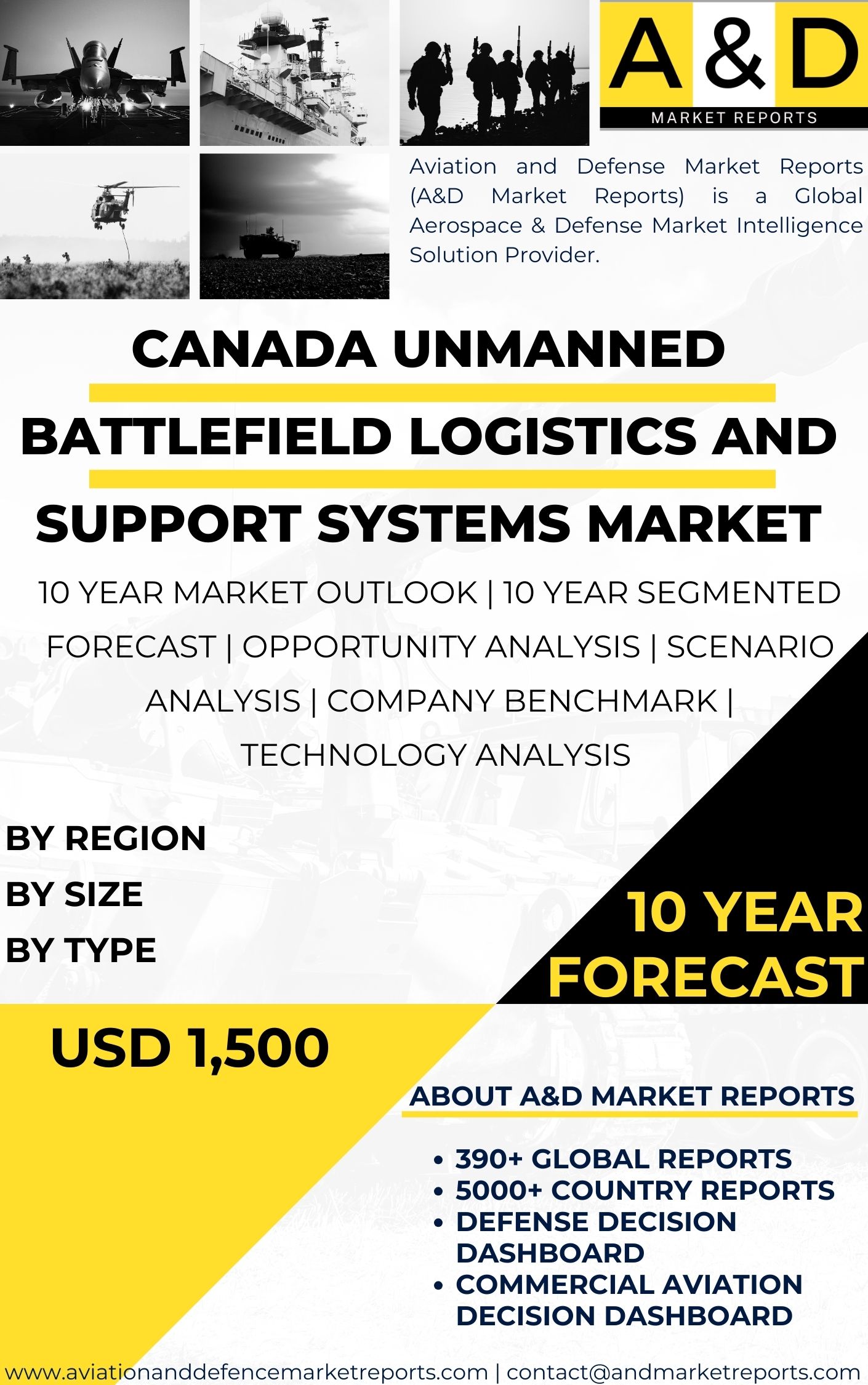
Canada Unmanned battlefield logistics are increasingly critical in modern military operations because they provide efficiency, safety, and versatility on the battlefield. These systems enable the Canadian Armed Forces (CAF) to deliver supplies, maintain equipment, and support troops without exposing personnel to unnecessary risks. In addition, unmanned systems reduce operational delays, allowing troops to respond more quickly to changing combat conditions. In Canada, these systems have become an integral part of military strategy, enhancing operational flexibility, improving situational awareness, and allowing decision-makers to allocate resources more effectively.
Evolution of Unmanned Systems
The evolution of unmanned systems in battlefield logistics and support reflects decades of technological advancement and the changing needs of military operations. Canada, like other nations, first experimented with primitive unmanned vehicles during World War I, using them for reconnaissance and basic supply tasks. These early vehicles provided valuable intelligence while reducing the exposure of human operators to enemy fire. Over the years, the role of unmanned systems expanded from simple transport and observation to sophisticated intelligence collection, automated supply delivery, and operational support. Improvements in sensors, communications, propulsion, and robotics have allowed these systems to operate reliably in a wide range of environments, from dense urban areas to rugged wilderness and extreme climates.
Expansion Through Unmanned Aerial Vehicles (UAVs)
With the advent of unmanned aerial vehicles (UAVs), commonly called drones, unmanned systems expanded significantly in scope and capability. UAVs are now a core component of Canada’s battlefield logistics and support strategy, serving multiple purposes such as surveillance, reconnaissance, intelligence gathering, and limited cargo transport. These aerial platforms provide the CAF with the ability to monitor enemy movements, assess battlefield conditions in real time, and deliver supplies to remote or hard-to-reach areas where traditional vehicles may face operational challenges. The flexibility and adaptability of UAVs make them invaluable for both domestic and international missions, supporting Canadian peacekeeping, humanitarian relief, and national defense operations while minimizing risks to human personnel.
Real-Time Intelligence and Situational Awareness
One of the greatest advantages of UAVs is their ability to provide commanders with real-time intelligence. High-resolution cameras, infrared sensors, and other surveillance equipment allow decision-makers to monitor battlefield conditions and troop movements continuously. This enhanced situational awareness enables the CAF to adapt rapidly to changes, anticipate threats, and respond efficiently to emergent operational needs. By extending the “eyes in the sky,” UAVs can access areas that would otherwise be difficult, dangerous, or impossible for human teams or manned vehicles to reach. Additionally, they reduce the burden on ground forces by providing timely reconnaissance information, enabling more precise targeting, efficient resource allocation, and safer troop movement.
Advanced Systems and Technology
The CAF uses advanced UAVs such as the RQ-21A Blackjack, CU-170 Heron, and SkyRanger R60. The RQ-21A delivers live video and data to ground teams, aiding decisions on the battlefield. The CU-170 Heron flies long distances and monitors borders, conflict zones, or peacekeeping missions. The SkyRanger R60 is small, portable, and perfect for quick tactical tasks. On the ground, the TITAN UGV carries heavy loads and moves supplies or casualties autonomously. Artificial intelligence (AI) enhances both UAVs and UGVs. AI allows systems to adapt, make decisions, and work with less human guidance. Swarm technology further improves efficiency by letting multiple unmanned systems operate together on complex missions.
Challenges, Training, and Ethics
Unmanned systems face challenges that the CAF must address. Cybersecurity is critical because these systems rely on networks for communication. The CAF protects them with encryption and monitoring to prevent hacking or interference. Interoperability is another challenge. All systems must work smoothly with manned vehicles to ensure effective operations. CAF personnel receive intensive training to operate and maintain unmanned systems safely. Ethics and international law are also important. Canada uses unmanned systems responsibly and avoids harming civilians. These rules ensure operations meet legal and moral standards while maintaining operational effectiveness.
Future of Unmanned Systems in Canada
The future of unmanned battlefield logistics in Canada looks promising. Advances in AI, autonomy, and batteries will make UAVs and UGVs smaller, faster, and more reliable. Swarm systems will allow multiple vehicles to work together efficiently. Unmanned systems will continue to support both military and humanitarian missions. They will improve disaster relief, border monitoring, and equipment delivery. Canada’s investment in unmanned technology ensures that the CAF stays modern, agile, and prepared for emerging challenges. By relying on these systems, Canada strengthens its military capabilities while protecting its personnel and improving operational outcomes.
Heavy Transport with TITAN UGV
The TITAN Unmanned Ground Vehicle is a robust example of a UGV designed for heavy logistics tasks. TITAN can transport equipment, supplies, and casualties across challenging environments autonomously. Its payload capacity and autonomous navigation systems allow for continuous operations without requiring constant human oversight. By leveraging TITAN and similar UGVs, the CAF can maintain supply lines, move critical resources efficiently, and respond more rapidly to battlefield demands, even in remote or dangerous locations.
Integration of Artificial Intelligence
Artificial intelligence (AI) enhances unmanned systems by enabling autonomy, adaptability, and decision-making capabilities. AI-driven UAVs and UGVs can respond to changing battlefield conditions, identify obstacles, optimize paths, and execute missions with minimal human input. This capability increases operational efficiency, reduces the likelihood of errors, and allows human personnel to concentrate on higher-priority tasks. AI also facilitates autonomous coordination between multiple unmanned systems, creating integrated logistical and support networks that operate seamlessly alongside manned forces.
Cybersecurity and Communication Challenges
Despite their benefits, unmanned battlefield systems face critical challenges in cybersecurity and secure communication. Since these systems rely heavily on wireless networks and data transmission, they are susceptible to hacking, jamming, or interception by adversaries. The CAF invests heavily in cybersecurity solutions to protect these systems and ensure the integrity of operational data. Strong encryption, network monitoring, and defensive measures are essential to maintain the reliability of unmanned operations in sensitive and hostile environments.
Interoperability and Coordination
Ensuring that unmanned systems can operate effectively alongside manned platforms is another significant challenge. Interoperability and compatibility within CAF’s networked operational environment are essential for coordinated operations. Effective communication protocols, joint exercises, and standardized training allow UAVs and UGVs to integrate seamlessly with manned assets. This coordination ensures that unmanned systems enhance situational awareness and logistical efficiency without disrupting overall operational flow.
Training and Ethical Use
Training is critical to the effective deployment of unmanned systems. CAF personnel undergo specialized programs to operate and maintain UAVs and UGVs safely and efficiently. Additionally, Canada emphasizes ethical considerations and adherence to international laws regarding the use of unmanned systems. These ethical frameworks ensure that autonomous platforms are used responsibly, minimizing unintended harm and maintaining compliance with global norms.
Domestic and International Applications
Unmanned battlefield logistics and support systems are valuable in both domestic and international operations. In Canada, they assist in disaster response, emergency relief, and infrastructure support, helping aid organizations and first responders operate efficiently. Internationally, these systems support peacekeeping missions, ISR operations, and supply logistics in high-risk zones. Their versatility ensures that they can be adapted to a wide range of missions, including humanitarian aid, tactical resupply, and intelligence gathering.
Future Developments and Innovation
Looking ahead, unmanned systems in Canada are likely to become smaller, more efficient, and more capable. Emerging technologies such as swarming—where multiple unmanned platforms operate collaboratively—will improve operational effectiveness and allow complex missions to be completed quickly. Advances in power management, battery technology, and miniaturization will result in longer operational durations and greater mobility, further enhancing the CAF’s operational reach. Future systems will combine AI, autonomy, and integrated communications to create fully networked battlefield logistics platforms.
Conclusion: Enhancing CAF Capability
In conclusion, unmanned battlefield logistics and support systems are central to the CAF’s operational effectiveness, safety, and versatility. UAVs and UGVs provide critical intelligence, surveillance, reconnaissance, and logistical support while reducing risks to personnel. Canada’s investment in advanced unmanned technologies reflects its commitment to maintaining a modern, agile, and capable armed forces. These systems will continue to play a pivotal role in both military missions and humanitarian operations, ensuring that the CAF can operate efficiently, safely, and effectively in a wide range of operational environments. By leveraging unmanned systems, Canada strengthens its ability to meet emerging challenges while enhancing the safety and efficiency of its armed forces.