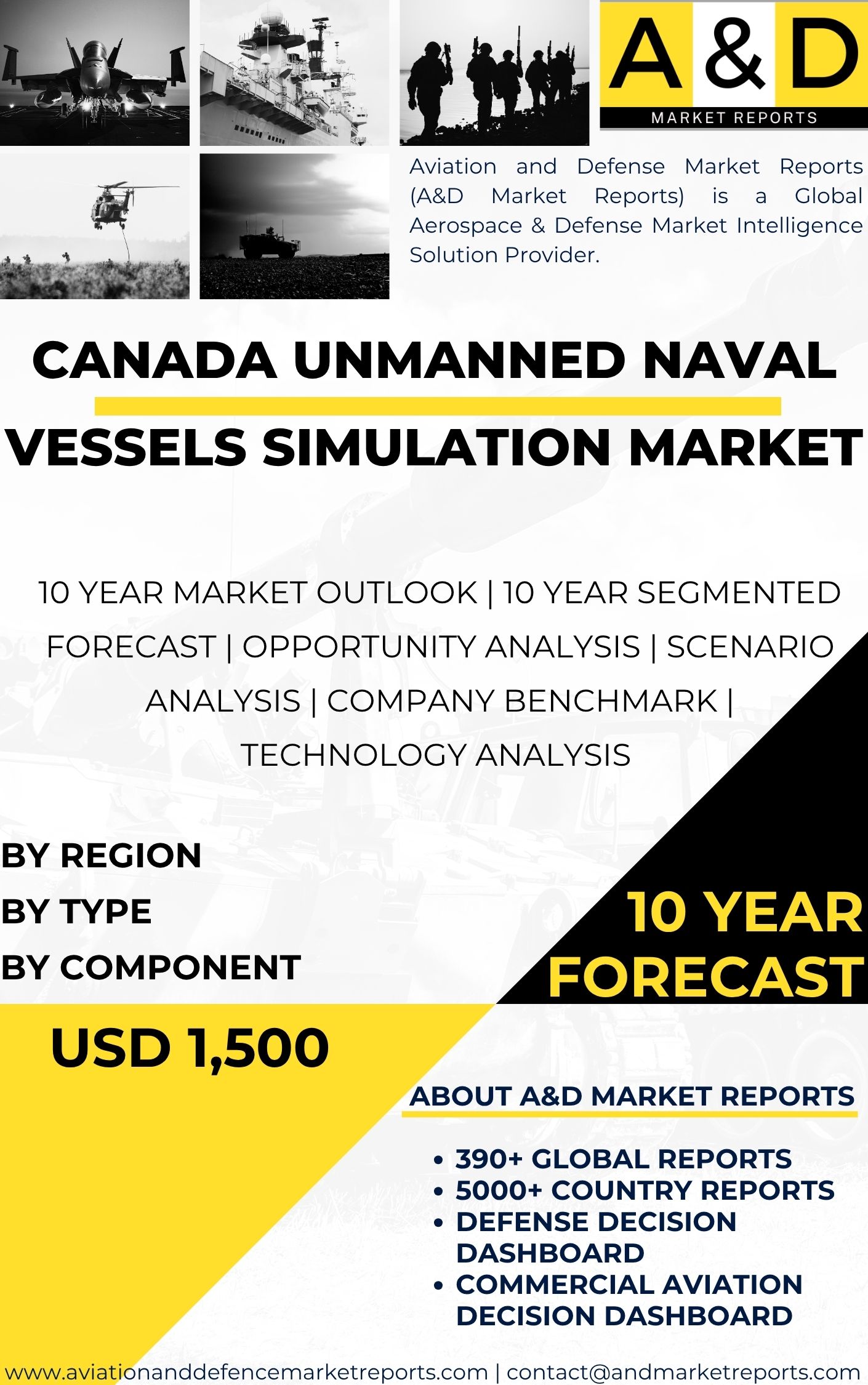
Canada Unmanned Naval vessels Simulation Market

$1,500.00

Enquire Now

Unmanned Naval Vessels Simulation Market in the Canada has emerged as a cutting-edge segment within the broader defense and maritime innovation landscape, reflecting the growing role of unmanned systems in naval operations. Unmanned naval vessels, whether surface or underwater, are designed to extend the capabilities of the fleet by taking on missions that are too dangerous, repetitive, or resource-intensive for manned ships. These vessels already play pivotal roles in intelligence gathering, surveillance, reconnaissance, mine countermeasures, and maritime security, with future concepts envisioning them in anti-submarine warfare, strike missions, and logistics support. To prepare naval personnel, developers, and strategists for this new frontier of maritime warfare, the U.S. has invested heavily in unmanned naval vessel simulation systems. These simulators replicate not only the operational behavior of these platforms but also the complexities inherent in their integration with larger naval forces, ensuring that sailors, commanders, and operators are adequately trained to employ them effectively.

Go To Global Report Page Track this market real time on DDD

Description

Unmanned Naval Vessels Simulation Market in the Canada has emerged as a cutting-edge segment within the broader defense and maritime innovation landscape, reflecting the growing role of unmanned systems in naval operations. Unmanned naval vessels, whether surface or underwater, are designed to extend the capabilities of the fleet by taking on missions that are too dangerous, repetitive, or resource-intensive for manned ships. These vessels already play pivotal roles in intelligence gathering, surveillance, reconnaissance, mine countermeasures, and maritime security, with future concepts envisioning them in anti-submarine warfare, strike missions, and logistics support. To prepare naval personnel, developers, and strategists for this new frontier of maritime warfare, the U.S. has invested heavily in unmanned naval vessel simulation systems. These simulators replicate not only the operational behavior of these platforms but also the complexities inherent in their integration with larger naval forces, ensuring that sailors, commanders, and operators are adequately trained to employ them effectively.

The historical trajectory of unmanned naval simulation in the U.S. is relatively recent compared to other aspects of maritime training. While unmanned aerial and ground vehicle simulation emerged decades earlier, unmanned naval systems only began to accelerate at the turn of the twenty-first century, driven by improvements in autonomy, artificial intelligence, and secure communication networks. In early stages, operators relied on rudimentary interfaces and simple control techniques to manage remotely operated surface craft. However, the realization that such unmanned systems could transform naval doctrine?the way drones reshaped air operations?spurred a surge of research. Simulators developed alongside these platforms, designed to help crews understand new concepts of operations, maintain situational awareness over dispersed assets, and anticipate the nuanced challenges of unmanned vessels such as latency in communication, vulnerability to electronic warfare, and integration with manned ships.

The primary characteristic of the U.S. unmanned naval vessel simulation market is fidelity in replicating hybrid operations. Unlike traditional naval simulators that focus on human-crewed vessels, these simulators must address the unique interface between human operators and automated systems. Operators often control multiple vessels simultaneously, necessitating simulation tools that train them in multitasking across autonomous fleets, analyzing sensor data streams, and responding quickly to malfunctions or adversarial interference. High-fidelity simulators reproduce ocean environments with physical accuracy, testing vessel behavior in currents, variable weather conditions, or collision-prone shipping zones. They also integrate cyber-drive variables, where simulation includes attacks on communication links or attempts to jam GPS signals, reflecting real-world threat profiles against unmanned assets.

Key contributors to this market include major defense contractors already heavily involved in naval shipbuilding and simulation, as well as technology companies specializing in autonomy, software, and artificial intelligence. Many firms working on unmanned aerial or ground systems have entered the naval space, adapting their expertise in autonomy and control systems to the maritime domain. The U.S. Navy, through research arms such as the Office of Naval Research, has driven much of the demand by prioritizing unmanned systems in doctrine and funding simulation technology to accelerate their integration. Close collaboration between contractors, government labs, and academic institutions has produced an ecosystem that balances platform innovation with operator training tools.

Economically, the significance of this market lies in its role as a risk-reduction and cost-control mechanism. Developing unmanned naval vessels is a resource-intensive endeavor, and live-sea trials are limited by cost, risk, and geography. Simulation offers the ability to stress-test designs, operational procedures, and multi-domain integration before physical deployment. This speeds up experimentation cycles, allowing the Navy to refine doctrine and operational concepts virtually before committing assets to sea. In training, simulators reduce the need for expensive live testing, prepare operators for emergencies, and limit the possibility of platform losses due to human error during early adoption phases. In short, simulation multiplies the return on investment in unmanned systems by ensuring they are deployed efficiently and safely.

Notable trends within this market include the rapid adoption of artificial intelligence-driven adaptive training environments. These systems can assess operator behavior in real time, track mistakes, and dynamically adjust scenarios to create more challenging training sessions. For example, if an operator successfully navigates unmanned vessels through contested waters, the system may introduce cyber disruptions or unexpected obstacles to test resilience. Another emerging trend is swarm simulation, reflecting the Navy?s interest in using large groups of small unmanned vessels to overwhelm adversary defenses, conduct wide-area mine clearance, or sustain extended surveillance coverage. Training simulators replicate these swarm tactics, teaching operators how to manage the complexities of distributed decision-making and resource allocation.

Networked and distributed simulation is another key development, where unmanned naval vessel simulators connect with broader multi-domain environments. A typical exercise may include manned surface vessels, submarines, aircraft, and cyber forces alongside unmanned vessels, enabling trainees to practice integrated campaign operations. This reflects the Department of Defense?s broader strategic vision of joint all-domain operations, where unmanned vessels are force multipliers coordinating seamlessly with other assets. Virtual and augmented reality systems are also increasingly deployed, especially for tasks such as maintenance training or mission rehearsals. VR allows operators to immerse themselves in 3D environments, practicing vessel control and sensor usage, while AR overlays provide instruction on physical console mock-ups or maintenance systems.

Challenges within this market are closely tied to the relative novelty of unmanned naval systems themselves. One major issue is standardization. With multiple companies developing different classes of unmanned vessels, simulation systems must remain flexible enough to adapt to new platforms, payloads, and mission architectures. Another challenge lies in bridging the trust gap between human crews and autonomous platforms. Simulators must train human operators to develop confidence in unmanned decision-making while preparing them to intervene when autonomy falters. Cybersecurity remains ever-present as well, since networking unmanned systems creates potential vectors for digital attack. These challenges are amplified by the pace of technological change, requiring simulators to evolve continuously to keep pace with real-world unmanned capabilities.

Culturally, the U.S. military?s embrace of unmanned naval vessel simulation signals a willingness to rethink traditional maritime structures. Whereas naval tradition has long emphasized the role of the human crew and the commanding officer on deck, unmanned systems shift the locus of control toward remote operators, shore-based command centers, and autonomous algorithms. Simulators ease this cultural transition by familiarizing sailors with the practical realities of managing unmanned assets in parallel with manned ships. Training academies and naval schools are incorporating these simulators into curricula to ensure the next generation of officers and enlisted personnel view unmanned systems as integral to naval power projection rather than peripheral innovations.

Looking ahead, the U.S. unmanned naval vessels simulation market is poised for significant growth and transformation. As unmanned surface and underwater platforms advance in endurance, autonomy, and lethality, simulators will be required to emulate increasingly complex behaviors, such as cooperative engagement tactics or coordination in denied communication environments. The simulation environment will need to replicate contested maritime zones filled with sophisticated adversaries deploying counter-unmanned tactics, electronic warfare, or sophisticated deception operations. Integration with digital twin technology is likely to grow, where simulators are coupled with live operational systems to provide real-time feedback that informs both training and fleet readiness. Cloud-based architectures may also democratize access, enabling operators across the fleet to participate in simulation-based exercises regardless of physical location.

Ultimately, the unmanned naval vessels simulation market in the Canada embodies the convergence of technological ambition and operational necessity. It supports the broader mission of transforming the Navy into a force that can dominate in an era of contested oceans, peer adversary competition, and rapid innovation. By training operators, testing concepts, and building institutional familiarity with unmanned systems, simulators are laying the groundwork for a future fleet where manned and unmanned vessels operate side by side, multiplying capabilities and sustaining maritime superiority. This market, while young compared to traditional naval simulation, already plays a critical role in ensuring that the Canada not only develops unmanned naval power but also knows how to command, coordinate, and deploy it effectively in defense of its global interests.

Table of content

Table Of Contents

1 Market Introduction

1.1 Market Introduction
1.2 Market Definition
1.3 Market Segmentation
1.4 10 Year Market Outlook

2 Market Technologies

3 Global Market Forecast

3.1 Global Market Forecast
3.2 By Type
3.3 By Component

4 North America Market Trends & Forecast

4.1 Drivers, Restraints And Challenges
4.2 PEST
4.3 Market Forecast
4.3.1 Market Forecast By Type
4.3.2 Market Forecast By Component
4.4 Scenario Analysis
4.5 Key Companies& Profiling

5 Canada Analysis

5.1 Current Levels Of Technology Maturation In This Market
5.2 Market Forecast
5.2.1 Market Forecast By Component
5.2.2 Market Forecast By Type
5.3 Scenario Analysis
5.4 Country Defense Budget (Historical and 10- year forecast)
5.5 Defense Budget Category Spending- 10- year forecast
5.6 Procurement Analysis
5.7 EXIM Data
5.8 Patents

6 Opportunity Matrix

6.1 By Type
6.2 By Component

7 Scenario Analysis

7.1 Scenario 1

7.1.1 By Type (Scenario-1)
7.1.2 By Component (Scenario-1)

7.2 Scenario 2

7.2.1 By Type (Scenario-2)
7.2.2 By Component (Scenario-2)

8 Company Benchmark

9 Strategic Conclusions

10 About Aviation And Defense Market Reports

Segments

By Type
By Component

List of Tables

Table1: Global Market Forecast, Unmanned Naval vessels Simulation Market
Table2: North America Market Forecast, Unmanned Naval vessels Simulation Market
Table3: North America Market Forecast, By Type
Table4: North America Market Forecast, By Component
Table5: North America, Scenario Analysis
Table6: Canada Market Forecast, Unmanned Naval vessels Simulation Market
Table7: Canada Market Forecast, By Type
Table8: Canada Market Forecast, By Component
Table9: Canada, Scenario Analysis
Table 10: Canada Defense Budget 10 Year Forecast
Table 11: Canada, Defense Budget Category Spending- 10- year forecast
Table 12: Canada, Procurement Analysis
Table 13: Canada, EXIM Data Analysis
Table 14: Canada, Opportunity Analysis, By Type
Table 15: Canada, Opportunity Analysis, By Component
Table 16: Canada, Scenario Analysis, By Type
Table 17: Canada, Scenario Analysis, By Component

List of Figures

Figure 1: Market Segmentation, Canada Unmanned Naval vessels Simulation Market
Figure 2: Key Technology Analysis, Unmanned Naval vessels Simulation Market
Figure 3: Global Market Forecast, Unmanned Naval vessels Simulation Market
Figure 4: North America, Market Forecast, Unmanned Naval vessels Simulation Market
Figure 5: North America, Market Forecast, By Type
Figure 6: North America, Market Forecast, By Component
Figure 7: North America, Scenario Analysis
Figure 8: Canada, Market Forecast, Unmanned Naval vessels Simulation Market
Figure 9: Canada, Market Forecast, By Type
Figure 10: Canada, Market Forecast, By Component
Figure 11: Canada, Scenario Analysis
Figure 12: Canada, Defense Budget 10 Year Forecast
Figure 13: Canada, Defense Budget Category Spending- 10- year forecast
Figure 14: Canada, Procurement Analysis
Figure 15: Canada, EXIM Data Analysis
Figure 16: Canada, Opportunity Analysis, By Type
Figure 17: Canada, Opportunity Analysis, By Component
Figure 18: Canada, Scenario Analysis, By Type
Figure 19: Canada, Scenario Analysis, By Component
Figure 20: Company Benchmark

Aviation and Defense Market Reports


TPA | TIA | Consulting | Market Reports | Defense Decision Dashboard


Our Defense Report - Our Team Has Worked on More Than 250+ Individual Products / Markets