
Description
Vibration Test Equipment Market Overview in Canada
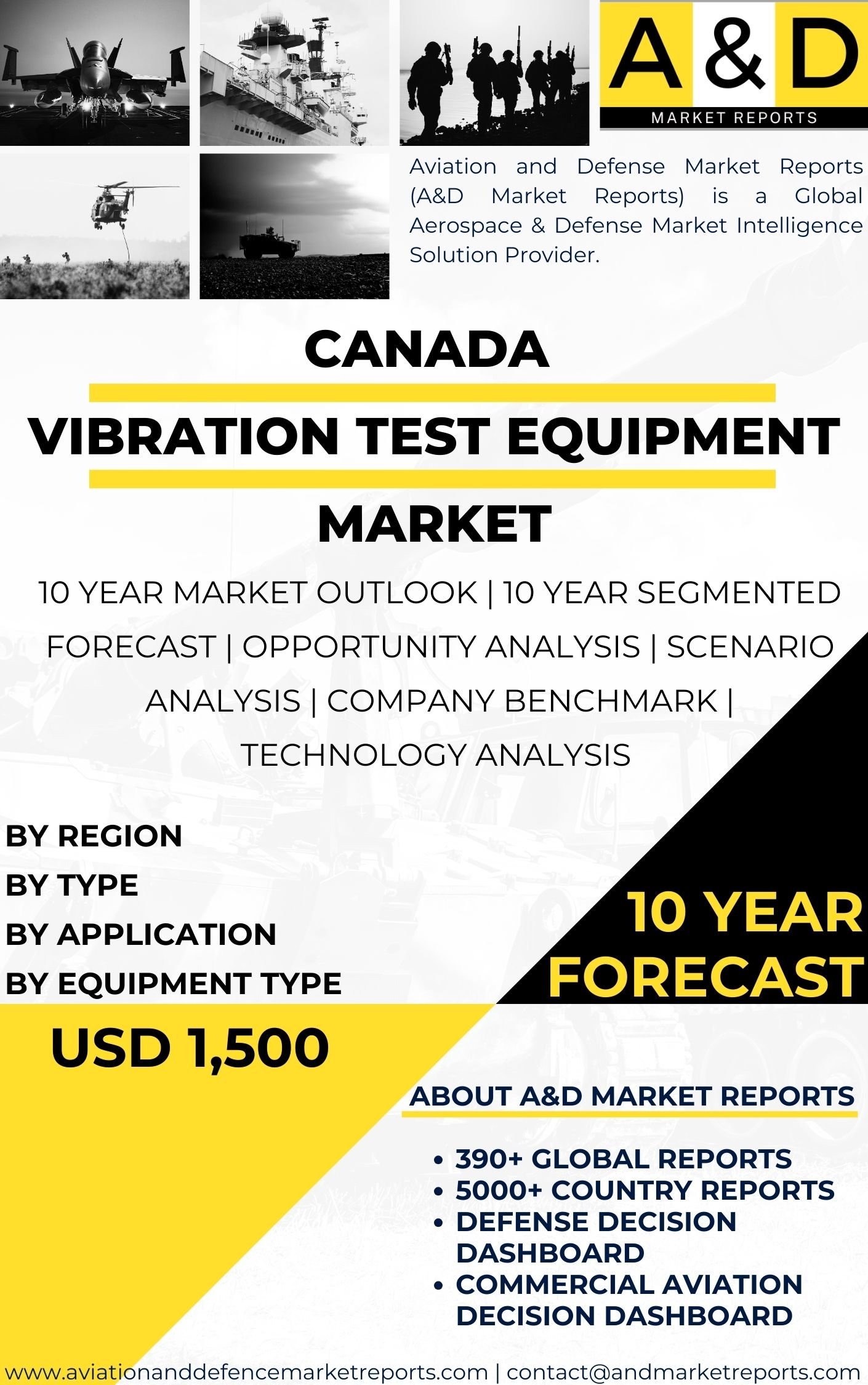
The Canada Vibration Test Equipment aerospace and defense sectors plays a vital role in ensuring durability, reliability, and operational safety across critical systems. It supports validation activities from early-stage research and prototype development to full-scale production and long-term maintenance programs. Engineers rely on vibration systems to simulate real-world operating environments under controlled laboratory conditions. These environments include aircraft turbulence, armored vehicle movement, missile launch shock, and spacecraft lift-off stress. Therefore, vibration testing helps verify that both individual components and integrated systems can withstand extreme dynamic forces. As aerospace missions become more complex, the importance of accurate environmental simulation continues to grow.
Equipment Types and Testing Capabilities
This market includes a broad portfolio of advanced systems such as electrodynamic shakers, hydraulic shakers, multi-axis vibration simulators, and acoustic testing chambers. Each system serves specific force, payload, and frequency requirements depending on the application. Engineers conduct random vibration tests to replicate unpredictable operational stress patterns over time. In contrast, sine vibration tests isolate specific frequencies to detect resonances and structural weaknesses. Additionally, shock testing evaluates sudden impact forces that occur during launches or weapon deployment. To ensure mission readiness, equipment must replicate defense-standard vibration profiles such as MIL-STD-810 and MIL-STD-167 with high accuracy and repeatability.
Technology Integration and System Performance
Leading manufacturers deliver integrated solutions that combine precision mechanical platforms with advanced digital control systems. These platforms feature real-time monitoring, automated feedback loops, and high-resolution data acquisition tools. As a result, engineers can analyze structural response instantly and adjust testing parameters when necessary. Many systems now support multi-axis motion, which recreates realistic three-dimensional vibration environments. Furthermore, user-friendly software interfaces simplify programming, reporting, and data visualization. Consequently, aerospace and defense organizations gain deeper insights into component performance under stress.
Economic and Strategic Importance
Vibration test equipment holds substantial economic and strategic value within the aerospace and defense ecosystem. Mechanical failure in mission-critical systems can result in operational disruption or safety risks. Therefore, proactive vibration testing reduces uncertainty and enhances reliability before deployment. By identifying design flaws early, manufacturers improve structural integrity and optimize material performance. In addition, rigorous testing lowers lifecycle costs by reducing unexpected maintenance and field failures. As defense budgets prioritize readiness and modernization, vibration validation remains a core investment area.
Innovation and Emerging Technologies
Technological innovation continues to reshape vibration testing capabilities. Advances in sensor technology and digital signal processing allow systems to operate across broader frequency ranges with greater force precision. At the same time, energy-efficient drive systems reduce operational expenses and environmental impact. Artificial intelligence and machine learning now assist with predictive diagnostics and anomaly detection. These tools analyze test data trends and identify potential weaknesses before they escalate. Moreover, the increasing use of lightweight composites and additive manufacturing requires adaptable and highly precise vibration platforms.
Regulatory and Compliance Framework
Strict compliance standards guide vibration testing across aerospace and defense programs. Regulatory bodies such as the U.S. Department of Defense, NASA, and the FAA establish detailed requirements for test profiles, calibration, and documentation. These standards ensure repeatability, traceability, and accuracy throughout the validation process. As a result, manufacturers must design equipment that consistently meets or exceeds certification thresholds. Detailed reporting and data integrity practices further strengthen quality assurance efforts. Consequently, regulatory alignment reinforces confidence in certified aerospace components and systems.
Conclusion and Market Outlook
Vibration test equipment serves as a foundational pillar of aerospace and defense development in Canada. It enables engineers to simulate complex mechanical stress environments with high precision and reliability. Through structured validation processes, organizations enhance product durability, safety, and mission readiness. Furthermore, evolving aircraft platforms and advanced materials will continue to demand more sophisticated testing capabilities. As innovation accelerates and operational demands intensify, this market will remain strategically important and technologically dynamic for years to come.