
Description
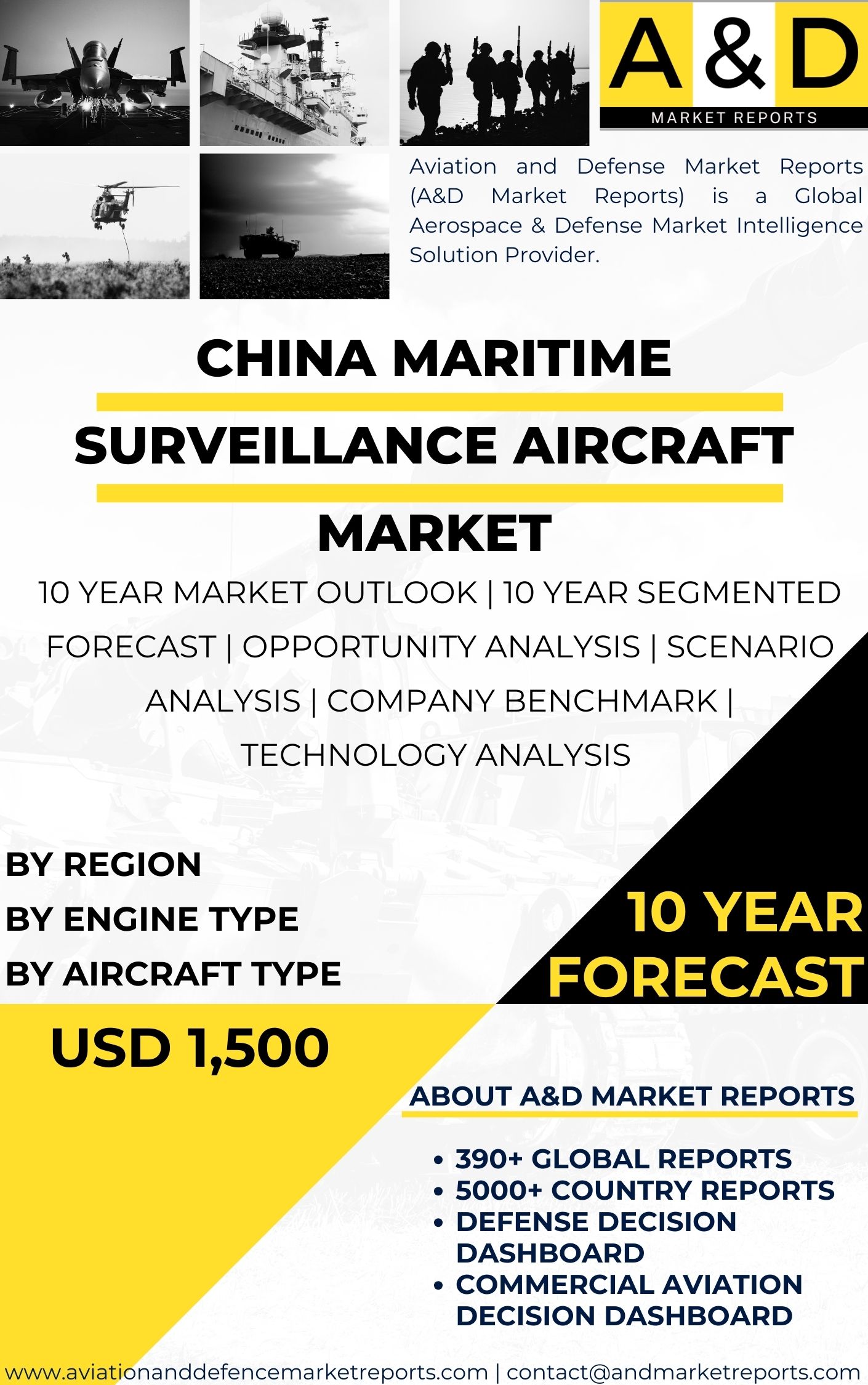
China Maritime Surveillance Aircraft Market Overview
The China Maritime Surveillance Aircraft represents a strategically important segment of the country’s defense and aerospace industry, driven by the growing need to monitor and secure vast maritime territories. Maritime surveillance aircraft are designed to conduct long-range reconnaissance, intelligence gathering, target identification, search and rescue missions, and maritime patrol operations. As China’s maritime interests continue to expand across regional and international waters, these aircraft have become essential assets for maintaining maritime domain awareness and supporting naval operations. Increasing geopolitical competition, expanding commercial shipping routes, and the protection of critical maritime infrastructure are further contributing to the demand for advanced surveillance platforms. As a result, the market has experienced steady growth and continues to attract significant investment from both government agencies and defense manufacturers.
Investment in Indigenous Aircraft Development
China has made extensive investments in developing indigenous maritime surveillance aircraft as part of its broader defense modernization strategy. The government has allocated substantial resources toward research and development programs aimed at creating domestically produced aircraft equipped with advanced surveillance and reconnaissance technologies. This focus on indigenous development allows China to reduce dependence on foreign suppliers while strengthening its domestic aerospace sector. Research institutes, defense laboratories, and aerospace manufacturers are working together to develop next-generation platforms capable of meeting evolving operational requirements. Continuous investment in aircraft design, mission systems, sensors, and communication technologies has enabled China to steadily improve the performance and capabilities of its maritime surveillance fleet.
Technological Self-Sufficiency as a Key Growth Driver
One of the most significant drivers of the China Maritime Surveillance Aircraft Market is the nation’s commitment to achieving technological self-sufficiency. China views domestic technological development as a critical component of national security and defense preparedness. As a result, major efforts have been directed toward developing indigenous radar systems, electro-optical sensors, communication equipment, mission computers, and data processing technologies. These initiatives not only reduce vulnerability to foreign technology restrictions but also strengthen China’s ability to independently upgrade and maintain its surveillance platforms. The pursuit of self-reliance has accelerated innovation across the aerospace industry and created opportunities for domestic companies to expand their role in advanced military aviation programs.
Rising Demand for Maritime Domain Awareness
China’s extensive coastline, growing naval activities, and expanding economic interests at sea have significantly increased the need for enhanced maritime domain awareness. Maritime surveillance aircraft provide continuous monitoring of maritime regions, enabling authorities to track vessel movements, identify potential threats, and respond quickly to emerging situations. These aircraft support a wide range of missions, including border protection, anti-smuggling operations, fisheries enforcement, environmental monitoring, and naval intelligence gathering. The ability to collect and analyze real-time information over vast ocean areas is becoming increasingly important as maritime traffic continues to grow. Consequently, defense agencies are investing in advanced surveillance platforms capable of operating effectively in complex maritime environments.
Strong Aerospace and Defense Industrial Base
China benefits from a well-developed aerospace and defense manufacturing ecosystem that provides a strong foundation for maritime surveillance aircraft production. The country possesses a large network of state-owned enterprises, private aerospace companies, research institutions, and component suppliers that contribute to aircraft development and manufacturing. These organizations possess expertise in aerodynamics, avionics, propulsion systems, radar technologies, and systems integration. The presence of a mature industrial infrastructure enables efficient production processes, cost-effective manufacturing, and rapid technological advancement. Collaboration between industry stakeholders also promotes innovation and facilitates the development of increasingly sophisticated surveillance aircraft capable of supporting modern military operations.
Advancements in Surveillance Technologies
Rapid technological advancements are significantly enhancing the effectiveness of maritime surveillance aircraft in China. Modern platforms are increasingly equipped with advanced radar systems capable of detecting and tracking multiple targets over long distances. Electro-optical and infrared sensors provide high-resolution imagery and improved target identification capabilities under various environmental conditions. Artificial intelligence and machine learning technologies are also being integrated into surveillance systems to improve data analysis, automate target recognition, and enhance decision-making processes. Additionally, secure communication networks and satellite connectivity enable real-time information sharing between aircraft, naval vessels, and command centers. These technological improvements are strengthening operational effectiveness and expanding the range of missions that surveillance aircraft can perform.
International Interest and Export Potential
China’s progress in maritime surveillance aircraft development has attracted growing international attention, particularly among countries seeking cost-effective defense and security solutions. Chinese manufacturers are increasingly promoting their surveillance platforms in international markets, highlighting their operational capabilities, affordability, and technological advancements. Export opportunities are emerging in regions where maritime security challenges are increasing and governments are seeking to improve surveillance capabilities. Successful exports not only generate revenue but also strengthen China’s position within the global defense industry. Furthermore, international partnerships and defense cooperation agreements may facilitate technology exchanges and open new market opportunities for Chinese aerospace companies.
Market Challenges
Despite strong growth prospects, the China Maritime Surveillance Aircraft Market faces several challenges that could impact future development. Quality assurance, operational reliability, and long-term maintenance remain critical concerns as domestic manufacturers seek to compete with established international aerospace companies. Maintaining high performance standards is essential for ensuring mission effectiveness and gaining customer confidence. Additionally, the rapid pace of technological change requires continuous investment in research and development to keep surveillance platforms competitive. Budget constraints, supply chain disruptions, and evolving defense requirements can also create challenges for manufacturers seeking to sustain growth and innovation within the market.
Integration and Interoperability Requirements
Modern maritime operations increasingly depend on the seamless integration of multiple surveillance assets operating across different domains. Maritime surveillance aircraft must be capable of sharing information with naval vessels, coastal monitoring stations, satellites, unmanned aerial systems, and command centers in real time. Achieving this level of interoperability requires sophisticated communication networks, standardized data formats, and advanced mission management systems. Integrating diverse technologies while maintaining system reliability and security presents a complex challenge for defense developers. Continued investment in network-centric capabilities and joint operational frameworks will be necessary to ensure effective coordination among all maritime surveillance assets.
Future Outlook
The future outlook for the China Maritime Surveillance Aircraft Market remains highly positive as defense modernization efforts continue to accelerate. Government support, expanding maritime interests, and technological innovation are expected to sustain strong market growth over the coming years. Emerging technologies such as artificial intelligence, autonomous mission systems, advanced sensor fusion, and next-generation communication networks will likely play an increasingly important role in future surveillance platforms. Investments in these technologies are expected to improve operational efficiency, extend mission endurance, and enhance situational awareness. As maritime security challenges continue to evolve, demand for advanced surveillance aircraft will remain strong, creating opportunities for further industry expansion.
Conclusion
The China Maritime Surveillance Aircraft Market is experiencing robust growth driven by increasing maritime security requirements, indigenous technology development, and continuous defense modernization initiatives. Strong government support, a well-established aerospace industry, and ongoing technological advancements have positioned China as a significant player in the global maritime surveillance sector. The development of advanced surveillance aircraft equipped with sophisticated sensors, communication systems, and data processing capabilities is enhancing China’s ability to monitor and protect its maritime interests. While challenges related to quality assurance, interoperability, and technological competitiveness remain, continued investment and innovation are expected to support sustained market growth and strengthen China’s position in the global defense aerospace industry.