
Description
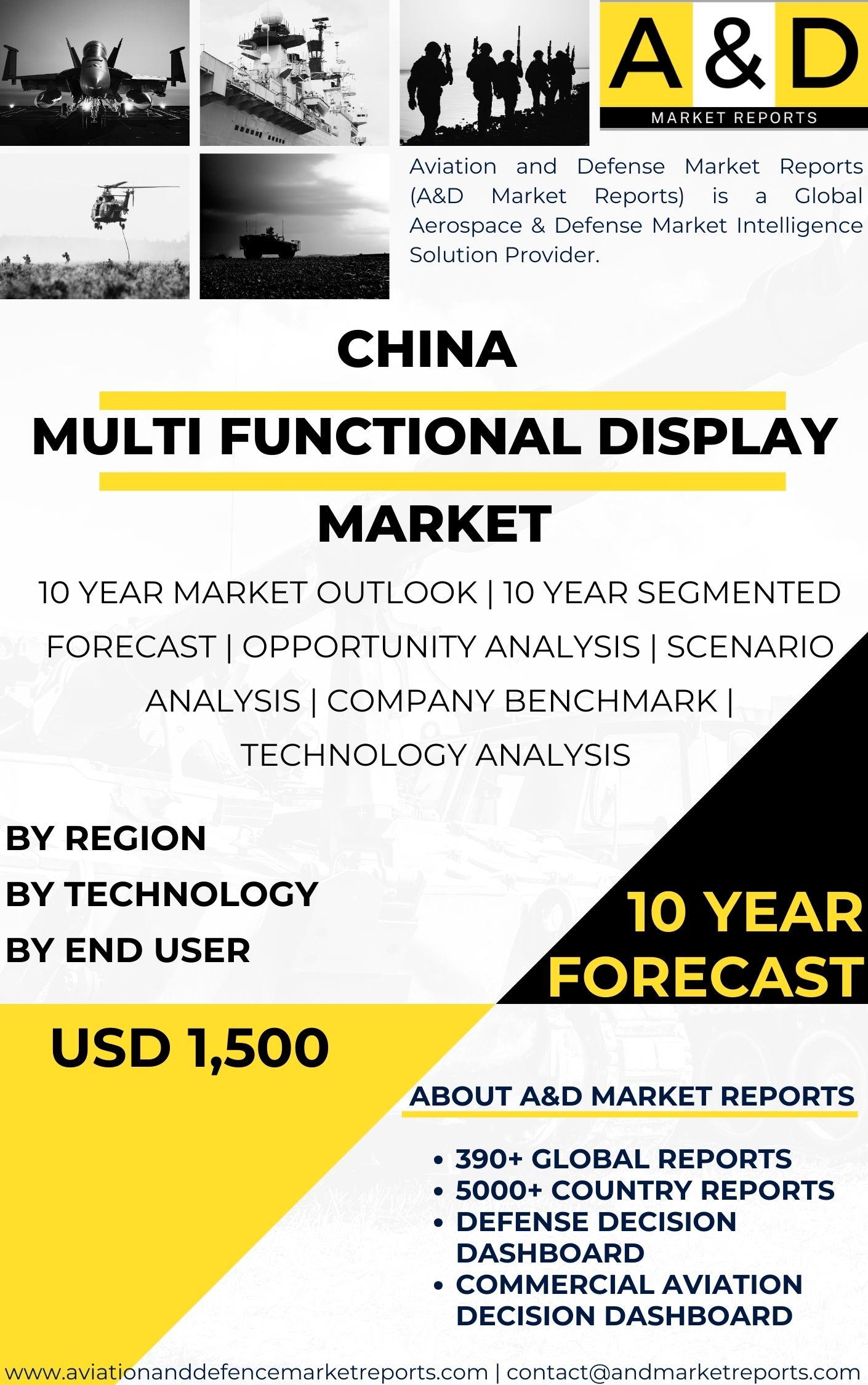
China Multi-Function Display (MFD) Market Overview
The China MFD Market is a rapidly expanding and highly advanced segment within the country’s aviation and defense electronics industry. MFDs are critical avionics components that consolidate flight data, mission parameters, sensor inputs, navigation details, and system health information into a single integrated display interface. These systems significantly enhance pilot situational awareness, reduce cockpit workload, and improve mission efficiency during complex operations. With China’s growing emphasis on modernizing its air force, upgrading commercial aviation systems, and strengthening indigenous aerospace capabilities, the demand for advanced MFD systems has increased substantially. The market is further supported by rapid technological advancements in avionics, increasing aircraft production, and the integration of digital cockpit systems across new-generation platforms.
Indigenous Development of MFD Technologies
China has made significant investments in the research, design, and production of indigenous Multi-Function Display technologies to reduce reliance on foreign avionics suppliers. Government-backed programs, defense research institutes, and aerospace manufacturers are working together to develop high-resolution, durable, and mission-adaptable display systems. These efforts focus on improving display clarity, response time, brightness adaptability, and multi-layer data integration for use in diverse operational environments. Indigenous development also allows China to customize MFD systems for specific military aircraft, including fighter jets, transport aircraft, helicopters, and unmanned aerial vehicles. Over time, these advancements have strengthened domestic capabilities in avionics engineering and reduced dependency on imported cockpit technologies.
Technological Self-Sufficiency and Strategic Importance
A key driver of the China MFD Market is the government’s strong push toward technological self-sufficiency in aerospace and defense systems. China views advanced avionics such as MFDs as critical components for achieving independent operational capability and reducing exposure to foreign restrictions or supply chain disruptions. As a result, substantial funding has been directed toward developing domestic display technologies, embedded processing units, and software-driven cockpit integration systems. This strategy has enabled Chinese manufacturers to build more sophisticated and integrated cockpit environments while strengthening the country’s broader aviation electronics ecosystem. The emphasis on self-reliance has also accelerated innovation in display resolution, touch interface technology, and real-time data processing capabilities.
Rising Demand from Expanding Aviation Sector
The rapid expansion of China’s aviation sector, including military aviation and commercial air transport, has significantly increased demand for advanced MFD systems. Modern aircraft require highly integrated cockpit solutions that can handle complex data streams from multiple onboard systems, including navigation, radar, communication, and weapon systems. Fighter aircraft, transport planes, helicopters, and unmanned aerial systems all depend on MFDs to support efficient mission execution and pilot decision-making. In civil aviation, next-generation commercial aircraft are increasingly adopting digital cockpit technologies that rely on multifunction displays for enhanced flight management and safety. This broadening application base continues to drive sustained growth in the MFD market.
Strong Aerospace and Avionics Industrial Base
China’s well-established aerospace and avionics industry provides a strong foundation for the development and production of Multi-Function Display systems. The country has a wide network of state-owned enterprises, private technology firms, and research institutions specializing in avionics, display engineering, embedded systems, and human-machine interface design. These organizations collaborate to develop high-performance MFD systems that meet stringent aviation requirements. The availability of advanced manufacturing facilities, skilled engineering talent, and integrated supply chains supports efficient production and continuous innovation. This industrial ecosystem enables China to rapidly scale production while improving the quality and sophistication of its avionics systems.
Advancements in Display and Avionics Technologies
Technological advancements are playing a major role in shaping the evolution of the China MFD Market. Modern MFD systems now incorporate high-resolution LCD and OLED displays, touchscreen interfaces, advanced graphics processing units, and real-time data fusion capabilities. Integration with artificial intelligence and machine learning technologies is further enhancing system intelligence, enabling predictive analysis and automated decision support in cockpit environments. Improvements in brightness control, anti-glare technology, and durability allow MFDs to perform reliably under extreme flight conditions. Additionally, integration with sensor systems, radar feeds, and satellite communication networks enables pilots to access a comprehensive operational picture, improving both safety and mission effectiveness.
International Collaboration and Export Opportunities
China’s MFD market has increasingly benefited from international collaboration and technology exchange initiatives. Chinese aerospace companies have engaged with global avionics manufacturers to access advanced technologies, improve design methodologies, and align with international aviation standards. These partnerships have helped accelerate domestic capability development while improving product competitiveness. Additionally, China is gradually expanding its presence in the global avionics export market, offering cost-effective and increasingly sophisticated MFD solutions to developing aviation markets. Export growth not only strengthens China’s industrial influence but also enhances its position in the global aerospace electronics sector.
Market Challenges
Despite strong growth, the China MFD Market faces several challenges related to quality assurance, reliability, and compliance with international aviation standards. MFD systems are mission-critical components, and any failure can significantly impact flight safety and operational success. Therefore, achieving consistent performance across different aircraft platforms remains a major requirement. Additionally, competition from established global avionics manufacturers creates pressure to continuously improve technology and innovation levels. Supply chain constraints, software complexity, and integration challenges with other avionics systems also present ongoing difficulties for manufacturers.
Certification and Regulatory Compliance Challenges
One of the most critical challenges in the MFD market is compliance with international aviation certification standards. MFD systems must meet strict regulatory requirements related to safety, performance, electromagnetic compatibility, and reliability before being deployed in certified aircraft. Achieving certification from global aviation authorities requires extensive testing, validation, and documentation processes. Chinese manufacturers must continue improving their quality management systems and engineering processes to meet these global benchmarks. Compliance with these standards is essential for expanding international market access and building trust among global aviation customers.
Future Outlook
The future of the China MFD Market is highly promising, supported by continued growth in aviation demand, rapid technological advancement, and strong government backing. Emerging technologies such as augmented reality displays, synthetic vision systems, AI-assisted cockpit management, and fully digital glass cockpits are expected to define the next generation of MFD systems. Integration with unmanned aerial systems and network-centric warfare platforms will further expand the role of MFDs in both military and civilian aviation. As China continues to invest in aerospace innovation and digital avionics, the market is expected to grow steadily with increasing global competitiveness.
Conclusion
The China Multi-Function Display Market is experiencing strong growth driven by aviation modernization, indigenous technology development, and increasing demand for advanced cockpit systems. Supported by a robust aerospace industrial base and continuous innovation, China is steadily strengthening its position in the global avionics sector. While challenges related to certification, reliability, and international competition remain, ongoing advancements in display technology and system integration are expected to drive long-term market expansion and enhance China’s capabilities in both military and commercial aviation avionics.