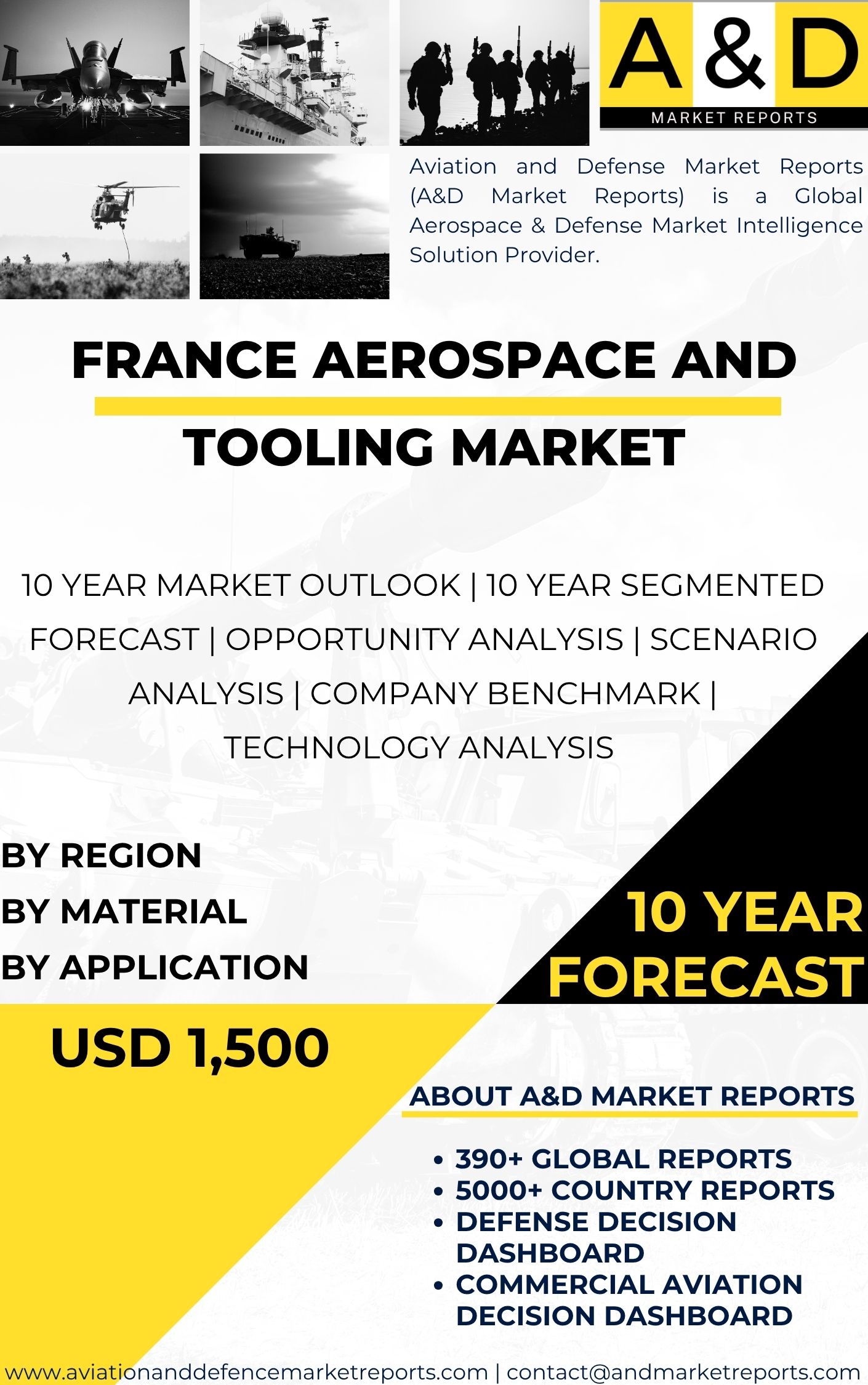
France Aerospace and tooling market

$1,500.00

Enquire Now

The aerospace and tooling market in France represents a critical foundation for the country?s wider aerospace, defense, and industrial base, serving as both an enabler of technological progress and a symbol of France?s enduring ambition to preserve its role as a global leader in aeronautics. Aerospace, as one of France?s crown industries, depends heavily on precision tooling to deliver advanced aircraft, spacecraft, and defense systems, ensuring production accuracy, structural reliability, and high efficiency throughout manufacturing. Tooling in this context refers not simply to physical instruments and machining devices but to an entire infrastructure of fixtures, jigs, molds, metrology systems, and automated platforms that make possible the production of complex aerospace structures and components. The market in France has grown alongside its aerospace sector, where commercial aircraft, military jets, space vehicles, and helicopters demand levels of precision surpassing nearly any other field. Over decades, aerospace tooling has evolved into a strategic capability, ensuring the ability to manufacture consistently reliable aircraft and weapon systems while reducing reliance on foreign suppliers, thereby reinforcing the principle of technological sovereignty so central to French industrial policy.

Go To Global Report Page Track this market real time on DDD

Description

Aerospace and Tooling Market in France Overview

The France Aerospace and tooling supports the country’s aerospace and defense industries. It enables the production of aircraft, spacecraft, and military systems. Aerospace is one of France’s most important industrial sectors. Therefore, it depends heavily on high-precision tooling solutions. These tools ensure accuracy, safety, and manufacturing efficiency. Moreover, tooling includes jigs, fixtures, molds, and automated systems. As a result, the market plays a vital role in maintaining industrial sovereignty.

Historical Development of Aerospace Tooling in France

The development of aerospace tooling in France began after World War II. During this time, France focused on rebuilding its aviation industry. Precision tooling became essential for producing modern aircraft. In addition, independent civilian and military programs increased tooling demand. Government, industry, and universities worked closely together. Over time, France joined major European aerospace programs. Consequently, its tooling expertise gained global recognition.

Key Characteristics of the French Aerospace and Tooling Market

Adaptability is a key characteristic of the French aerospace tooling market. Aerospace designs change frequently and require flexible tooling systems. For example, new composite materials need advanced fixtures. Precision is equally important in aerospace manufacturing. French tooling meets strict tolerance and safety standards. Furthermore, digital integration has become increasingly important. As a result, tooling systems now support smart manufacturing.

Key Players and Industrial Ecosystem

Major aerospace manufacturers strongly influence the tooling market in France. These companies rely on advanced tooling for production efficiency. Some develop tooling in-house to maintain control. Meanwhile, specialized suppliers support niche tooling needs. Small and medium enterprises play an important role. In addition, research institutions support innovation and skills. Therefore, collaboration strengthens the entire industrial ecosystem.

Economic and Strategic Importance

The aerospace and tooling market is economically important for France. It supports exports and sustains thousands of skilled jobs. Commercial aircraft production depends heavily on advanced tooling. Without it, global competitiveness would decline. Strategically, tooling ensures defense manufacturing independence. Military aircraft require specialized production systems. As a result, tooling supports national security and readiness.

Trends Shaping the Market

Digitalization is transforming the aerospace and tooling market in France. Industry 4.0 tools enable data-driven manufacturing processes. For example, smart tooling improves monitoring and efficiency. Digital twins reduce costs and production risks. Sustainability is another growing trend in the market. Companies adopt eco-friendly materials and energy-efficient methods. Consequently, production becomes more flexible and responsible.

Security and Regulatory Environment

Security is critical in aerospace and defense tooling. Advanced tooling supports sensitive military platforms. Therefore, design and export are tightly regulated. Government oversight ensures responsible technology sharing. Digital systems also introduce cybersecurity risks. Connected tooling systems require strong protection measures. As a result, cybersecurity investments continue to rise.

Future Outlook of the Market

The future of France’s aerospace and tooling market remains strong. New aerospace technologies are emerging rapidly. For instance, electric and hydrogen aircraft need new tooling designs. French companies are adapting to these changes. Robotics and artificial intelligence will improve efficiency further. Sustainability requirements will also shape future development. Overall, the market will support long-term innovation and growth.
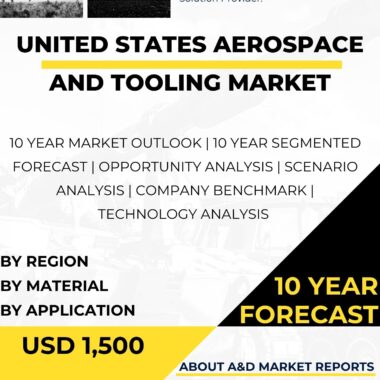
Table of content

Table Of Contents

1 Market Introduction

1.1 Market Introduction
1.2 Market Definition
1.3 Market Segmentation
1.4 10 Year Market Outlook

2 Market Technologies

3 Global Market Forecast

3.1 Global Market Forecast
3.2 By Type
3.3 By Product

4 Europe Market Trends & Forecast

4.1 Drivers, Restraints And Challenges
4.2 PEST
4.3 Market Forecast
4.3.1 Market Forecast By Type
4.3.2 Market Forecast By Product
4.4 Scenario Analysis
4.5 Key Companies& Profiling

5 France Analysis

5.1 Current Levels Of Technology Maturation In This Market
5.2 Market Forecast
5.2.1 Market Forecast By Type
5.2.2 Market Forecast By Product
5.3 Scenario Analysis
5.4 Country Defense Budget (Historical and 10- year forecast)
5.5 Defense Budget Category Spending- 10- year forecast
5.6 Procurement Analysis
5.7 EXIM Data
5.8 Patents

6 Opportunity Matrix

6.1 By Type
6.2 By Product

7 Scenario Analysis

7.1 Scenario 1

7.1.1 By Type (Scenario-1)
7.1.2 By Product (Scenario-1)

7.2 Scenario 2

7.2.1 By Type (Scenario-2)
7.2.2 By Product (Scenario-2)

8 Company Benchmark

9 Strategic Conclusions

10 About Aviation And Defense Market Reports

Segments

By Material
By Application

List of Tables

Table1: Global Market Forecast, Aerospace and tooling market
Table2: Europe Market Forecast, Aerospace and tooling market
Table3: Europe Market Forecast, By Material
Table4: Europe Market Forecast, By Application
Table5: Europe, Scenario Analysis
Table6: France Market Forecast, Aerospace and tooling market
Table7: France Market Forecast, By Material
Table8: France Market Forecast, By Application
Table9: France, Scenario Analysis
Table 10: France Defense Budget 10 Year Forecast
Table 11: France, Defense Budget Category Spending- 10- year forecast
Table 12: France, Procurement Analysis
Table 13: France, EXIM Data Analysis
Table 14: France, Opportunity Analysis, By Material
Table 15: France, Opportunity Analysis, By Application
Table 16: France, Scenario Analysis, By Material
Table 17: France, Scenario Analysis, By Application

List of Figures

Figure 1: Market Segmentation, France Aerospace and tooling market
Figure 2: Key Technology Analysis, Aerospace and tooling market
Figure 3: Global Market Forecast, Aerospace and tooling market
Figure 4: Europe, Market Forecast, Aerospace and tooling market
Figure 5: Europe, Market Forecast, By Material
Figure 6: Europe, Market Forecast, By Application
Figure 7: Europe, Scenario Analysis
Figure 8: France, Market Forecast, Aerospace and tooling market
Figure 9: France, Market Forecast, By Material
Figure 10: France, Market Forecast, By Application
Figure 11: France, Scenario Analysis
Figure 12: France, Defense Budget 10 Year Forecast
Figure 13: France, Defense Budget Category Spending- 10- year forecast
Figure 14: France, Procurement Analysis
Figure 15: France, EXIM Data Analysis
Figure 16: France, Opportunity Analysis, By Material
Figure 17: France, Opportunity Analysis, By Application
Figure 18: France, Scenario Analysis, By Material
Figure 19: France, Scenario Analysis, By Application
Figure 20: Company Benchmark