
Description
Strategic Role of Avionics Test Systems in France
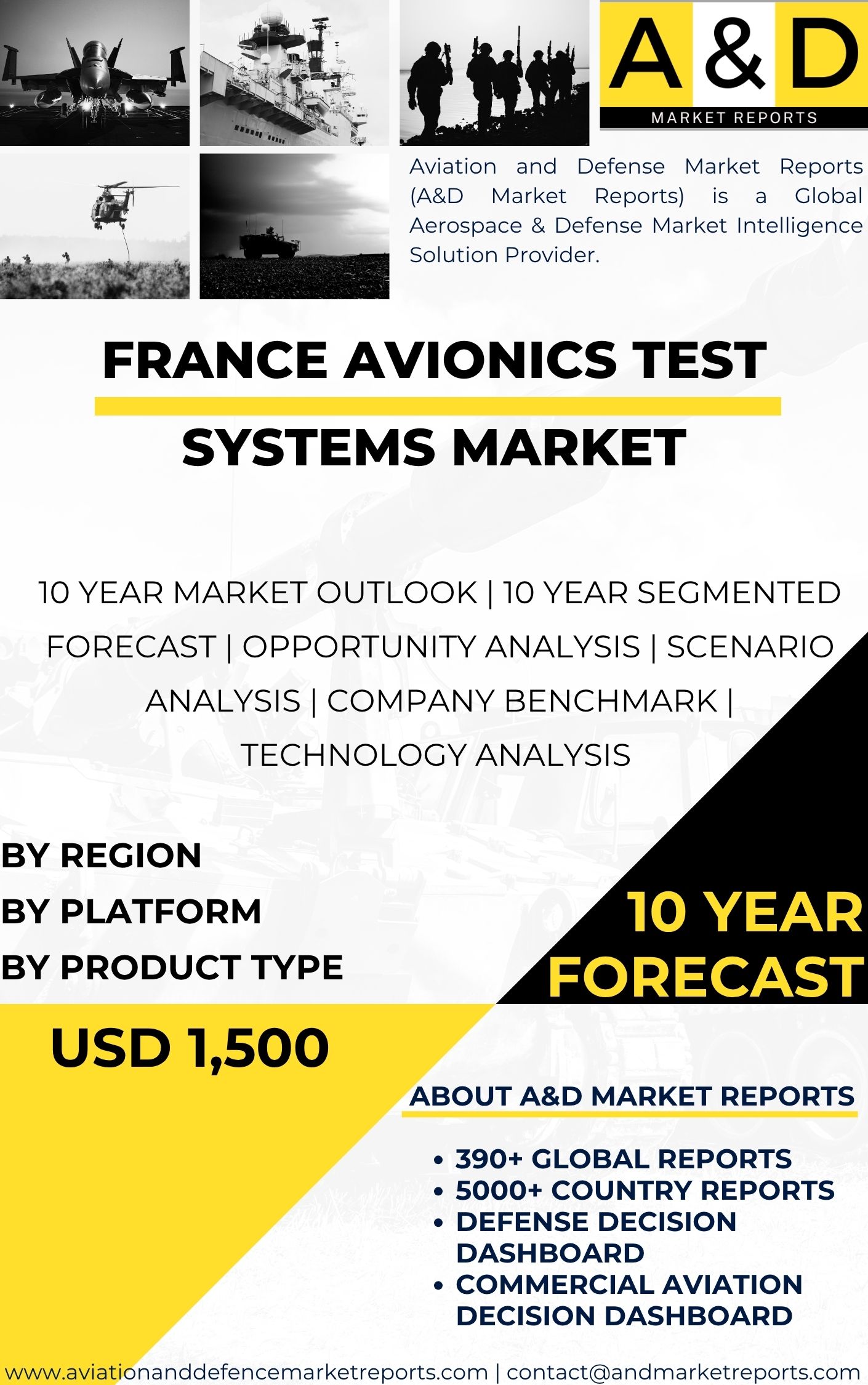
The France Avionics Test Systems occupies a central and strategically vital position within the nation’s aerospace and defense ecosystem. France has long established itself as a global aviation leader, and this status depends heavily on the reliability of onboard electronic systems. Avionics govern navigation, communication, flight control, and mission execution, making their flawless operation essential. Therefore, testing systems play a decisive role in verifying performance and safety. These systems validate complex interactions between hardware and software. As aviation technology grows more advanced, testing becomes even more critical. Consequently, avionics test systems form the backbone of operational trust across French aerospace platforms.
Avionics Systems as the Intelligence Core of Aircraft
Modern aircraft rely on avionics as their central intelligence system. These integrated electronics manage real-time decision-making and situational awareness for pilots and crews. Because avionics operate continuously during flight, even minor faults can lead to severe consequences. For this reason, avionics test systems must detect errors with extreme precision. They verify signal accuracy, data integrity, and system responsiveness. In France, these test systems support both initial certification and long-term operational reliability. As aircraft complexity increases, avionics testing ensures confidence across every mission profile.
Evolution of a Specialized Testing Market
The avionics test systems market in France has evolved into a highly specialized technological sector. Early testing methods focused on individual components and manual verification. However, growing system integration quickly outpaced these traditional approaches. As a result, France invested in automated and modular testing platforms. These platforms validate entire avionics suites rather than isolated units. Over time, testing environments became smarter, faster, and more adaptive. This evolution allowed France to maintain pace with global aerospace advancements. Today, the market reflects decades of accumulated engineering expertise.
Historical Influence of Aerospace Leaders
France’s aerospace champions shaped the development of avionics testing capabilities. Companies such as Airbus, Dassault Aviation, Thales, Safran, and MBDA demanded increasingly advanced validation tools. Their aircraft programs pushed avionics complexity to new levels. Consequently, test systems had to evolve alongside them. Early bench testing gave way to integrated labs and simulated environments. Government-backed research further accelerated this transition. Through sustained investment, France established itself as a leader in avionics verification and validation technologies.
Civil Aviation Applications and Certification Needs
In civil aviation, avionics test systems ensure compliance with strict international regulations. Airlines depend on these systems to certify new aircraft and maintain existing fleets. Regular testing supports pilot training, system upgrades, and safety audits. Moreover, accurate testing minimizes aircraft downtime. This directly improves airline efficiency and profitability. In France, civil aviation authorities maintain close oversight of testing procedures. As a result, avionics test systems continuously evolve to meet rising safety expectations.
Military Aviation and Mission Readiness
Military aviation places unique demands on avionics test systems. Combat aircraft and transport platforms operate in unpredictable and hostile environments. Therefore, test systems must simulate electronic warfare, signal interference, and mission-specific stress conditions. French defense forces rely on these tools to maintain operational readiness. Avionics testing also supports rapid deployment and mission adaptability. Furthermore, secure communications and system resilience remain top priorities. This makes avionics test systems indispensable to national defense.
Support for Unmanned and Advanced Platforms
Unmanned aerial vehicles and autonomous systems are becoming increasingly important in France. These platforms rely almost entirely on avionics for navigation and decision-making. Consequently, testing focuses on software logic, data links, and autonomous responses. Avionics test systems validate reliability before deployment. They also ensure secure control under dynamic conditions. As France expands its unmanned capabilities, testing systems grow more sophisticated. This trend reinforces long-term demand within the market.
Industrial Ecosystem and Collaboration
The French avionics test systems market thrives on collaboration. Large manufacturers work closely with specialized technology firms. These smaller companies provide expertise in automation, simulation, and signal processing. Research institutions contribute innovation and skilled talent. Together, this ecosystem fosters continuous improvement. Knowledge flows between civil and military domains. As a result, France maintains a flexible and resilient testing industry capable of rapid adaptation.
Economic Contribution and Global Reach
Economically, avionics test systems generate high-value employment across engineering and software disciplines. The sector strengthens France’s aerospace exports by guaranteeing product quality. International customers often adopt French testing solutions alongside aircraft purchases. This integration enhances France’s reputation for reliability. Additionally, the market supports long-term industrial sustainability. Its global footprint reduces dependence on domestic demand alone. Therefore, avionics testing contributes significantly to national economic resilience.
Automation and Artificial Intelligence Trends
Automation now defines the future of avionics testing. Automated systems reduce human error and speed up validation processes. Artificial intelligence further enhances these capabilities. AI-driven testing identifies patterns and predicts potential failures. This proactive approach improves safety and reduces lifecycle costs. In France, such innovations align with broader digital transformation goals. Consequently, avionics test systems are becoming smarter and more efficient with each generation.
Cybersecurity and Virtualization Developments
Cybersecurity has emerged as a critical testing dimension. As avionics become networked, vulnerability risks increase. French test systems now evaluate resistance to cyber threats. Virtualization also plays a growing role. Digital twins allow early-stage testing without physical hardware. This shortens development cycles and lowers costs. Together, cybersecurity and virtualization redefine modern avionics validation strategies.
Future Outlook and Strategic Significance
Looking ahead, the avionics test systems market in France will grow alongside aerospace innovation. Advanced automation, autonomy, and satellite navigation will raise testing requirements. Sustainability goals will also influence system design. Government support and European collaboration will remain strong. Ultimately, avionics test systems will continue to safeguard safety and technological leadership. They represent not just a market, but a strategic pillar of French aerospace excellence.