
Description
Market Overview and Industry Background
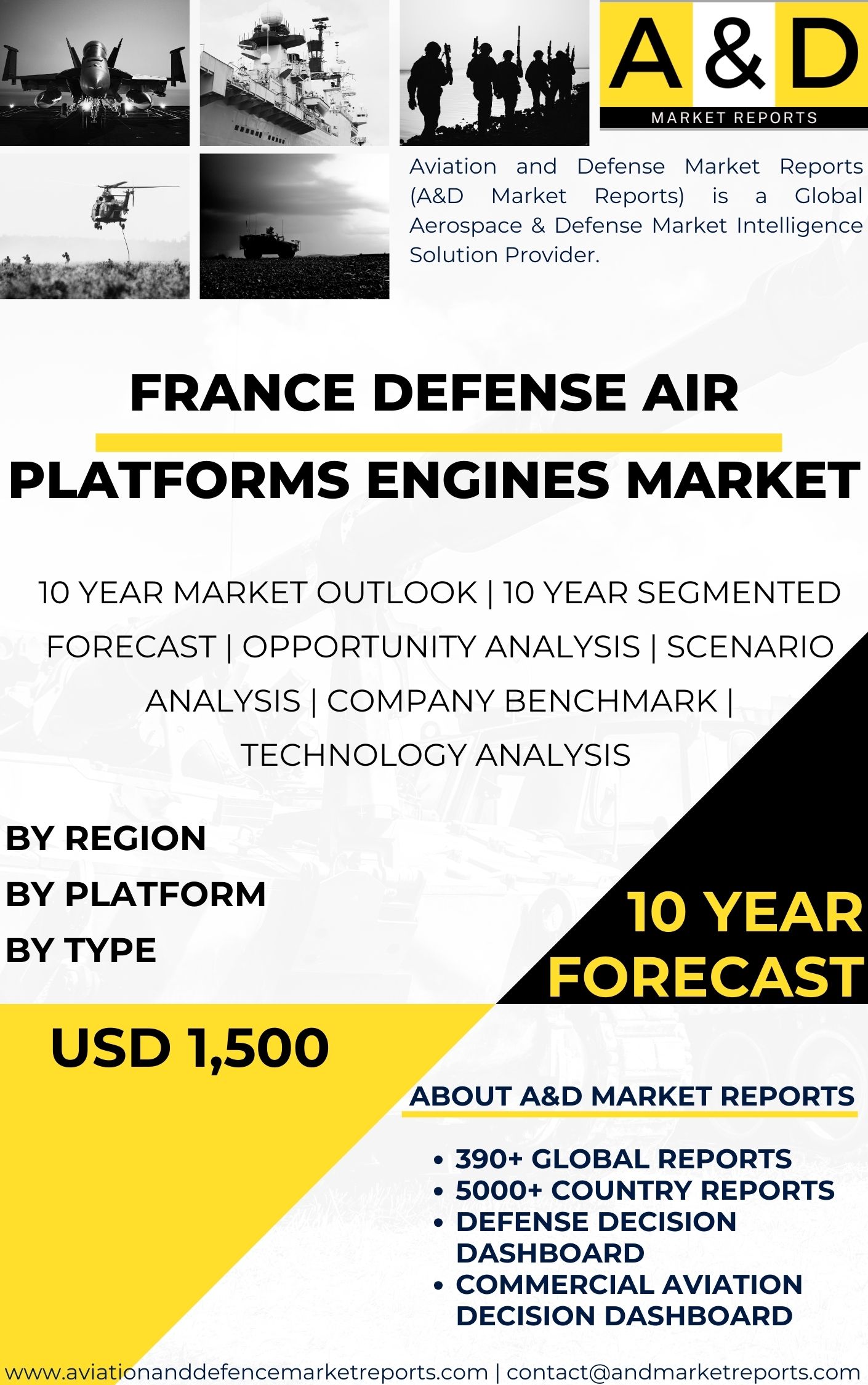
The France Defense Air Platforms has shown strong growth supported by continuous technological advancement. Engines used in fighter jets, transport aircraft, and military helicopters are central to mission success and operational reliability. These propulsion systems directly influence speed, range, payload capacity, and survivability. France benefits from a long aerospace legacy and a mature defense manufacturing ecosystem. As a result, the country has become a key developer and exporter of advanced military aircraft engines. This market reflects France’s strategic focus on maintaining air power dominance. Overall, engine development remains a cornerstone of national defense capability.
Strategic Importance of Aviation Engines
A major driver of this market is France’s recognition of aviation engines as a decisive factor in modern warfare. High-performance engines enhance maneuverability, endurance, and rapid response capabilities. Moreover, reliable propulsion systems allow aircraft to operate effectively in diverse and demanding environments. France invests heavily to ensure its air platforms remain technologically superior. These investments also reduce dependency on external suppliers. Consequently, propulsion technology supports long-term operational sovereignty. Strategic importance continues to fuel sustained market demand.
Integration Across Defense Air Platforms
The French defense sector prioritizes integrating advanced engines across multiple air platforms. Fighter aircraft require high thrust and rapid acceleration. Transport aircraft depend on fuel efficiency and durability. Helicopters rely on engines capable of stable performance under varying loads. Advanced propulsion technologies support these diverse requirements. As a result, French forces gain flexibility across mission profiles. Engine integration also improves aircraft survivability and mission readiness. This multi-platform approach strengthens overall air force capability.
Interoperability and Allied Operations
France actively engages in multinational defense cooperation and joint air operations. Engine interoperability supports shared maintenance standards and operational compatibility. This is especially important during coalition missions and joint exercises. France designs engines to align with allied requirements and certification norms. As a result, aircraft powered by French engines can operate seamlessly alongside partner forces. Interoperability enhances trust and operational efficiency. It also strengthens France’s role within allied defense frameworks.
Role of the French Aerospace Industry
The French aerospace and defense industry is a key pillar of the engine market. Domestic manufacturers and research institutions lead innovation in propulsion engineering. Expertise spans materials science, thermal efficiency, and advanced manufacturing. French engines are known for durability, performance consistency, and advanced control systems. Industry players continuously refine designs based on operational feedback. This close alignment with military needs drives product excellence. The industrial base ensures long-term competitiveness.
Government Support and R&D Investment
Strong government backing has accelerated innovation in engine technology. France supports research through funding programs and strategic aerospace initiatives. Public-private partnerships reduce development risk and cost. Academic collaboration contributes to breakthroughs in propulsion science. These efforts ensure a steady pipeline of next-generation engines. Government commitment also supports workforce development and infrastructure. R&D investment remains a critical growth enabler.
Technological Advancements in Propulsion
Ongoing research has produced significant engine technology improvements. Advanced materials increase temperature tolerance and durability. Aerodynamic refinements enhance thrust efficiency and fuel economy. Digital engine control systems improve reliability and predictive maintenance. These advancements reduce operating costs while improving performance. Environmental sustainability is also increasingly addressed. Innovation continues to reshape engine capabilities across platforms.
International Collaboration and Export Programs
France collaborates closely with international partners on engine development and exports. Joint programs allow shared expertise and faster innovation cycles. Export partnerships expand market reach and strengthen diplomatic ties. Standardized engine platforms simplify integration for foreign customers. These collaborations also support technology transfer and shared maintenance ecosystems. As a result, France strengthens its global propulsion footprint. International cooperation remains a strategic priority.
Civilian and Dual-Use Applications
The defense air platforms engines market also supports civilian aerospace innovation. Technologies developed for military use influence commercial aviation and UAV propulsion. Fuel efficiency and noise reduction are key crossover benefits. Research institutions leverage defense programs to advance civilian engine designs. Dual-use applications improve return on investment. This overlap strengthens the broader aerospace sector. Civilian demand adds resilience to the market.
Regulatory Framework and Cybersecurity
France enforces strict safety and performance regulations for aircraft engines. Certification standards ensure reliability under extreme operating conditions. Cybersecurity has become increasingly important with digital engine controls. Protecting propulsion systems from cyber threats is a national priority. Regulatory oversight ensures compliance with international aviation norms. These measures enhance system resilience and trust. Governance plays a vital supporting role.
Future Outlook and Market Conclusion
The defense air platforms engines market in France is expected to grow steadily. Ongoing defense modernization programs will sustain demand. Technological innovation will further improve efficiency and performance. International collaboration will expand export opportunities. Civilian applications will continue to benefit from defense-driven research. Together, these factors reinforce France’s leadership in propulsion technology. The country remains well positioned as a global engine innovator.