
Description
Market Overview and Strategic Importance
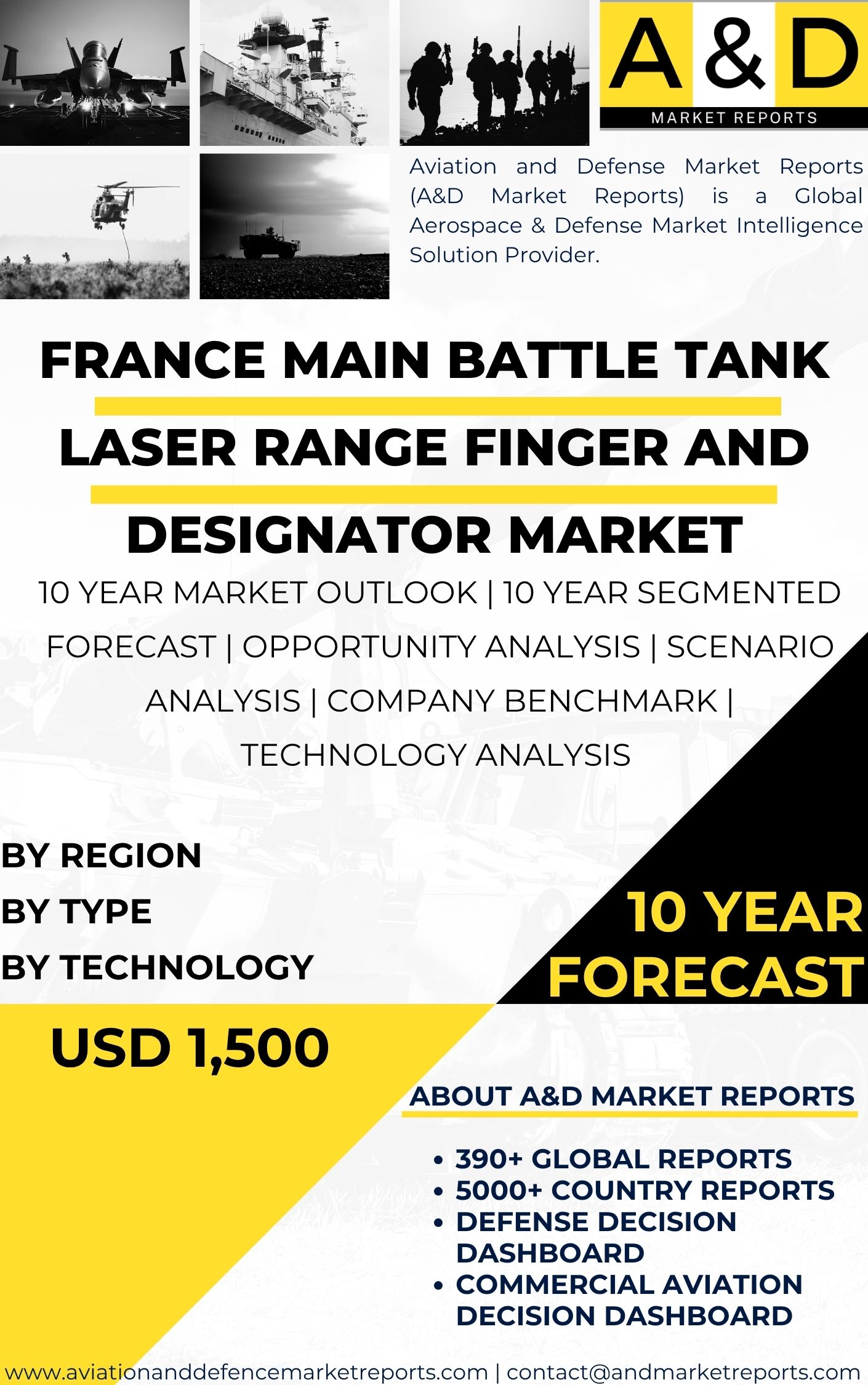
The France Main Battle Tank forms a critical pillar of the nation’s defense optics and fire-control ecosystem. These systems directly influence targeting accuracy, lethality, and battlefield effectiveness. Laser range finders precisely calculate target distance, while designators enable guided munitions and coordinated strikes. Consequently, they are indispensable to modern armored warfare. In France, this market reflects both technological excellence and strategic necessity.
Historical Evolution of Laser Targeting in French Armor
Historically, France has played a pioneering role in armored warfare since the First World War. Over time, the evolution of tanks exposed the limitations of optical sights and manual range estimation. As engagement distances increased, accuracy became harder to maintain. Therefore, with the maturation of laser technology in the late twentieth century, France integrated laser range finders into its tanks. The Leclerc main battle tank symbolizes this transition, combining firepower with advanced targeting precision.
Sovereign Development and Strategic Autonomy
Importantly, France treats laser range finders and designators as sovereign military technologies. Because targeting precision directly affects combat outcomes, dependence on foreign suppliers is considered a strategic risk. As a result, French defense companies, supported by government research institutions, invest heavily in domestic development. This approach safeguards national security while also strengthening export credibility in global defense markets.
Core Technological Capabilities
Technologically, French laser range finders operate by emitting laser pulses and measuring return time to calculate distance with extreme accuracy. This data feeds directly into fire-control systems, allowing real-time ballistic correction. In addition, laser designators mark targets for guided munitions. As a result, tanks can coordinate strikes with aircraft, artillery, or drones. This capability reflects France’s network-centric approach to modern warfare.
Operational Performance in Diverse Environments
Operational requirements strongly shape system design. French tanks deploy across deserts, forests, and temperate European terrain. Therefore, laser systems must perform reliably in dust, fog, heat distortion, and low-light conditions. French engineers address these challenges through protective coatings, advanced optics, and efficient power management. Furthermore, integration with digital fire-control systems ensures rapid engagement even while vehicles are in motion.
Economic and Industrial Impact
Economically, this market sustains a high-value industrial ecosystem. Optics manufacturers, electronics firms, software developers, and materials specialists collaborate to deliver complete systems. Meanwhile, small and medium enterprises supply niche components. This layered supply chain supports skilled employment and innovation. Moreover, export programs amplify economic value, as French tanks often include indigenous laser systems in international sales.
Digitalization and Artificial Intelligence Trends
Increasingly, digitalization is reshaping the market. Laser systems now function as integrated nodes within tank electronic architectures. Software automatically processes range and designation data, reducing crew workload. Additionally, artificial intelligence supports target recognition and prioritization. Consequently, engagement speed and accuracy improve significantly, even under complex combat conditions.
Modularity and Upgrade Flexibility
Another defining trend is modularity. France emphasizes systems that can evolve through upgrades rather than replacement. Therefore, laser range finders and designators are designed with modular hardware and software. New emitters, extended range capabilities, or software enhancements can be added over time. This approach ensures long service life and cost efficiency.
Interoperability and Coalition Operations
Interoperability remains essential. French laser systems comply with NATO standards, allowing coordination with allied munitions and targeting protocols. At the same time, sensitive elements such as encryption and emission profiles remain under national control. Thus, France balances alliance cooperation with technological independence.
Cultural and Doctrinal Significance
Culturally, laser targeting systems symbolize precision and confidence within the French Army. For tank crews, they provide assurance that every engagement is data-driven. For defense planners, they represent sovereignty over critical technologies. More broadly, they reflect France’s ability to merge historical armored doctrine with modern digital warfare.
Future Outlook and Sensor Integration
Looking ahead, laser range finders and designators will become deeply integrated into wider sensor networks. Future French and European tanks will share laser data with drones, artillery, satellites, and command systems. Artificial intelligence will enhance autonomous threat detection, while advances in miniaturization and power efficiency will allow wider system deployment across vehicles.
Conclusion and Strategic Value
Overall, the main battle tank laser range finder and designator market in France demonstrates how a specialized subsystem shapes national defense capability. Rooted in armored warfare heritage and driven by innovation, it reinforces lethality, survivability, and sovereignty. As battlefields become more networked and data-driven, these systems will remain essential instruments of France’s operational credibility and strategic strength.