
Description
Market Overview
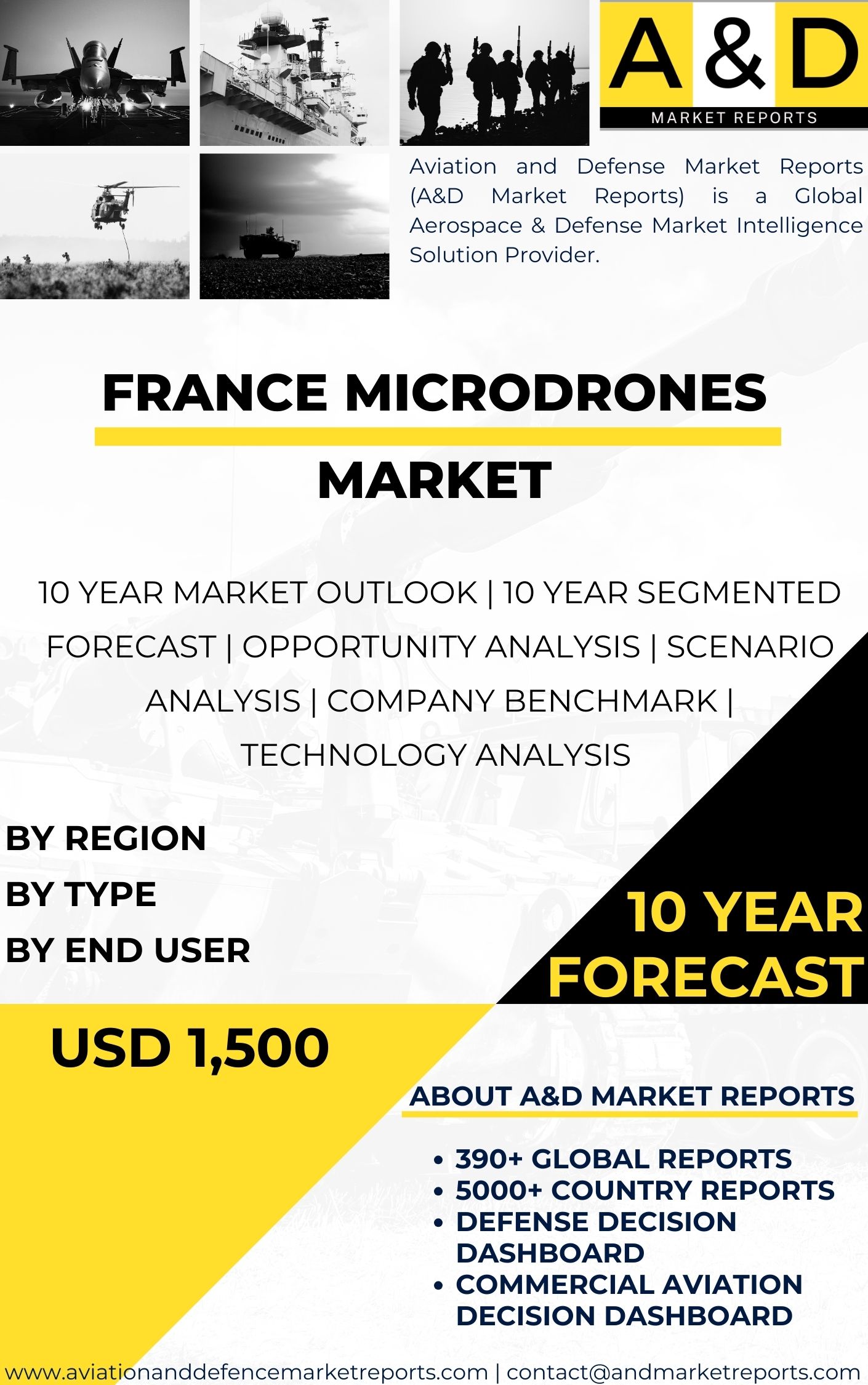
The France Microdrones Market is a dynamic and rapidly growing segment within the aerospace and defense industry. Microdrones, also called UAVs or drones, are small, autonomous aerial platforms that can be remotely operated or pre-programmed. They have applications in military, civil, agriculture, environmental monitoring, and surveillance sectors. Moreover, microdrones improve operational efficiency, safety, and data collection across industries. As a result, France has emerged as a hub for UAV innovation, with leading manufacturers driving technological advancements. Continuous R&D ensures the market remains competitive and adaptive to global trends.
French Manufacturers and Capabilities
French companies lead in microdrone design, leveraging expertise in aerospace engineering, avionics, and robotics. They produce highly versatile drones tailored to diverse sectors and applications. Additionally, these manufacturers offer a range of sizes, payloads, and capabilities to meet specific customer needs. As a result, their products are widely used across military, commercial, and research domains. Collaboration with research institutions and technology partners enhances innovation. Therefore, France maintains a strong position in the global microdrone market.
Military Applications
The military sector represents a major portion of the microdrones market. French armed forces deploy UAVs for reconnaissance, surveillance, intelligence gathering, and situational awareness. These drones provide real-time data, enabling faster and more informed battlefield decisions. Moreover, microdrones support counterterrorism, border security, and protection of critical infrastructure. As a result, they improve operational efficiency and troop safety. Continuous technological upgrades ensure that microdrones remain relevant against evolving security threats.
Civil and Commercial Applications
Civil and commercial sectors are increasingly driving market growth. Agriculture, construction, environmental monitoring, and media industries use microdrones to improve productivity and data collection. In agriculture, drones with specialized sensors monitor crop health, irrigation, and pest control, enabling sustainable practices. Moreover, environmental monitoring benefits from drones reaching inaccessible areas to track wildlife, ecosystems, and climate patterns. Therefore, microdrones contribute to efficiency, safety, and sustainability across multiple sectors. Adoption is expected to increase steadily as technology matures.
International Collaboration and Exports
France participates actively in international defense collaborations and UAV exports. Joint projects with allied nations support technology sharing, co-development, and market expansion. Additionally, French microdrones are exported globally, creating significant revenue streams. As a result, French manufacturers gain access to new markets while strengthening international defense relationships. Furthermore, collaborations accelerate innovation and enhance competitiveness. This global engagement positions France as a leading microdrone technology provider.
Technological Advancements
Technological innovation drives growth in the microdrones market. Key developments include miniaturization, AI integration, long-endurance capabilities, and advanced sensors and payloads. These advancements make drones more efficient, agile, and intelligent. Moreover, they expand operational versatility across military and civilian applications. As a result, French microdrones can perform complex tasks with higher precision and reliability. Continuous R&D ensures that new features meet emerging industry and defense requirements.
Market Challenges
The France microdrones market faces several challenges. Competition from UAV manufacturers in the United States, China, and Israel is intense. Additionally, regulatory and safety concerns affect commercial and civil operations. Policymakers and manufacturers must balance innovation with responsible and safe drone use. Moreover, cost pressures and evolving technological standards create additional hurdles. As a result, companies need to focus on differentiation, compliance, and continuous improvement to maintain market leadership.
Research and Development Focus
French companies invest heavily in research and development to remain competitive in microdrone technology. Collaboration with universities and technology partners provides access to expertise and emerging innovations. Moreover, R&D focuses on improving flight autonomy, endurance, sensor integration, and payload management. As a result, French microdrones are increasingly capable, efficient, and adaptable. Continuous innovation also enables companies to enter new applications and markets. Therefore, R&D is central to maintaining France’s leadership in the global microdrone sector.
Product Diversification
Diversification is a key strategy for French microdrone manufacturers. They offer hardware, software, data analytics, and value-added services alongside UAV platforms. Moreover, modular designs allow clients to customize drones for specific tasks and industries. As a result, manufacturers can address a wide range of customer requirements and operational scenarios. This approach also enhances export opportunities and market resilience. Therefore, diversification ensures that French companies remain flexible and competitive in an evolving market.
Future Outlook
The future of the France microdrones market is promising. Increasing adoption across industries, AI advancements, and miniaturization drive demand for sophisticated solutions. Additionally, new applications in challenging environments, such as urban areas or harsh weather conditions, expand market potential. As a result, French companies are well-positioned to capitalize on emerging opportunities. Continuous R&D, strategic partnerships, and sustainable practices will ensure long-term success. The market is expected to remain dynamic, competitive, and central to France’s aerospace and defense innovation landscape.