
Description
Market Significance
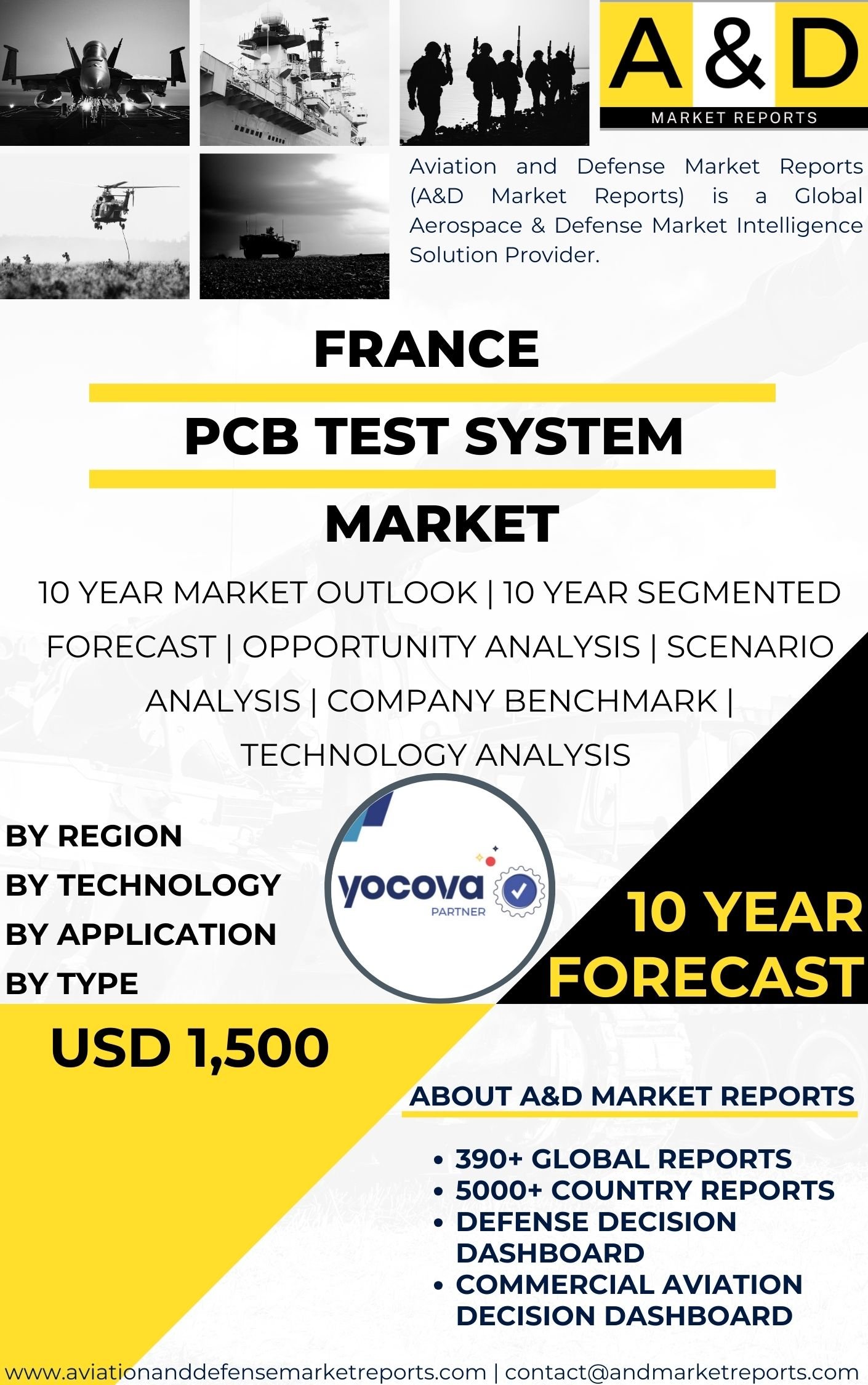
The France PCB Test System in France plays a critical role in quality assurance across electronics, aerospace, automotive, defense, and industrial technologies. PCBs act as the backbone of modern electronic systems. They route signals and connect components. Their reliability directly impacts aircraft avionics, automotive control units, defense communications, medical devices, and many other applications. Consequently, France’s leadership in aerospace, defense, renewable energy, and high-value manufacturing drives a continual demand for advanced PCB test systems. These systems must be precise, responsive to design innovations, and aligned with France’s industrial digital transformation goals.
Historical Development
PCB testing in France began with simple functional checks to validate circuitry, detect shorts, and catch assembly errors. As boards became more complex, miniaturized, and multilayered, test systems had to evolve. Companies like Airbus, Dassault Aviation, Thales, and Safran required advanced PCBs for avionics, radar, communications, and control systems. Harsh operating conditions meant that every PCB had to pass strict quality assurance. Over time, this culture of precision became ingrained in French industry, making multiple layers of validation standard practice before deployment.
Techniques and Solutions
The market offers diverse testing methods. Early-stage in-circuit testing finds misaligned components, soldering faults, and open circuits. Functional testing ensures that fully assembled boards perform as designed. Advanced methods, such as flying probe tests, X-ray inspections, and boundary scans, have grown in importance. These methods handle dense, hard-to-access boards. Furthermore, French firms invest in flexible systems that adapt to miniaturized, embedded, and multilayer electronics. This adaptability is crucial because aerospace and defense innovation cycles are accelerating rapidly.
Industry Players and Ecosystem
Major companies shape market trends. Airbus relies on sophisticated PCB assemblies for aircraft avionics, requiring robust testing frameworks. Thales uses test systems for radar, secure communications, command systems, and sensor processing. Safran and Dassault Aviation demand aerospace-grade PCB validation, where failures could be catastrophic. Smaller French firms provide advanced test equipment, often partnering with global providers. Research organizations and engineering schools also contribute, ensuring innovation in PCB design and testing is embedded in France’s industrial strategies.
Economic Importance
PCB testing ensures quality across sectors that drive France’s competitiveness. In aerospace, rigorous validation maintains safety and global credibility. Defense electronics depend on reliable PCBs for operational readiness. In medical devices, transportation, and communications, testing reduces warranty costs and ensures export competitiveness. The market also creates jobs in electronics engineering, software development, and manufacturing processes. In this way, PCB test systems support both technical reliability and economic resilience.
Technological Trends
Automation and AI are transforming PCB testing. Robotics and machine learning shorten validation cycles and reduce manual work. AI predicts failures, improving yield and reducing downtime. Non-contact methods, such as X-ray, optical, and electromagnetic testing, verify boards that are inaccessible by traditional probes. Boundary scan technology is increasingly important for embedded systems in vehicles, drones, and smart infrastructure. Cloud connectivity allows teams to share, analyze, and archive large datasets, supporting multinational aerospace and defense programs.
Cultural and Regulatory Environment
Strict safety and compliance standards shape demand. Aerospace and defense boards must meet national, European, and international certifications. Companies recognize the reputational and strategic risks of failure. Consequently, PCB testing is integral to production lines. Civilian industries, such as automotive and energy, also follow stringent environmental and safety standards. This regulatory culture ensures test systems remain essential pillars of system integrity.
Future Outlook
The market will continue to grow in complexity. Miniaturization and high-density boards require testing beyond physical access. Advanced chipsets and hybrid components in aerospace and defense will drive demand for multifunctional systems. Civil industries, including electric vehicles, green energy, and smart infrastructure, will also need sophisticated testing. AI will increasingly enable predictive diagnostics, improving manufacturing yields and lifecycle reliability. Sustainable processes will reduce energy use and waste. Collaboration with European partners may lead to shared standards and co-developed platforms, reinforcing France’s global leadership.
Conclusion
France’s PCB test systems market combines precision engineering, technological resilience, and a culture of excellence. It ensures that circuit boards—the hidden foundation of electronic systems—remain reliable in critical applications. By leveraging domestic expertise, global collaboration, AI, and strict safety standards, France has built a PCB testing industry that supports its current strength in aerospace and defense while preparing for future global competitiveness. As technology evolves, this market will remain key to safeguarding France’s high-tech ambitions.