
Description
Market Significance
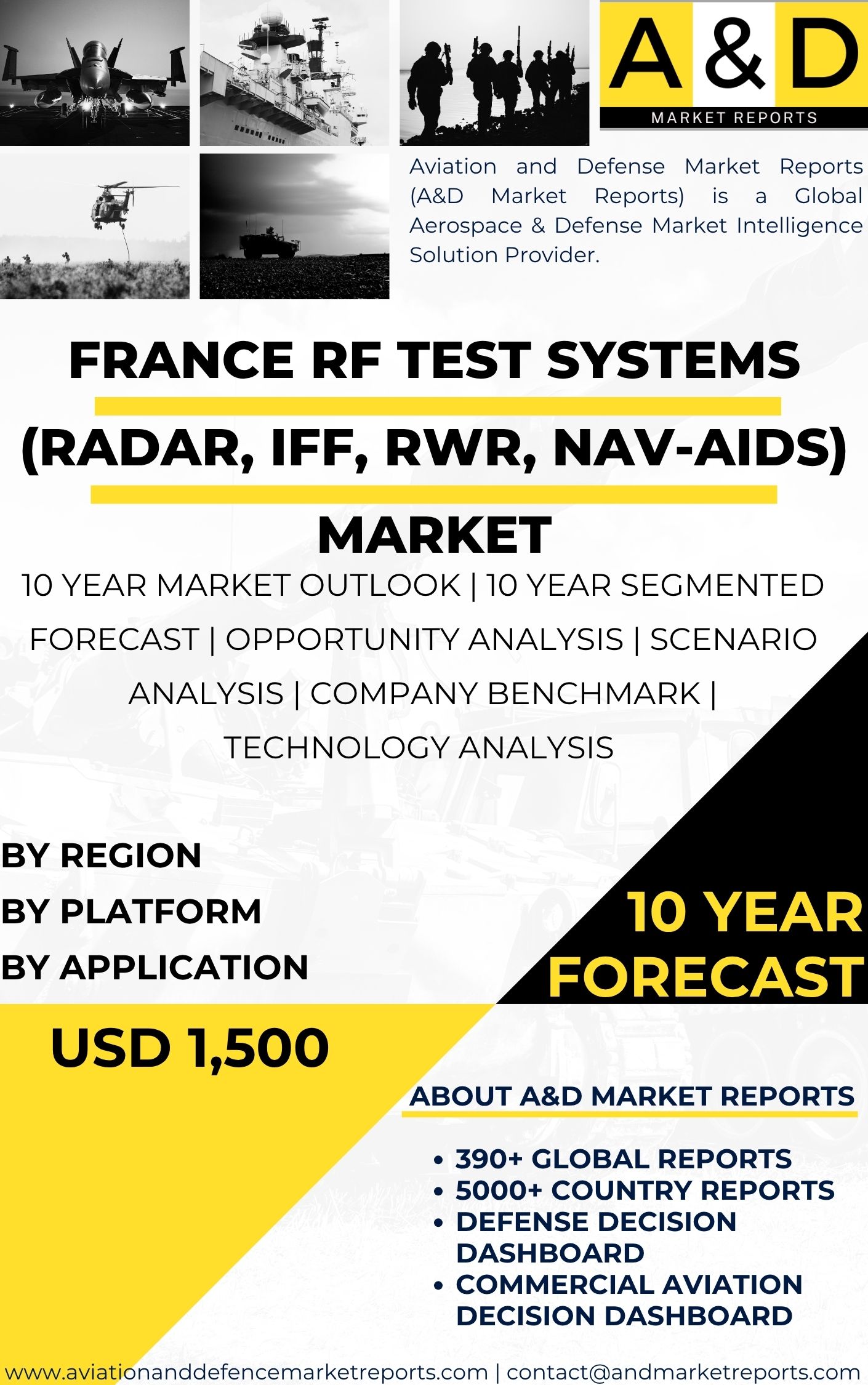
The France RF Test Systems is a cornerstone of both aerospace and defense sectors. These systems are essential for validating radar, IFF (Identification Friend or Foe), RWR (Radar Warning Receivers), and navigation aids, functioning as the nervous system for aircraft, naval vessels, and ground platforms. By enabling accurate communication, detection, and navigation, RF testing ensures operational success, with safety, security, and precision at the forefront.
Historical Development
RF technologies gained prominence during France’s aviation and defense expansion in the mid-to-late 20th century. As radar systems became critical for air defense, maritime surveillance, and aerospace programs, the need for sophisticated test equipment capable of simulating jamming, interference, and environmental variations grew. The addition of IFF and RWR systems added complexity, requiring reliable performance under hostile conditions. With the growth of major aerospace and defense players such as Airbus, Dassault Aviation, Safran, Naval Group, and MBDA, domestic RF test systems were developed to support both system development and lifecycle management.
Market Applications
The French RF test systems market serves both civil and military needs. Civil aviation relies on these systems to validate navigation aids such as ILS, VOR, and satellite augmentation systems, ensuring compliance with European and global safety standards. Defense applications demand testing of radar, IFF, and RWR in contested electromagnetic environments. To meet these requirements, test systems are designed to be versatile, modular, and upgradeable, capable of adapting to evolving threat libraries, waveform updates, and higher bandwidths without full replacement.
Industrial Ecosystem
France’s industrial ecosystem for RF testing combines large system integrators and specialized firms. Thales leads in RF innovation, producing both operational systems and testing solutions. Dassault and Airbus require advanced validation for aircraft certification, while Safran focuses on navigation aids and MBDA on missile datalinks and seekers. Smaller companies and academic laboratories contribute specialized instrumentation, integration services, and software development. Together, this ecosystem blends industrial strength with forward-looking innovation and sustains high-skill employment in software, electronics, and systems engineering.
Economic Importance
RF testing underpins the reliability of French aircraft and defense systems, reduces operational risks, and ensures NATO interoperability. It safeguards human lives and strengthens France’s aerospace reputation, ensuring exported platforms meet the highest standards. Technological trends such as virtualization, digital twins, and AI-driven analysis enable realistic lab-based replication of RF conditions, anomaly detection, and adaptive signal testing. Wideband, multi-standard evaluation capabilities and portable field-deployable testers improve efficiency for both development and maintenance.
Cybersecurity and Resilience
As RF systems increasingly rely on networks, cybersecurity becomes crucial. French test systems now simulate spoofing, jamming, cyber attacks, and spectrum denial to verify resilience, ensuring technical and digital security. France’s emphasis on technological independence reinforces domestic development, secure testing protocols, and sovereign capabilities. Precision, safety, and resilience remain central to both industrial culture and national strategy.
Operational Applications
Operationally, RF test systems simulate realistic scenarios across radar, IFF, RWR, and navigation aids. They expose systems to environmental challenges, hostile signatures, jamming, and urban interference, preparing platforms, crews, and fleets for real-world missions.
Future Outlook
Looking ahead, next-generation radar, software-defined communications, and quantum-resistant navigation systems will increase testing demands, with AI simulating adaptive electromagnetic battlefields and cloud-based platforms enabling distributed collaboration. Sustainable designs will reduce energy consumption without compromising performance. France is poised to continue shaping RF testing within European and NATO frameworks.
Conclusion
RF test systems in France are more than technical tools; they are critical to defense readiness, civil aviation safety, and industrial credibility. Combining French expertise, industrial capacity, and cultural commitment to excellence, these systems ensure that every radar scan, navigation signal, and situational update is accurate and reliable. By validating critical signals, they strengthen both operational capability and France’s global leadership in aerospace and defense innovation.