
Description
Market Overview and Strategic Importance
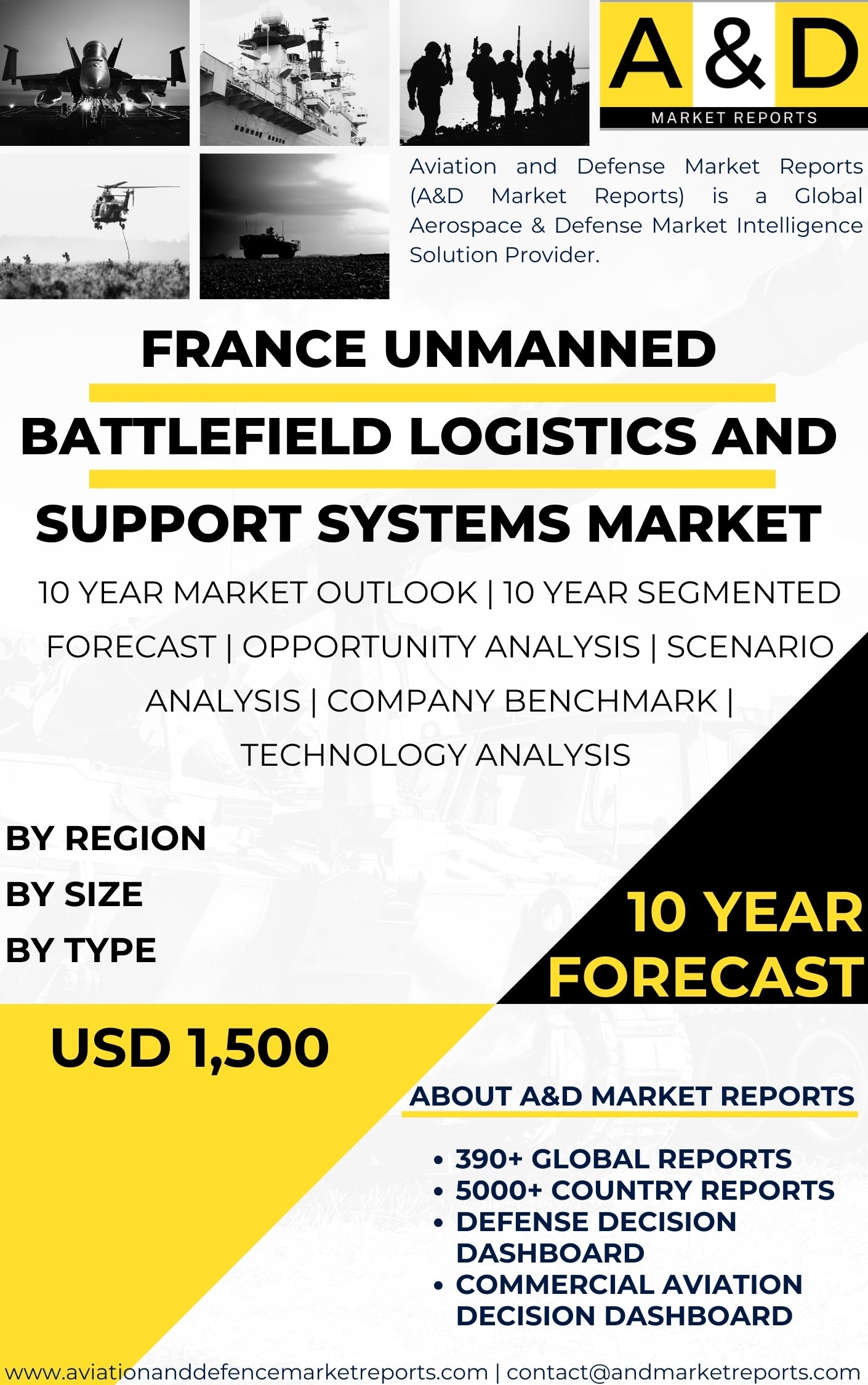
The France Unmanned battlefield logistics has experienced strong growth driven by rapid technological progress and evolving military requirements. These systems, including unmanned ground vehicles and unmanned aerial vehicles, are designed to perform high-risk and repetitive logistics tasks on the battlefield. They support armed forces by transporting supplies, evacuating casualties, and enhancing situational awareness without exposing soldiers to direct danger. France’s strong focus on defense innovation and military modernization has helped the country establish itself as an important player in the global unmanned systems market. The adoption of unmanned logistics solutions aligns with France’s objective of maintaining operational superiority in complex combat environments.
Demand Drivers and Operational Necessity
One of the key drivers of the unmanned battlefield logistics and support systems market in France is the increasing need for safe, efficient, and resilient logistics operations. Modern warfare involves unpredictable threats, difficult terrain, and contested supply routes, making conventional logistics risky. Unmanned systems help reduce human casualties while ensuring timely delivery of critical supplies. Moreover, these platforms improve operational efficiency by enabling continuous logistics support even in hostile conditions. As military missions become more complex, the demand for autonomous logistics capabilities continues to rise.
Integration within the French Armed Forces
The French Armed Forces actively integrate unmanned logistics and support systems into their operational structure. These systems support a wide range of missions, including cargo transport, ammunition resupply, fuel delivery, and medical evacuation. In addition, unmanned platforms assist in reconnaissance and surveillance, improving situational awareness for commanders. By adopting these technologies, France enhances force mobility and operational endurance. This integration reflects a broader shift toward technology-driven and network-centric warfare concepts.
Interoperability and Allied Cooperation
France places strong emphasis on interoperability to ensure effective cooperation with allied forces. Unmanned battlefield logistics and support systems are designed to operate seamlessly during joint exercises and multinational missions. As a result, compatibility in communication and command systems allows French forces to integrate smoothly with coalition partners. This approach strengthens collective defense capabilities and improves mission success rates. Consequently, interoperable unmanned systems reinforce France’s role as a reliable defense partner.
Role of the French Aerospace and Defense Industry
The French aerospace and defense industry plays a vital role in advancing unmanned battlefield logistics and support systems. Defense manufacturers and research institutions in France possess strong expertise in robotics, automation, and sensor technologies. French-developed systems are known for their reliability and adaptability in challenging environments. Furthermore, continuous innovation improves autonomy, payload capacity, and system intelligence. This industrial strength supports both domestic defense requirements and international export opportunities.
Government Support and Research Ecosystem
The French government provides strong support for research and development in unmanned military technologies. Public-private partnerships, defense research programs, and academic collaboration drive innovation and accelerate system development. Additionally, government funding enables testing, validation, and rapid deployment of new technologies. This supportive ecosystem helps maintain technological leadership and industrial competitiveness. Over time, consistent policy commitment ensures sustained growth in the unmanned systems sector.
Technological Advancements and Capability Expansion
Ongoing research has resulted in significant technological advancements in unmanned battlefield logistics and support systems. Developments in artificial intelligence, robotics, and sensor fusion enhance autonomous navigation and mission execution. Moreover, improved communication systems allow secure data exchange in contested environments. These innovations increase system reliability and operational flexibility. Consequently, unmanned platforms can perform more complex tasks with greater precision.
International Collaboration and Export Potential
France actively engages in international collaboration for the development and export of unmanned logistics systems. Joint programs with allied nations enable technology sharing and cost-effective innovation. In addition, export partnerships expand France’s presence in the global defense market and strengthen diplomatic ties. Standardization efforts further improve multinational interoperability. Together, these collaborations contribute to the global adoption of French unmanned logistics solutions.
Civilian and Dual-Use Applications
Unmanned logistics and support systems developed in France are increasingly applied beyond military operations. Civilian uses include disaster response, search and rescue, and industrial logistics. These systems reduce risks in hazardous environments and improve operational efficiency. Furthermore, dual-use applications broaden market opportunities and support long-term industry growth. The transfer of military technology to civilian sectors enhances overall technological resilience.
Regulatory Framework and Cybersecurity Focus
France’s regulatory framework ensures that unmanned systems meet strict safety and performance standards. Regulations govern system testing, deployment, and operational use. At the same time, cybersecurity remains a critical focus due to the digital nature of unmanned platforms. Protective measures safeguard against cyber threats and ensure mission integrity. Strong regulation therefore builds trust in unmanned logistics technologies.
Future Outlook and Market Potential
The unmanned battlefield logistics and support systems market in France is expected to grow steadily in the coming years. Continued military modernization, technological innovation, and international cooperation will drive demand. As autonomous capabilities advance, unmanned systems will become central to military logistics planning. France’s strategic vision and industrial strength position it as a global leader in this domain. Overall, the future points toward enhanced efficiency, reduced risk, and sustained defense innovation.