
Description
Market Overview and Growth
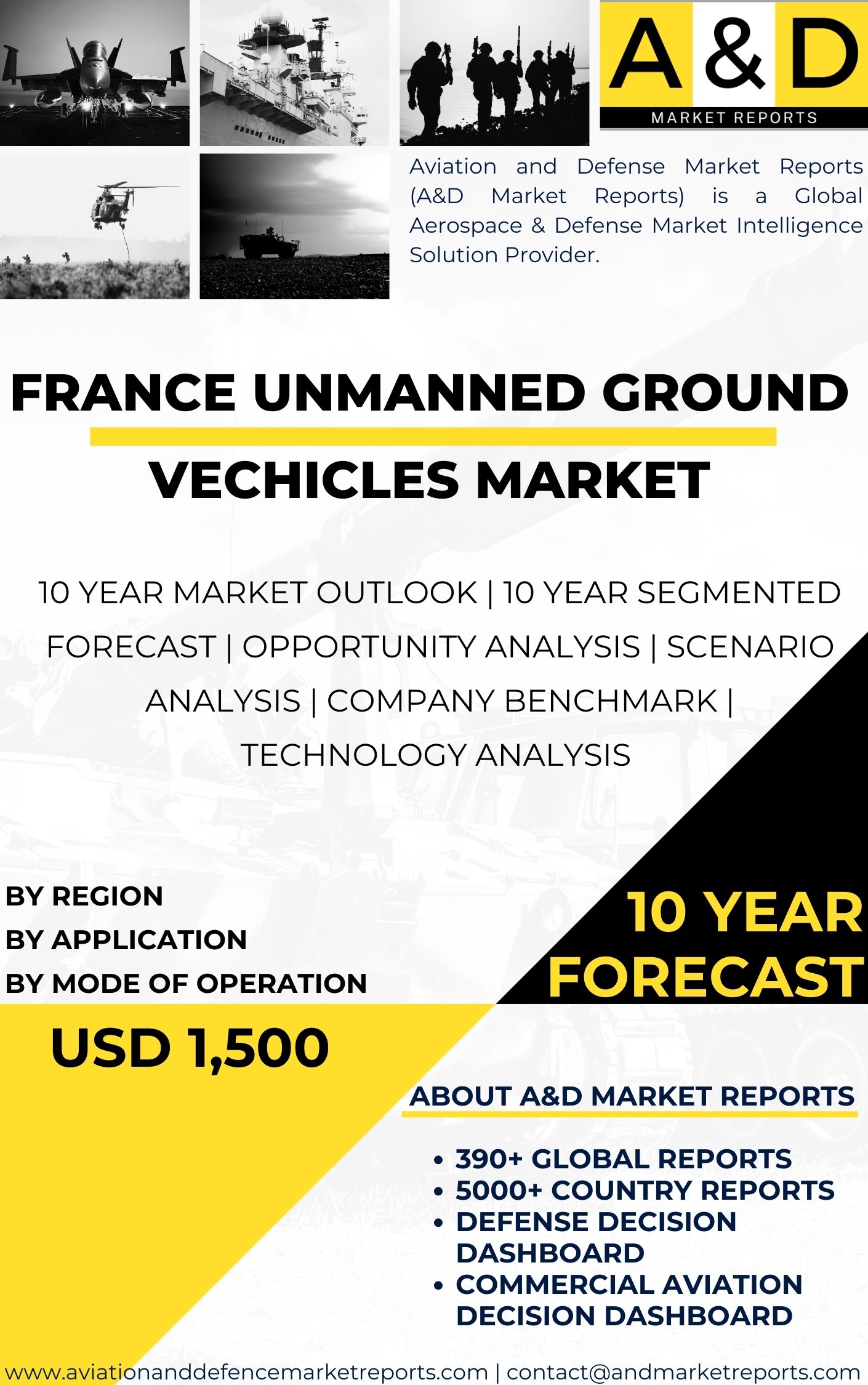
The France Unmanned Ground Vechicles has grown rapidly in recent years, fueled by technological innovation and the increasing need for efficient military logistics. Unmanned systems, including unmanned ground vehicles (UGVs) and unmanned aerial vehicles (UAVs), provide critical support by transporting supplies, evacuating casualties, and conducting reconnaissance on the battlefield. France’s commitment to military modernization and technological innovation has positioned it as a global leader in this market. Furthermore, the rise of complex modern warfare scenarios has amplified the demand for reliable, autonomous systems that can operate in high-risk environments where human presence is limited.
Key Market Drivers
France recognizes the strategic importance of unmanned logistics systems in modern military operations. These systems reduce risks to personnel by performing dangerous missions, such as transporting ammunition or medical supplies in conflict zones. They also enhance operational efficiency, enabling faster and more precise supply delivery across challenging terrains. As a result, the French Armed Forces can maintain high operational tempo and readiness, while minimizing human exposure to threats. Additionally, advancements in robotics, artificial intelligence, and autonomous navigation further drive the adoption of unmanned systems in logistics and battlefield support.
Military Adoption and Strategic Importance
The French Armed Forces prioritize the integration of unmanned battlefield logistics and support systems across various operations. These systems are employed in autonomous cargo transport, reconnaissance, surveillance, and medical evacuation. By leveraging these technologies, France can project power effectively and sustain long-duration missions with reduced manpower requirements. Moreover, the interoperability of unmanned systems ensures seamless coordination with allied forces during joint exercises, coalition operations, and multinational missions. This capability enhances France’s influence in international defense collaborations and strengthens collective military readiness.
Industry Role and Technological Capabilities
France’s aerospace and defense industry plays a pivotal role in shaping the unmanned logistics market. Leading defense contractors and research institutions are renowned for their expertise in robotics, automation, AI integration, and advanced sensor systems. French unmanned logistics platforms are known for their reliability, adaptability, and modular design, allowing military operators to customize systems for different mission requirements. These capabilities make France a global hub for the development of versatile unmanned logistics solutions.
Research, Development, and Innovation
The French government supports research and development initiatives that drive innovation in unmanned logistics and support systems. Public-private partnerships, academic collaborations, and defense grants have facilitated the creation of advanced prototypes and operational systems. Innovations include AI-assisted navigation, sensor fusion for obstacle detection, and hybrid autonomous systems capable of operating in complex terrains. Continuous R&D ensures that France remains at the forefront of developing next-generation unmanned solutions that meet the evolving demands of modern warfare.
International Collaboration and Export Potential
France actively collaborates with international allies through joint development programs and export initiatives. These partnerships allow access to cutting-edge technologies, while fostering standardization and interoperability among allied forces. By pooling expertise and resources, France expands its market presence globally and ensures that its unmanned systems are compatible with the equipment of coalition partners. Export programs further enhance France’s position as a leading supplier of unmanned battlefield logistics and support technologies worldwide.
Civilian Applications
Beyond defense, unmanned logistics systems have increasing civilian relevance. In France, these technologies are applied in disaster response, search and rescue, industrial logistics, and remote site operations. For instance, autonomous ground vehicles can deliver essential supplies to disaster-stricken areas or support medical teams in hazardous environments. Similarly, UAVs can perform aerial surveys, infrastructure inspections, and monitoring tasks in sectors like energy, construction, and agriculture. These applications demonstrate the versatility and societal value of unmanned logistics technologies.
Regulatory and Safety Framework
France’s regulatory framework ensures the safety, reliability, and cybersecurity of unmanned logistics systems. Defense standards mandate strict performance, operational, and cybersecurity requirements to protect critical infrastructure. Civilian applications also follow safety and environmental standards to mitigate risks to people and ecosystems. Through robust regulations, France maintains a balance between innovation, operational effectiveness, and public safety.
Future Outlook
The unmanned battlefield logistics and support systems market in France is poised for continued expansion. Increasing defense modernization programs, technological advancements, and civilian adoption drive market growth. Future innovations are expected in AI-driven decision-making, autonomous swarming technologies, and enhanced energy efficiency for long-duration missions. As these systems become more sophisticated, their strategic significance in military operations and civilian applications will continue to grow, reinforcing France’s role as a global innovator and leader in unmanned battlefield logistics and support solutions.