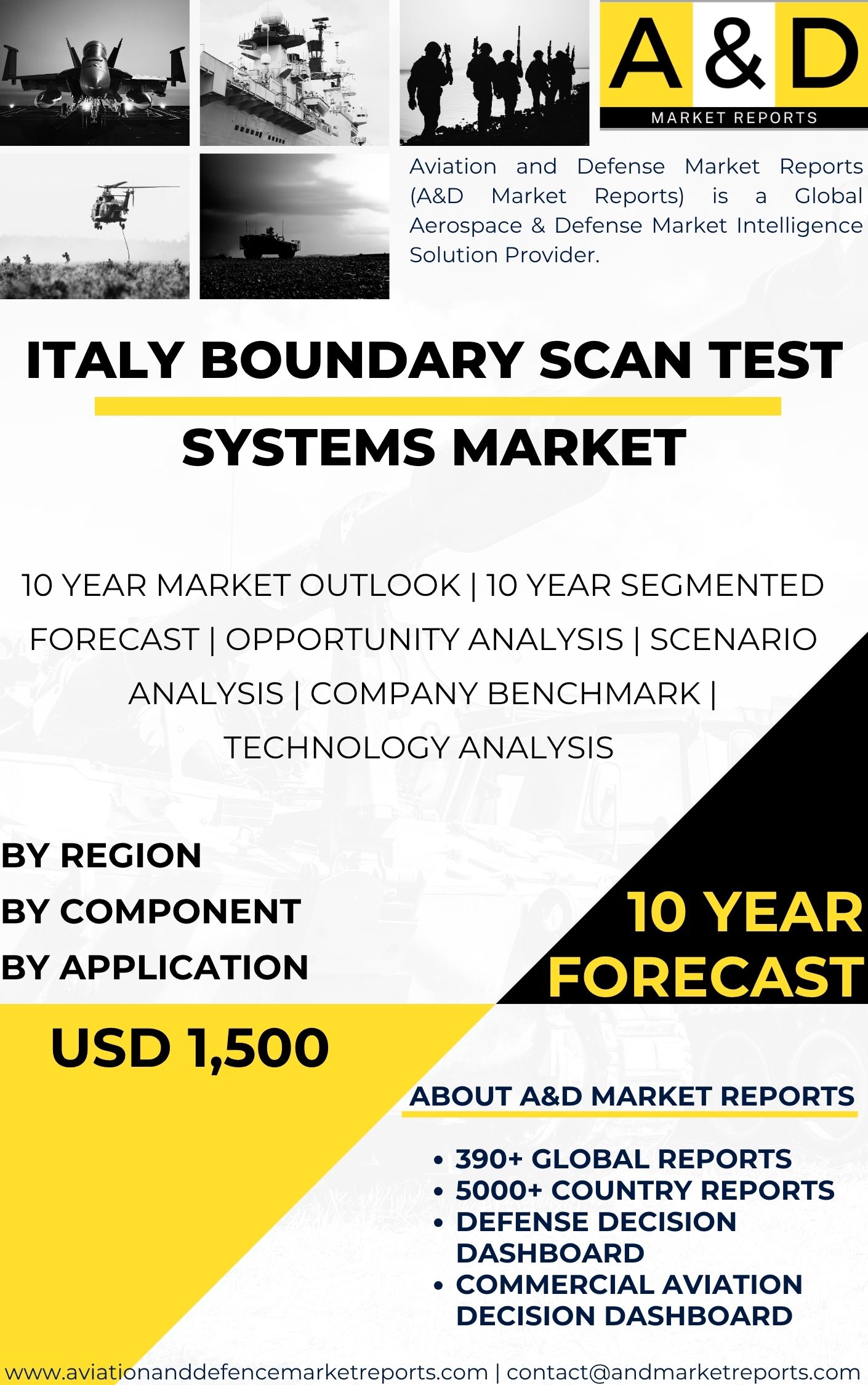
Italy Boundary Scan Test Systems

$1,500.00

Enquire Now
Category: Tag: Report ID: ANDCIT0212

The boundary scan test systems market in Italy’s aerospace and defense sector is experiencing significant growth, fueled by the increasing complexity and miniaturization of electronic circuits in modern military platforms. Boundary scan technology, based on the IEEE 1149.1 standard, allows for efficient testing of interconnects and components without the need for physical probes, making it particularly valuable for densely packed PCBs and systems with limited access points. In Italy, defense contractors and system integrators are adopting boundary scan solutions to streamline the manufacturing and maintenance processes of avionics, radar systems, and communication equipment. These systems enable rapid detection of faults, verification of solder joints, and assessment of signal integrity, thereby reducing the risk of failures and enhancing the reliability of critical defense systems. The integration of artificial intelligence and machine learning algorithms into boundary scan platforms is further advancing fault detection capabilities, allowing for predictive maintenance and automated diagnostics. Moreover, the interoperability of boundary scan tools with other test equipment and simulation environments facilitates comprehensive validation of complex electronic systems, ensuring compliance with stringent military standards and enhancing overall system performance. As Italy continues to invest in defense modernization, the adoption of boundary scan test systems is poised to play a pivotal role in maintaining the operational readiness and technological superiority of its military assets.

Go To Global Report Page Track this market real time on DDD

Description

Overview of Boundary Scan Test Systems Market in Italy

Italy Boundary Scan Test Systems in aerospace and defense is expanding steadily as electronic systems become more advanced and compact. Modern defense platforms rely on highly integrated printed circuit boards, making traditional probing methods less practical and often inefficient. Boundary scan technology offers a reliable, non-intrusive solution for testing complex circuits without requiring direct physical access. This significantly improves both manufacturing efficiency and maintenance processes across the lifecycle of defense systems. As the demand for high-reliability electronics increases, these systems are becoming essential tools for ensuring operational safety and performance. Italy’s focus on strengthening its aerospace and defense capabilities further accelerates the adoption of such advanced testing solutions.

Role of IEEE 1149.1 Standard in Testing

Boundary scan technology operates based on the IEEE 1149.1 standard, which provides a structured and widely accepted approach to circuit testing. This standard enables engineers to access internal components of a circuit through a dedicated serial interface, eliminating the need for physical test probes. It is especially useful in modern electronics where components are densely packed and difficult to reach. The standard also ensures consistency in testing procedures across different platforms and manufacturers. By enabling testing during design, production, and maintenance stages, it enhances overall system quality. This level of standardization supports interoperability and improves efficiency across Italy’s defense electronics ecosystem.

Applications in Aerospace and Defense Systems

Boundary scan test systems are extensively used in critical aerospace and defense applications such as avionics, radar systems, and communication equipment. These systems help detect faults like open circuits, short circuits, poor solder connections, and signal degradation. In high-risk environments, even minor electronic failures can have serious consequences, making reliable testing essential. Boundary scan technology allows engineers to identify and resolve issues quickly, reducing system downtime. Italian defense organizations, including Leonardo S.p.A., depend on these solutions for ensuring product quality and mission readiness. The ability to perform accurate diagnostics enhances both safety and operational effectiveness.

Integration of AI and Advanced Diagnostics

The integration of artificial intelligence and machine learning is transforming boundary scan testing capabilities in Italy. These technologies enable systems to analyze large volumes of test data and identify patterns that indicate potential failures. Predictive maintenance becomes possible, allowing engineers to address issues before they escalate into major problems. Automated diagnostics reduce reliance on manual testing and improve overall efficiency. Real-time analysis also helps in faster decision-making during maintenance operations. As AI continues to evolve, it will further enhance the accuracy and reliability of boundary scan systems, making them even more valuable in complex defense environments.

Interoperability and System Validation

Boundary scan systems are designed to work seamlessly with other testing equipment and simulation tools. This interoperability allows engineers to perform comprehensive validation of complex electronic systems. Multiple subsystems can be tested together, ensuring that they function correctly as an integrated unit. This is particularly important for modern defense platforms that rely on interconnected electronic architectures. Italy’s participation in multinational defense programs increases the need for standardized and compatible testing solutions. Boundary scan systems help meet these requirements by supporting consistent validation across different platforms. This ensures compliance with international standards and enhances system reliability.

Future Outlook and Strategic Importance

The future of boundary scan test systems in Italy is strongly linked to ongoing defense modernization and technological advancements. As electronic systems continue to evolve, the need for efficient and accurate testing solutions will grow. Investments in automation, artificial intelligence, and integrated testing platforms will shape the next generation of boundary scan systems. These advancements will improve testing speed, reduce costs, and enhance reliability. Italy’s strong industrial base and commitment to innovation position it well for continued growth in this market. Boundary scan technology will remain a critical component in maintaining the performance, safety, and technological superiority of aerospace and defense systems.
Table of content

Table Of Contents

1 Market Introduction

1.1 Market Introduction
1.2 Market Definition
1.3 Market Segmentation
1.4 10 Year Market Outlook

2 Market Technologies

3 Global Market Forecast

3.1 Global Market Forecast
3.2 By Component
3.3 By Application

4 Europe Market Trends & Forecast

4.1 Drivers, Restraints And Challenges
4.2 PEST
4.3 Market Forecast
4.3.1 Market Forecast By Component
4.3.2 Market Forecast By Application
4.4 Scenario Analysis
4.5 Key Companies& Profiling

5 Italy Analysis

5.1 Current Levels Of Technology Maturation In This Market
5.2 Market Forecast
5.2.1 Market Forecast By Component
5.2.2 Market Forecast By Application
5.3 Scenario Analysis
5.4 Country Defense Budget (Historical and 10- year forecast)
5.5 Defense Budget Category Spending- 10- year forecast
5.6 Procurement Analysis
5.7 EXIM Data
5.8 Patents

6 Opportunity Matrix

6.1 By Component
6.2 By Application

7 Scenario Analysis

7.1 Scenario 1

7.1.1 By Component (Scenario-1)
7.1.2 By Application (Scenario-1)

7.2 Scenario 2

7.2.1 By Component (Scenario-2)
7.2.2 By Application (Scenario-2)

8 Company Benchmark

9 Strategic Conclusions

10 About Aviation And Defense Market Reports

Segments

By Component
By Application

List of Tables

Table1: Global Market Forecast, Boundary Scan Test Systems
Table2: Europe Market Forecast, Boundary Scan Test Systems
Table3: Europe Market Forecast, By Component
Table4: Europe Market Forecast, By Application
Table5: Europe, Scenario Analysis
Table6: Italy Market Forecast, Boundary Scan Test Systems
Table7: Italy Market Forecast, By Component
Table8: Italy Market Forecast, By Application
Table9: Italy, Scenario Analysis
Table 10: Italy Defense Budget 10 Year Forecast
Table 11: Italy, Defense Budget Category Spending- 10- year forecast
Table 12: Italy, Procurement Analysis
Table 13: Italy, EXIM Data Analysis
Table 14: Italy, Opportunity Analysis, By Component
Table 15: Italy, Opportunity Analysis, By Application
Table 16: Italy, Scenario Analysis, By Component
Table 17: Italy, Scenario Analysis, By Application

List of Figures

Figure 1: Market Segmentation, Italy Boundary Scan Test Systems
Figure 2: Key Technology Analysis, Boundary Scan Test Systems
Figure 3: Global Market Forecast, Boundary Scan Test Systems
Figure 4: Europe, Market Forecast, Boundary Scan Test Systems
Figure 5: Europe, Market Forecast, By Component
Figure 6: Europe, Market Forecast, By Application
Figure 7: Europe, Scenario Analysis
Figure 8: Italy, Market Forecast, Boundary Scan Test Systems
Figure 9: Italy, Market Forecast, By Component
Figure 10: Italy, Market Forecast, By Application
Figure 11: Italy, Scenario Analysis
Figure 12: Italy, Defense Budget 10 Year Forecast
Figure 13: Italy, Defense Budget Category Spending- 10- year forecast
Figure 14: Italy, Procurement Analysis
Figure 15: Italy, EXIM Data Analysis
Figure 16: Italy, Opportunity Analysis, By Component
Figure 17: Italy, Opportunity Analysis, By Application
Figure 18: Italy, Scenario Analysis, By Component
Figure 19: Italy, Scenario Analysis, By Application
Figure 20: Company Benchmark

Aviation and Defense Market Reports


TPA | TIA | Consulting | Market Reports | Defense Decision Dashboard


Our Defense Report - Our Team Has Worked on More Than 250+ Individual Products / Markets