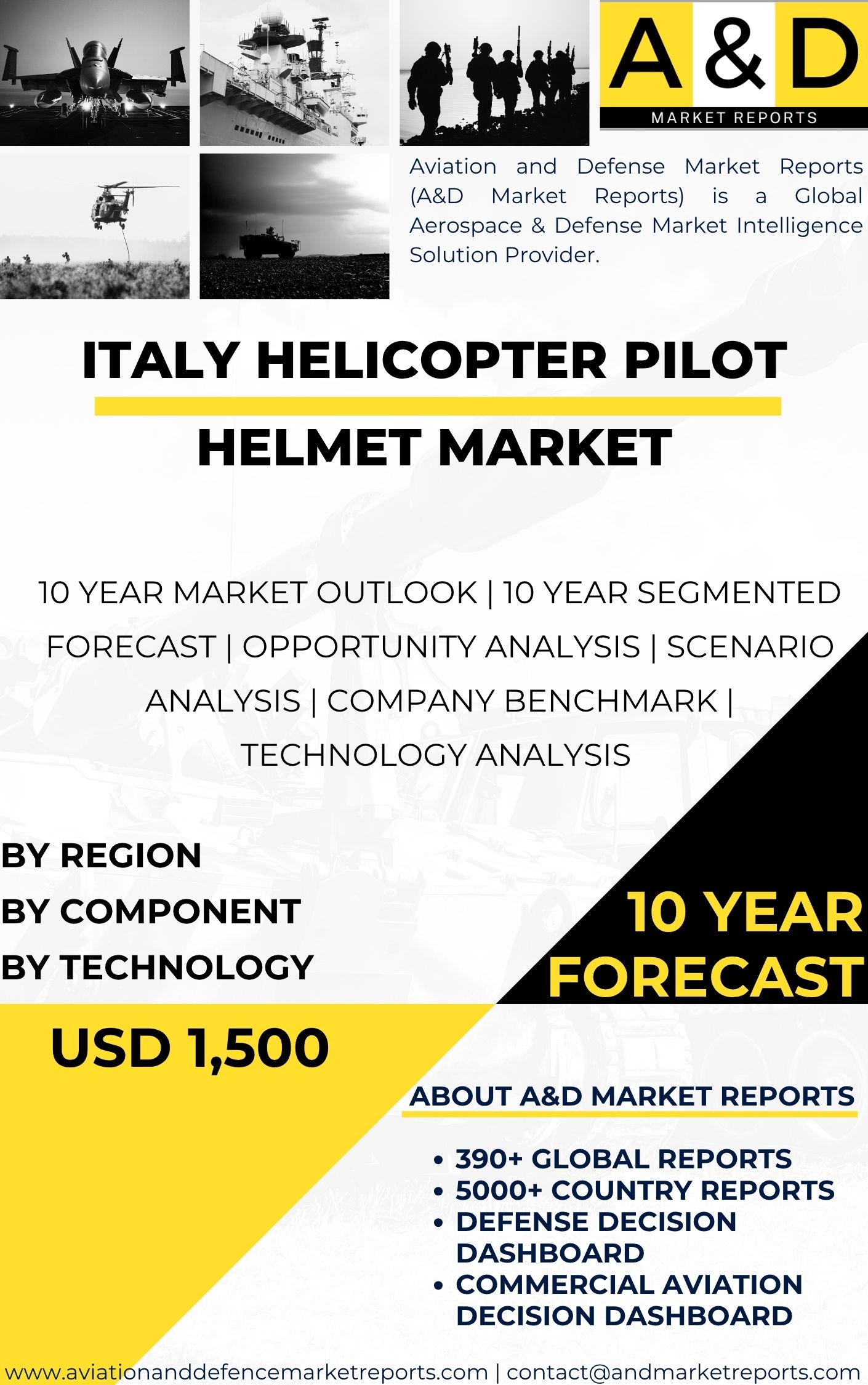
Italy Helicopter Pilot Helmet Market

$1,500.00

Enquire Now

Italy?s helicopter pilot helmet market addresses a different set of operational priorities and human-factor constraints compared with fixed-wing fighter helmets, and the resulting product landscape reflects a focus on crash protection, vibration and noise mitigation, multi-spectral vision compatibility, and modular mission adaptability. Helicopter operations frequently involve low-altitude flight, maritime and shipboard operations, search-and-rescue, medical evacuation, special operations insertion and CASEVAC missions, exposing aircrew to corrosive salt environments, prolonged vibration, rapid head movements, and a high requirement for clear, reliable communications in noisy cockpits. As a result, the helmets used by helicopter pilots must deliver superior blunt-impact energy absorption and optimized liner systems to reduce head and neck loads in crash scenarios while remaining comfortable for long-duration missions. Material technology emphasizes energy-dissipating liners, advanced foam architectures and composite shells that combine toughness with light weight. Given the acoustic environment of helicopters, integrated communications and active noise attenuation systems are critical features; helmets must allow crisp intercom and radio performance while minimizing pilot fatigue from rotor and engine noise. Many helicopter missions also demand rapid reconfiguration: crews may need to mount night-vision goggles, camera systems, visors, or face shields depending on mission type, and modern helicopter helmets therefore provide robust, repeatable mounting points and standardized rails for accessories. Night-vision compatibility is particularly important because a large proportion of rotary-wing operations are conducted at night; helmets must maintain optical alignment between NVGs and pilot sightlines and ensure that mounts do not introduce parallax or discomfort. Maritime operations add another specialized requirement set: helmets intended for shipborne crews frequently incorporate flotation compatibility, corrosion-resistant fittings, and quick-release systems that can be operated while wearing gloves and under stress, and where underwater egress is possible they must interface with breathing and flotation equipment. Human factors again play a central role; designers optimize weight distribution and balance to reduce neck strain and use breathable liner materials and adjustable retention systems to maintain comfort in hot or humid conditions. The modular approach extends to communications and mission-system integration ? some variants include integrated hydration ports, enhanced environmental sealing, and plug-and-play interfaces for mission cameras and GPS/head-up data feeds used in SAR or ISR tasks. Because helicopter operations often occur within coalition and NATO frameworks, interoperability with allied communication standards and NVG systems is commercially important. Certification standards relevant to aviation crashworthiness, flammability, and electromagnetics must be met; these standards drive product testing and create barriers that favor experienced suppliers with established testing infrastructures. Aftermarket services are a significant component of supplier offerings: replacement liners and visors, recalibration of communications and NVG alignment, depot-level repairs, and training on correct donning/doffing procedures are all part of lifecycle support. The market also supports specialist variants for naval special forces, mountain rescue units and medevac crews that require additional sealing, enhanced ballistic protection for certain roles, or sterile interface options for medical environments. R&D priorities focus on improved energy-absorbing materials that reduce mass, better acoustic protection with minimal communication latency, and enhanced NVG integration that reduces pilot eye strain and maintains sight alignment across varied lighting conditions. Suppliers are also responsive to ergonomic advances that reduce cumulative musculoskeletal strain and to the need for rapid field-replaceable components that shorten turnaround times between missions. Economically, the helicopter helmet segment offers steady demand tied to fleet sizes and operational tempo, with recurring revenue from spare parts and maintenance. Strategically, Italy?s varied rotary-wing missions ? from NATO deployments to domestic SAR and law-enforcement support ? ensure that the market favors versatile, rugged, and serviceable helmets that prioritize safety, communications clarity and mission adaptability.
Go To Global Report Page Track this market real time on DDD

Description

Italy?s helicopter pilot helmet market addresses a different set of operational priorities and human-factor constraints compared with fixed-wing fighter helmets, and the resulting product landscape reflects a focus on crash protection, vibration and noise mitigation, multi-spectral vision compatibility, and modular mission adaptability. Helicopter operations frequently involve low-altitude flight, maritime and shipboard operations, search-and-rescue, medical evacuation, special operations insertion and CASEVAC missions, exposing aircrew to corrosive salt environments, prolonged vibration, rapid head movements, and a high requirement for clear, reliable communications in noisy cockpits. As a result, the helmets used by helicopter pilots must deliver superior blunt-impact energy absorption and optimized liner systems to reduce head and neck loads in crash scenarios while remaining comfortable for long-duration missions. Material technology emphasizes energy-dissipating liners, advanced foam architectures and composite shells that combine toughness with light weight. Given the acoustic environment of helicopters, integrated communications and active noise attenuation systems are critical features; helmets must allow crisp intercom and radio performance while minimizing pilot fatigue from rotor and engine noise. Many helicopter missions also demand rapid reconfiguration: crews may need to mount night-vision goggles, camera systems, visors, or face shields depending on mission type, and modern helicopter helmets therefore provide robust, repeatable mounting points and standardized rails for accessories. Night-vision compatibility is particularly important because a large proportion of rotary-wing operations are conducted at night; helmets must maintain optical alignment between NVGs and pilot sightlines and ensure that mounts do not introduce parallax or discomfort. Maritime operations add another specialized requirement set: helmets intended for shipborne crews frequently incorporate flotation compatibility, corrosion-resistant fittings, and quick-release systems that can be operated while wearing gloves and under stress, and where underwater egress is possible they must interface with breathing and flotation equipment. Human factors again play a central role; designers optimize weight distribution and balance to reduce neck strain and use breathable liner materials and adjustable retention systems to maintain comfort in hot or humid conditions. The modular approach extends to communications and mission-system integration ? some variants include integrated hydration ports, enhanced environmental sealing, and plug-and-play interfaces for mission cameras and GPS/head-up data feeds used in SAR or ISR tasks. Because helicopter operations often occur within coalition and NATO frameworks, interoperability with allied communication standards and NVG systems is commercially important. Certification standards relevant to aviation crashworthiness, flammability, and electromagnetics must be met; these standards drive product testing and create barriers that favor experienced suppliers with established testing infrastructures. Aftermarket services are a significant component of supplier offerings: replacement liners and visors, recalibration of communications and NVG alignment, depot-level repairs, and training on correct donning/doffing procedures are all part of lifecycle support. The market also supports specialist variants for naval special forces, mountain rescue units and medevac crews that require additional sealing, enhanced ballistic protection for certain roles, or sterile interface options for medical environments. R&D priorities focus on improved energy-absorbing materials that reduce mass, better acoustic protection with minimal communication latency, and enhanced NVG integration that reduces pilot eye strain and maintains sight alignment across varied lighting conditions. Suppliers are also responsive to ergonomic advances that reduce cumulative musculoskeletal strain and to the need for rapid field-replaceable components that shorten turnaround times between missions. Economically, the helicopter helmet segment offers steady demand tied to fleet sizes and operational tempo, with recurring revenue from spare parts and maintenance. Strategically, Italy?s varied rotary-wing missions ? from NATO deployments to domestic SAR and law-enforcement support ? ensure that the market favors versatile, rugged, and serviceable helmets that prioritize safety, communications clarity and mission adaptability.
Table of content

Table Of Contents

1 Market Introduction

1.1 Market Introduction
1.2 Market Definition
1.3 Market Segmentation
1.4 10 Year Market Outlook

2 Market Technologies

3 Global Market Forecast

3.1 Global Market Forecast
3.2 By Technology
3.3 By Component

4 Europe Market Trends & Forecast

4.1 Drivers, Restraints And Challenges
4.2 PEST
4.3 Market Forecast
4.3.1 Market Forecast By Technology
4.3.2 Market Forecast By Component
4.4 Scenario Analysis
4.5 Key Companies& Profiling

5 Italy Analysis

5.1 Current Levels Of Technology Maturation In This Market
5.2 Market Forecast
5.2.1 Market Forecast By Component
5.2.2 Market Forecast By Technology
5.3 Scenario Analysis
5.4 Country Defense Budget (Historical and 10- year forecast)
5.5 Defense Budget Category Spending- 10- year forecast
5.6 Procurement Analysis
5.7 EXIM Data
5.8 Patents

6 Opportunity Matrix

6.1 By Technology
6.2 By Component

7 Scenario Analysis

7.1 Scenario 1

7.1.1 By Technology (Scenario-1)
7.1.2 By Component (Scenario-1)

7.2 Scenario 2

7.2.1 By Technology (Scenario-2)
7.2.2 By Component (Scenario-2)

8 Company Benchmark

9 Strategic Conclusions

10 About Aviation And Defense Market Reports

Segments

By Component
By Technology

List of Tables

Table1: Global Market Forecast, Helicopter Pilot Helmet Market
Table2: Europe Market Forecast, Helicopter Pilot Helmet Market
Table3: Europe Market Forecast, By Component
Table4: Europe Market Forecast, By Technology
Table5: Europe, Scenario Analysis
Table6: Italy Market Forecast, Helicopter Pilot Helmet Market
Table7: Italy Market Forecast, By Component
Table8: Italy Market Forecast, By Technology
Table9: Italy, Scenario Analysis
Table 10: Italy Defense Budget 10 Year Forecast
Table 11: Italy, Defense Budget Category Spending- 10- year forecast
Table 12: Italy, Procurement Analysis
Table 13: Italy, EXIM Data Analysis
Table 14: Italy, Opportunity Analysis, By Component
Table 15: Italy, Opportunity Analysis, By Technology
Table 16: Italy, Scenario Analysis, By Component
Table 17: Italy, Scenario Analysis, By Technology

List of Figures

Figure 1: Market Segmentation, Italy Helicopter Pilot Helmet Market
Figure 2: Key Technology Analysis, Helicopter Pilot Helmet Market
Figure 3: Global Market Forecast, Helicopter Pilot Helmet Market
Figure 4: Europe, Market Forecast, Helicopter Pilot Helmet Market
Figure 5: Europe, Market Forecast, By Component
Figure 6: Europe, Market Forecast, By Technology
Figure 7: Europe, Scenario Analysis
Figure 8: Italy, Market Forecast, Helicopter Pilot Helmet Market
Figure 9: Italy, Market Forecast, By Component
Figure 10: Italy, Market Forecast, By Technology
Figure 11: Italy, Scenario Analysis
Figure 12: Italy, Defense Budget 10 Year Forecast
Figure 13: Italy, Defense Budget Category Spending- 10- year forecast
Figure 14: Italy, Procurement Analysis
Figure 15: Italy, EXIM Data Analysis
Figure 16: Italy, Opportunity Analysis, By Component
Figure 17: Italy, Opportunity Analysis, By Technology
Figure 18: Italy, Scenario Analysis, By Component
Figure 19: Italy, Scenario Analysis, By Technology
Figure 20: Company Benchmark