Italy Naval Surface Vessels Simulation Market

$1,500.00

Enquire Now

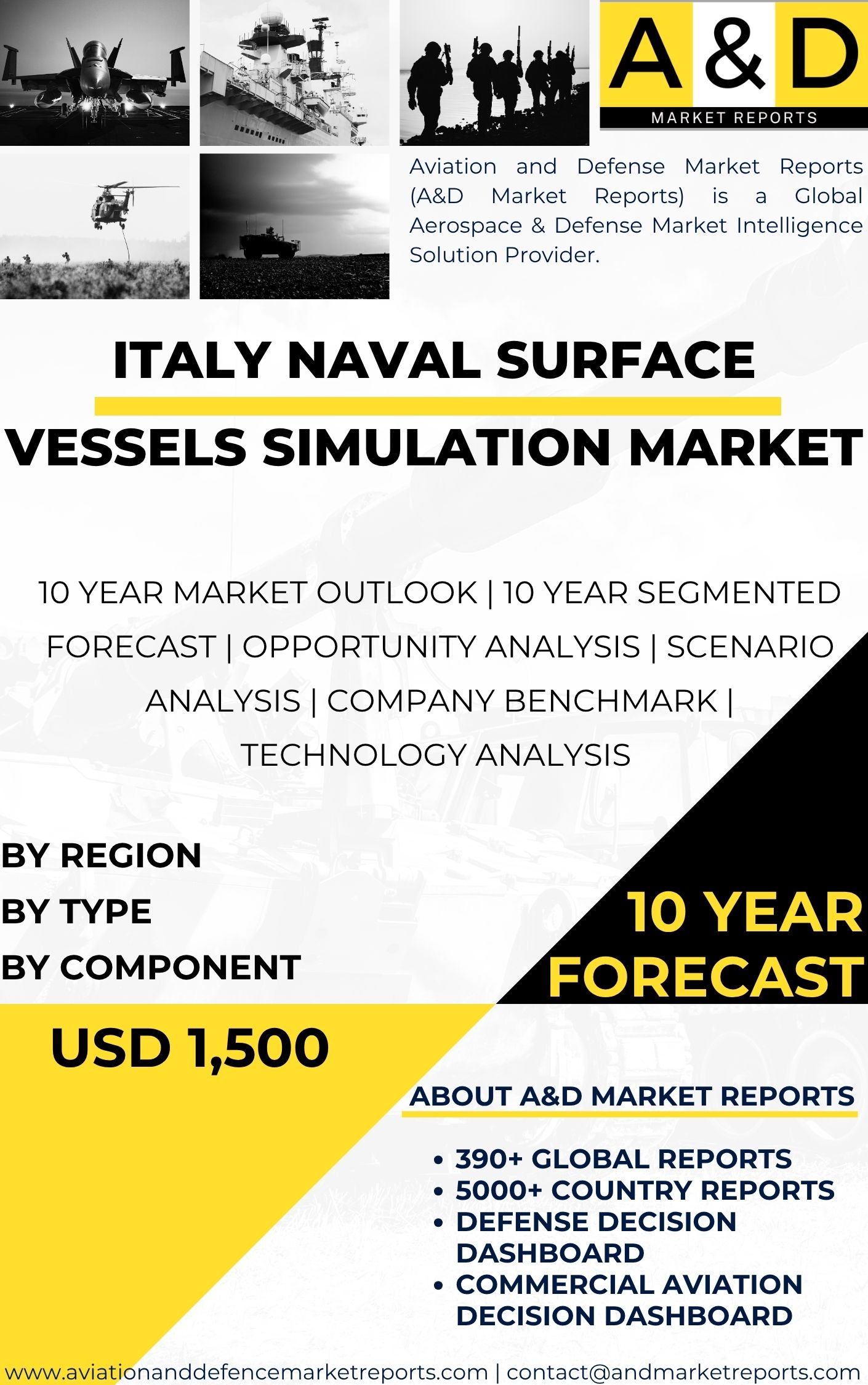
Italy?s naval surface vessels simulation market encompasses the development, provision, and operation of synthetic training environments that replicate shipboard systems, operational scenarios, and maritime mission dynamics for surface combatants, patrol vessels, and auxiliary ships. The market serves the Italian Navy, allied naval forces, and private-sector operators who require realistic simulation for navigation, weapons, damage control, sensor operation, and multi-crew coordination. Demand is driven by fleet modernization, lifecycle training requirements, cost reduction goals, and the complexity of contemporary naval operations, which include joint exercises, littoral combat, anti-submarine warfare, and electronic warfare. Suppliers in Italy offer integrated bridge simulators, full-mission tactical trainers, part-task trainers for specific subsystems, and networked multi-ship exercises capable of replicating coalition operations. Simulation fidelity covers ship handling, propulsion dynamics, weapon systems, radar and sonar operation, electronic warfare, communication networks, and threat scenarios ranging from asymmetric surface attacks to high-end naval warfare. Visual environments are generated using high-resolution maritime and coastal terrain databases, including variable sea states, weather conditions, and dynamic vessel traffic, while interactive AI-driven entities simulate adversary or civilian contacts. Networking capabilities enable distributed exercises where multiple vessels, shore command centers, and joint forces interact within a single synthetic operational space, supporting realistic coordination, command decision-making, and operational rehearsals. R&D priorities in the Italian market include enhanced fidelity of ship motion models, integration of cyber-physical simulations, advanced scenario generation, and virtual reality interfaces for immersive operator training. Realistic feedback in terms of control response, force feedback for helm and weapon systems, and system interaction is critical for effective training outcomes. Lifecycle considerations include frequent software updates to reflect new operational tactics, platform upgrades, and environmental changes, maintenance of hardware such as motion platforms and projection systems, and validation to ensure regulatory and NATO interoperability standards. Cost-efficiency is a central driver: simulation reduces fuel consumption, wear and tear, and risk during live training, allowing high-frequency practice of complex tactical procedures in a controlled and safe environment. Export potential exists under cooperative agreements and NATO-aligned programs, but simulation systems often include sensitive scenario and sensor emulation data, subjecting suppliers to licensing and technology transfer restrictions. Integration with live systems, virtualized command centers, and other training devices ensures that simulated experiences can be applied directly to operational missions. Overall, Italy?s naval surface vessel simulation market prioritizes high-fidelity, cost-effective, and modular solutions that support realistic, networked training across multi-ship and joint operational environments, enhancing readiness while minimizing risk and operational expenditure.
Go To Global Report Page Track this market real time on DDD

Description

Italy?s naval surface vessels simulation market encompasses the development, provision, and operation of synthetic training environments that replicate shipboard systems, operational scenarios, and maritime mission dynamics for surface combatants, patrol vessels, and auxiliary ships. The market serves the Italian Navy, allied naval forces, and private-sector operators who require realistic simulation for navigation, weapons, damage control, sensor operation, and multi-crew coordination. Demand is driven by fleet modernization, lifecycle training requirements, cost reduction goals, and the complexity of contemporary naval operations, which include joint exercises, littoral combat, anti-submarine warfare, and electronic warfare. Suppliers in Italy offer integrated bridge simulators, full-mission tactical trainers, part-task trainers for specific subsystems, and networked multi-ship exercises capable of replicating coalition operations. Simulation fidelity covers ship handling, propulsion dynamics, weapon systems, radar and sonar operation, electronic warfare, communication networks, and threat scenarios ranging from asymmetric surface attacks to high-end naval warfare. Visual environments are generated using high-resolution maritime and coastal terrain databases, including variable sea states, weather conditions, and dynamic vessel traffic, while interactive AI-driven entities simulate adversary or civilian contacts. Networking capabilities enable distributed exercises where multiple vessels, shore command centers, and joint forces interact within a single synthetic operational space, supporting realistic coordination, command decision-making, and operational rehearsals. R&D priorities in the Italian market include enhanced fidelity of ship motion models, integration of cyber-physical simulations, advanced scenario generation, and virtual reality interfaces for immersive operator training. Realistic feedback in terms of control response, force feedback for helm and weapon systems, and system interaction is critical for effective training outcomes. Lifecycle considerations include frequent software updates to reflect new operational tactics, platform upgrades, and environmental changes, maintenance of hardware such as motion platforms and projection systems, and validation to ensure regulatory and NATO interoperability standards. Cost-efficiency is a central driver: simulation reduces fuel consumption, wear and tear, and risk during live training, allowing high-frequency practice of complex tactical procedures in a controlled and safe environment. Export potential exists under cooperative agreements and NATO-aligned programs, but simulation systems often include sensitive scenario and sensor emulation data, subjecting suppliers to licensing and technology transfer restrictions. Integration with live systems, virtualized command centers, and other training devices ensures that simulated experiences can be applied directly to operational missions. Overall, Italy?s naval surface vessel simulation market prioritizes high-fidelity, cost-effective, and modular solutions that support realistic, networked training across multi-ship and joint operational environments, enhancing readiness while minimizing risk and operational expenditure.
Table of content

Table Of Contents

1 Market Introduction

1.1 Market Introduction
1.2 Market Definition
1.3 Market Segmentation
1.4 10 Year Market Outlook

2 Market Technologies

3 Global Market Forecast

3.1 Global Market Forecast
3.2 By Type
3.3 By Component

4 Europe Market Trends & Forecast

4.1 Drivers, Restraints And Challenges
4.2 PEST
4.3 Market Forecast
4.3.1 Market Forecast By Type
4.3.2 Market Forecast By Component
4.4 Scenario Analysis
4.5 Key Companies& Profiling

5 Italy Analysis

5.1 Current Levels Of Technology Maturation In This Market
5.2 Market Forecast
5.2.1 Market Forecast By Component
5.2.2 Market Forecast By Type
5.3 Scenario Analysis
5.4 Country Defense Budget (Historical and 10- year forecast)
5.5 Defense Budget Category Spending- 10- year forecast
5.6 Procurement Analysis
5.7 EXIM Data
5.8 Patents

6 Opportunity Matrix

6.1 By Type
6.2 By Component

7 Scenario Analysis

7.1 Scenario 1

7.1.1 By Type (Scenario-1)
7.1.2 By Component (Scenario-1)

7.2 Scenario 2

7.2.1 By Type (Scenario-2)
7.2.2 By Component (Scenario-2)

8 Company Benchmark

9 Strategic Conclusions

10 About Aviation And Defense Market Reports

Segments

By Type
By Component

List of Tables

Table1: Global Market Forecast, Naval Surface Vessels Simulation Market
Table2: Europe Market Forecast, Naval Surface Vessels Simulation Market
Table3: Europe Market Forecast, By Type
Table4: Europe Market Forecast, By Component
Table5: Europe, Scenario Analysis
Table6: Italy Market Forecast, Naval Surface Vessels Simulation Market
Table7: Italy Market Forecast, By Type
Table8: Italy Market Forecast, By Component
Table9: Italy, Scenario Analysis
Table 10: Italy Defense Budget 10 Year Forecast
Table 11: Italy, Defense Budget Category Spending- 10- year forecast
Table 12: Italy, Procurement Analysis
Table 13: Italy, EXIM Data Analysis
Table 14: Italy, Opportunity Analysis, By Type
Table 15: Italy, Opportunity Analysis, By Component
Table 16: Italy, Scenario Analysis, By Type
Table 17: Italy, Scenario Analysis, By Component

List of Figures

Figure 1: Market Segmentation, Italy Naval Surface Vessels Simulation Market
Figure 2: Key Technology Analysis, Naval Surface Vessels Simulation Market
Figure 3: Global Market Forecast, Naval Surface Vessels Simulation Market
Figure 4: Europe, Market Forecast, Naval Surface Vessels Simulation Market
Figure 5: Europe, Market Forecast, By Type
Figure 6: Europe, Market Forecast, By Component
Figure 7: Europe, Scenario Analysis
Figure 8: Italy, Market Forecast, Naval Surface Vessels Simulation Market
Figure 9: Italy, Market Forecast, By Type
Figure 10: Italy, Market Forecast, By Component
Figure 11: Italy, Scenario Analysis
Figure 12: Italy, Defense Budget 10 Year Forecast
Figure 13: Italy, Defense Budget Category Spending- 10- year forecast
Figure 14: Italy, Procurement Analysis
Figure 15: Italy, EXIM Data Analysis
Figure 16: Italy, Opportunity Analysis, By Type
Figure 17: Italy, Opportunity Analysis, By Component
Figure 18: Italy, Scenario Analysis, By Type
Figure 19: Italy, Scenario Analysis, By Component
Figure 20: Company Benchmark

Aviation and Defense Market Reports


TPA | TIA | Consulting | Market Reports | Defense Decision Dashboard


Our Defense Report - Our Team Has Worked on More Than 250+ Individual Products / Markets