Description
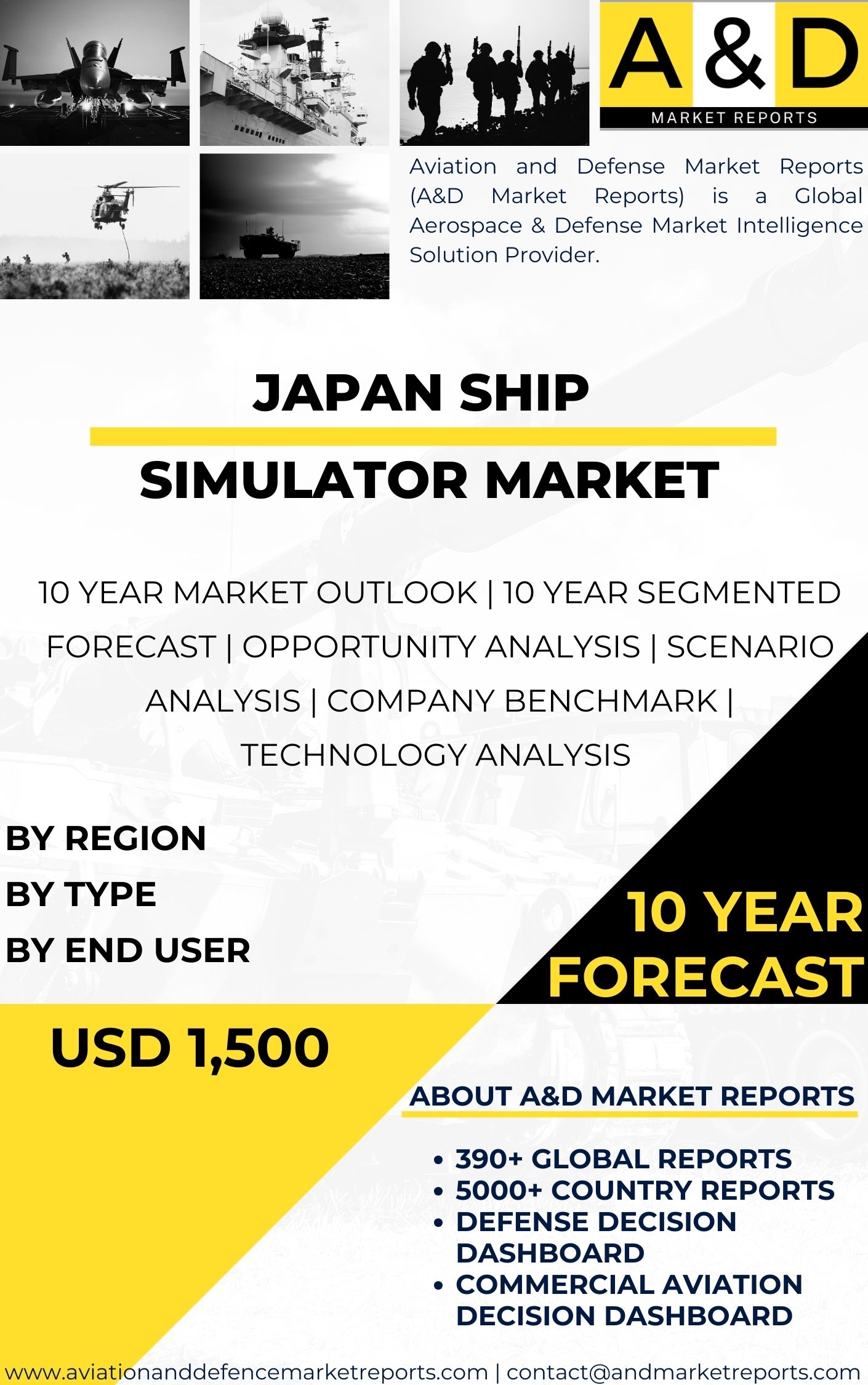
Japan ship simulator market has gained strong momentum as the country prioritizes maritime safety, workforce training, and technological advancement. As a leading maritime nation, Japan relies heavily on skilled seafarers and well-trained naval personnel. Therefore, advanced simulation-based training has become increasingly important. Moreover, the growing complexity of maritime operations has further accelerated demand for realistic and reliable ship simulator systems. As a result, investment in simulator development and deployment continues to rise.
Japan Ship Simulator Market by Simulator Types and Technologies
The Japan ship simulator market includes a wide range of training systems designed to meet diverse operational needs. These include full-mission simulators, part-task simulators, and virtual reality-based simulators. Each simulator type serves a specific training objective. Furthermore, modern simulators can replicate various vessel categories, including cargo ships, tankers, passenger vessels, and naval platforms. Consequently, training programs can be customized to reflect real-world maritime environments such as ports, coastal waters, and open seas.
Japan Ship Simulator Market in Maritime Training and Education
Maritime training and education represent the largest application area within the Japan ship simulator market. Maritime academies, naval institutions, and private training centers widely use simulators for hands-on instruction. As a result, trainees can practice ship handling, navigation, and collision avoidance in a controlled environment. Moreover, simulators reduce training costs and operational risks compared to live-vessel training. Therefore, they have become an essential tool for developing professional maritime skills.
Japan Ship Simulator Market in Maritime Safety Enhancement
Beyond education, the Japan ship simulator market plays a vital role in improving maritime safety. Simulator-based training allows personnel to rehearse emergency scenarios without real-world consequences. For example, trainees can practice fire response, grounding recovery, and man-overboard procedures. Consequently, crews are better prepared to respond effectively during actual emergencies. As a result, simulator training contributes directly to reducing maritime accidents and operational errors.
Japan Ship Simulator Market in Research and Operational Development
Ship simulators also support research and operational optimization within the Japan ship simulator market. By simulating vessel behavior and traffic flows, stakeholders can test port layouts, ship designs, and navigation procedures. Moreover, simulators enable evaluation of new technologies and operational concepts before real-world implementation. Therefore, simulation plays an important role in improving efficiency and safety across Japan’s maritime infrastructure.
Japan Ship Simulator Market and Domestic Manufacturing Capabilities
Japan has increased its focus on indigenous development within the ship simulator market. Consequently, domestic manufacturers are expanding their capabilities in simulator design and system integration. Government initiatives and industry partnerships further support local innovation. Moreover, collaboration between maritime authorities, training institutions, and research organizations enables the development of simulators tailored to national training requirements. As a result, domestic production capacity continues to strengthen.
Japan Ship Simulator Market and International Collaboration
International cooperation significantly influences the Japan ship simulator market. Japan collaborates with global maritime organizations and foreign partners to adopt advanced simulation technologies. Additionally, these partnerships support knowledge sharing and training standard alignment. As a result, Japan’s maritime training facilities benefit from global best practices. Therefore, international collaboration enhances both training quality and global recognition.
Japan Ship Simulator Market and Digital Technology Advancements
Technological innovation continues to shape the Japan ship simulator market. For instance, advancements in virtual reality and artificial intelligence have improved training realism and adaptability. Moreover, data analytics enables performance tracking and personalized training scenarios. Consequently, simulators now provide more immersive and effective learning experiences. These digital enhancements improve skill retention and decision-making under pressure.
Japan Market Challenges and Cost Considerations
Despite strong growth, the Japan ship simulator market faces several challenges. High acquisition and maintenance costs remain a key concern for training institutions. Furthermore, continuous updates are required to keep simulators aligned with evolving technologies and regulations. Therefore, cost management and long-term planning are essential for sustainable deployment.
Japan Market and Integration Requirements
System integration is another important challenge in the Japan ship simulator market. Simulators must work seamlessly with other training tools and maritime systems. Moreover, comprehensive training programs require coordination across multiple platforms. As a result, system compatibility and interoperability have become key focus areas for developers and users alike.
Japan Market and Standardization Issues
Standardization plays a critical role in the Japan ship simulator market. Training outcomes must align with international maritime regulations and certification requirements. Therefore, harmonizing simulator standards with global frameworks is essential. Moreover, standardized certification improves international acceptance of Japanese maritime qualifications. As a result, standardization supports workforce mobility and global competitiveness.
Japan Market Outlook
Overall, the Japan ship simulator market is expected to continue its steady expansion. Growth will be driven by rising safety standards, increasing training demand, and ongoing digital transformation. Consequently, ship simulators will remain central to Japan’s maritime education and safety strategy. Moreover, continued investment in domestic development, technology innovation, and international cooperation will support long-term market sustainability. Addressing cost, integration, and standardization challenges will be essential to maintaining global leadership in maritime training and safety.
Table of content
Table Of Contents
1 Market Introduction
1.1 Market Introduction
1.2 Market Definition
1.3 Market Segmentation
1.4 10 Year Market Outlook
2 Market Technologies
3 Global Market Forecast
3.1 Global Market Forecast
3.2 By Type
3.3 By End User
4 APAC Market Trends & Forecast
4.1 Drivers, Restraints And Challenges
4.2 PEST
4.3 Market Forecast
4.3.1 Market Forecast By Type
4.3.2 Market Forecast By End User
4.4 Scenario Analysis
4.5 Key Companies& Profiling
5 Japan Analysis
5.1 Current Levels Of Technology Maturation In This Market
5.2 Market Forecast
5.2.1 Market Forecast By Type
5.2.2 Market Forecast By End User
5.3 Scenario Analysis
5.4 Country Defense Budget (Historical and 10- year forecast)
5.5 Defense Budget Category Spending- 10- year forecast
5.6 Procurement Analysis
5.7 EXIM Data
5.8 Patents
6 Opportunity Matrix
6.1 By Type
6.2 By End User
7 Scenario Analysis
7.1 Scenario 1
7.1.1 By Type (Scenario-1)
7.1.2 By End User (Scenario-1)
7.2 Scenario 2
7.2.1 By Type (Scenario-2)
7.2.2 By End User (Scenario-2)
8 Company Benchmark
9 Strategic Conclusions
10 About Aviation And Defense Market Reports
List of Tables
Table1: Global Market Forecast, Japan Ship Simulator Market
Table2: APAC Market Forecast, Japan Ship Simulator Market
Table3: APAC Market Forecast, By Type
Table4: APAC Market Forecast, By End User
Table5: APAC, Scenario Analysis
Table6: Japan Market Forecast, Japan Ship Simulator Market
Table7: Japan Market Forecast, By Type
Table8: Japan Market Forecast, By End User
Table9: Japan, Scenario Analysis
Table 10: Japan Defense Budget 10 Year Forecast
Table 11: Japan, Defense Budget Category Spending- 10- year forecast
Table 12: Japan, Procurement Analysis
Table 13: Japan, EXIM Data Analysis
Table 14: Japan, Opportunity Analysis, By Type
Table 15: Japan, Opportunity Analysis, By End User
Table 16: Japan, Scenario Analysis, By Type
Table 17: Japan, Scenario Analysis, By End User