
Description
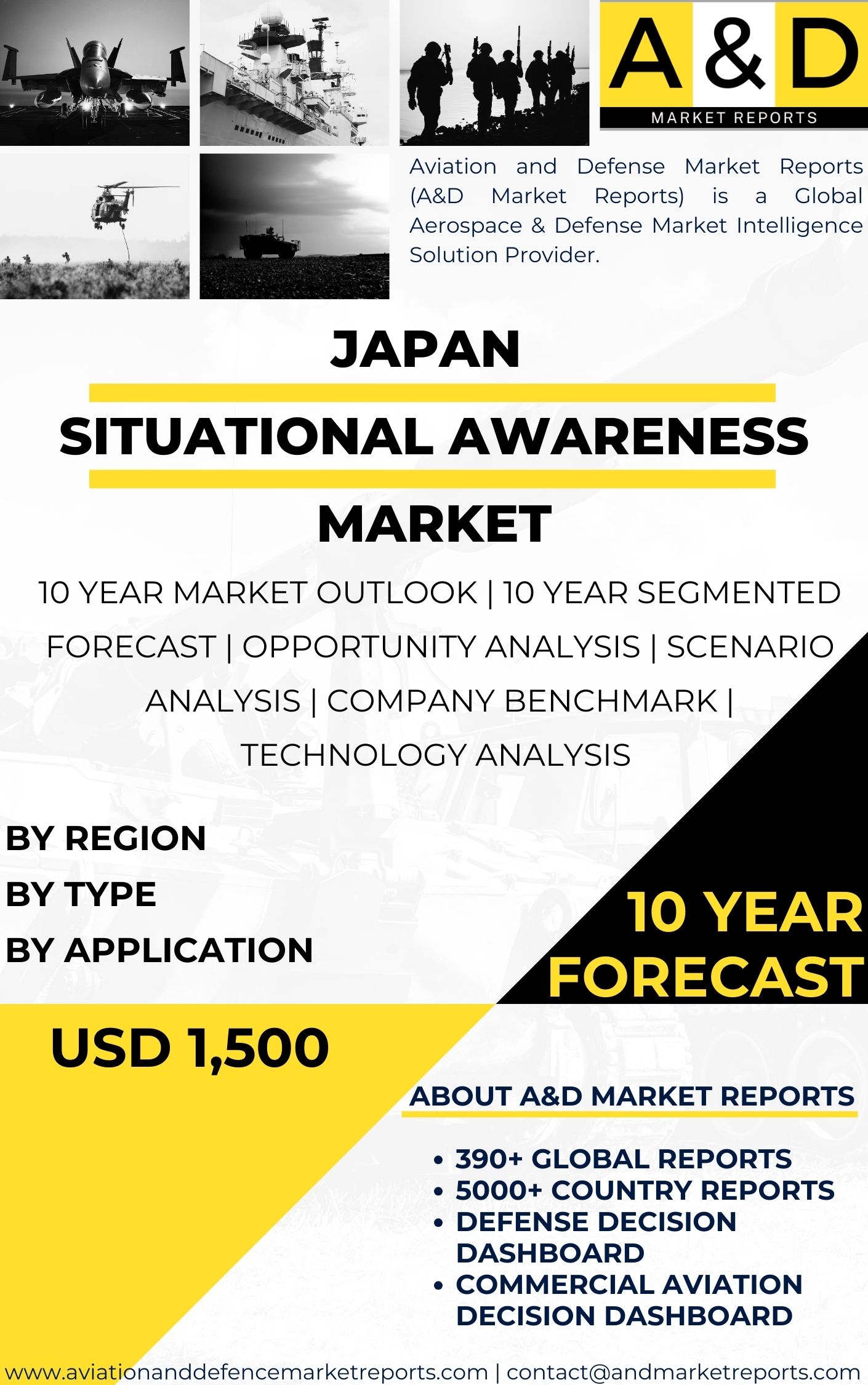
Japan Situational Awareness Market Overview is an evolving and strategically important sector focused on real-time monitoring, data integration, and decision-support technologies across defense, aviation, disaster management, industrial operations, and critical infrastructure. The market emphasizes the ability to accurately perceive, analyze, and act on environmental and operational data, enabling faster and more informed decision-making in high-risk and time-sensitive scenarios. Japan’s increasing reliance on situational awareness solutions reflects its broader priorities around safety, resilience, and operational efficiency.
Japan Situational Awareness Market Components and System Architecture
The Japan situational awareness market comprises a wide range of components including sensors, command and control systems, software platforms, payload solutions, and associated services. Sensors form the backbone by collecting real-time data from physical and digital environments, while command and control systems process this information into actionable intelligence. Software platforms support visualization, analytics, and data fusion, and services such as integration, maintenance, and lifecycle support contribute significantly to market value, reflecting demand for fully integrated solutions.
Japan Situational Awareness Market Driven by Disaster Management Needs
Disaster management is a major driver of the situational awareness market in Japan due to the country’s exposure to earthquakes, typhoons, tsunamis, and other natural hazards. Situational awareness systems enhance early warning, emergency coordination, and post-disaster response by integrating geospatial intelligence, environmental monitoring, and real-time communication. These capabilities improve coordination among government agencies and emergency responders, strengthening national resilience and public safety preparedness.
Japan Situational Awareness Market in Defense and Security Applications
The defense sector plays a central role in driving market growth, with Japan prioritizing advanced battlefield awareness, surveillance, intelligence gathering, and command and control capabilities. Situational awareness technologies support the Japan Self-Defense Forces by improving operational readiness, force protection, and decision superiority. Integration of sensors, radar, and network-centric platforms enables a unified operational picture across land, air, maritime, space, and cyber domains, aligning with Japan’s defense modernization strategy.
Japan Situational Awareness Market and Technological Advancements
Technological innovation is a key growth catalyst in the Japan situational awareness market. The adoption of artificial intelligence, machine learning, big data analytics, and the Internet of Things enhances data processing speed, predictive capabilities, and pattern recognition. These technologies enable proactive decision-making rather than reactive responses. Japan’s strong electronics, software, and manufacturing ecosystem further supports continuous improvement in situational awareness platforms.
Japan Situational Awareness Market Across Industrial and Infrastructure Sectors
Industrial and critical infrastructure applications are increasingly adopting situational awareness solutions to improve safety, reliability, and efficiency. Manufacturing plants, energy facilities, transportation networks, and logistics hubs use real-time monitoring and alert systems to detect anomalies, prevent accidents, and minimize downtime. This growing adoption reflects Japan’s broader push toward industrial digitalization and smart operations.
Market in Smart Cities and Autonomous Systems
Emerging applications in smart cities, automotive systems, and autonomous platforms are expanding the scope of the situational awareness market in Japan. Autonomous vehicles and smart infrastructure rely on integrated data from cameras, sensors, GPS, and communication networks to ensure safety and efficiency. Japan’s leadership in automotive technology and urban innovation supports gradual but sustained uptake of situational awareness solutions in these domains.
Market Supported by Government Initiatives
Government policies and programs play a critical role in shaping the Japan situational awareness market. National security strategies, disaster preparedness initiatives, and infrastructure modernization programs encourage the deployment of advanced situational awareness technologies. Public-sector investment in research and development and the promotion of interoperability and safety standards continue to stimulate market adoption.
Market Challenges and Future Outlook
The market faces challenges related to system complexity, cybersecurity risks, data integration, and high implementation costs. Ensuring interoperability across diverse platforms and protecting sensitive information remain key concerns. However, advancements in secure communications, encryption, and standardized system architectures are mitigating these issues. Overall, the situational awareness market in Japan is expected to expand steadily, driven by defense modernization, disaster resilience requirements, industrial transformation, and smart technology adoption, reinforcing its importance within Japan’s national security and operational framework.